



















Tanvi Upadhyay


BLOG / Performance Management
The Art of Writing Good Performance Reviews: Examples and Phrases
Written by:


December 6, 2025
In pursuit of achieving organizational excellence, performance reviews stand as powerful catalysts for driving growth and fostering a strong efficient workforce.
Performance reviews provide employees with valuable feedback on their strengths and areas for improvement, paving the way for professional growth. They enable individuals to set clear goals, enhance their skills, and align their efforts with organizational objectives. Thus fostering a culture of continuous development and nurturing a stronger and more successful workforce.
We understand this significance – providing constructive feedback that empowers employees to thrive. But very often, we fail to do it the right way.
This is why in this blog we delve into how you can craft impactful performance reviews. We have good performance review examples and phrases to inspire meaningful discussions in your organization.
But before everything else, let’s learn how exactly performance reviews help.
Effective Performance Reviews to Drive Employee Engagement and Growth
Understanding the power of effective reviews is paramount for HRs and managers seeking to cultivate a motivated workforce. Let’s see why.
Boosting Employee Motivation and Engagement through Constructive Feedback

Effective performance reviews boost employee motivation and engagement. Constructive feedback and recognition create a sense of value and purpose, fueling individuals to strive for excellence. Employees who feel their efforts are acknowledged and aligned with organizational goals are more likely to remain committed and invested in their roles.
Catalyzes Organizational Growth
By evaluating individual performance against predefined metrics, you can identify high-performing employees and potential areas for improvement. This alignment between individual achievements and overall company objectives allows for a focused approach towards optimizing organizational performance.
Negative Impact of a Bad Review on Employees, Team Performance, and Organizational Culture
A poorly executed review can have detrimental effects on employees and the broader organization. Employees who receive unjust or vague feedback may feel demotivated, leading to decreased productivity and performance.
Moreover, a negative review culture erodes the trust among team members and hinders collaboration, adversely affecting overall team dynamics. A toxic review environment can perpetuate dissatisfaction, resulting in attrition and a negative impact on the organizational culture.
Empowering HRs to Streamline the Performance Review Process for Managers and Employees
HRs have a huge responsibility in streamlining the performance review process and optimizing its effectiveness and impact. They create a goal-aligned framework and offer guidance and training. They ensure fair evaluations through calibration sessions, encourage ongoing feedback, and align individual goals with company objectives.
To streamline this complex process, a software solution like Peoplebox.ai becomes a crucial tool not just for reviews but also for easy data management.

By implementing user-friendly performance review software, HRs facilitate seamless communication and feedback exchange between employees and managers. It simplifies the process and reduces administrative burdens.
The tool also helps in aligning goals and performance easily. Let’s check some of the most useful features of Peoplebox.ai that help HR in creating an effective and efficient performance review process.
Conducting Seamless Performance Reviews Directly within Slack
Peoplebox.ai seamlessly integrates with Slack, facilitating easy and real-time performance reviews. This user-friendly platform allows managers and employees to conduct evaluations directly within their familiar Slack workspace, streamlining communication and feedback exchange.
You can run the entire review cycle in Slack – self, manager & 360-degree feedback. You can easily edit and withdraw reviews, while the system’s auto-reminders and smart nudges ensure faster approvals and submissions and do so much more.
Utilizing Tools to Craft Comprehensive and Impactful Performance Reviews
Crafting comprehensive and meaningful reviews can be a daunting task. Peoplebox.ai provides valuable guidance and prompts, aiding managers in writing impactful reviews that offer constructive feedback and recognize accomplishments. It offers features that enable all reviewers to receive notifications containing a list of reviews they are required to write.
Generating Data-Driven Summary Reports for Informed Decision-Making
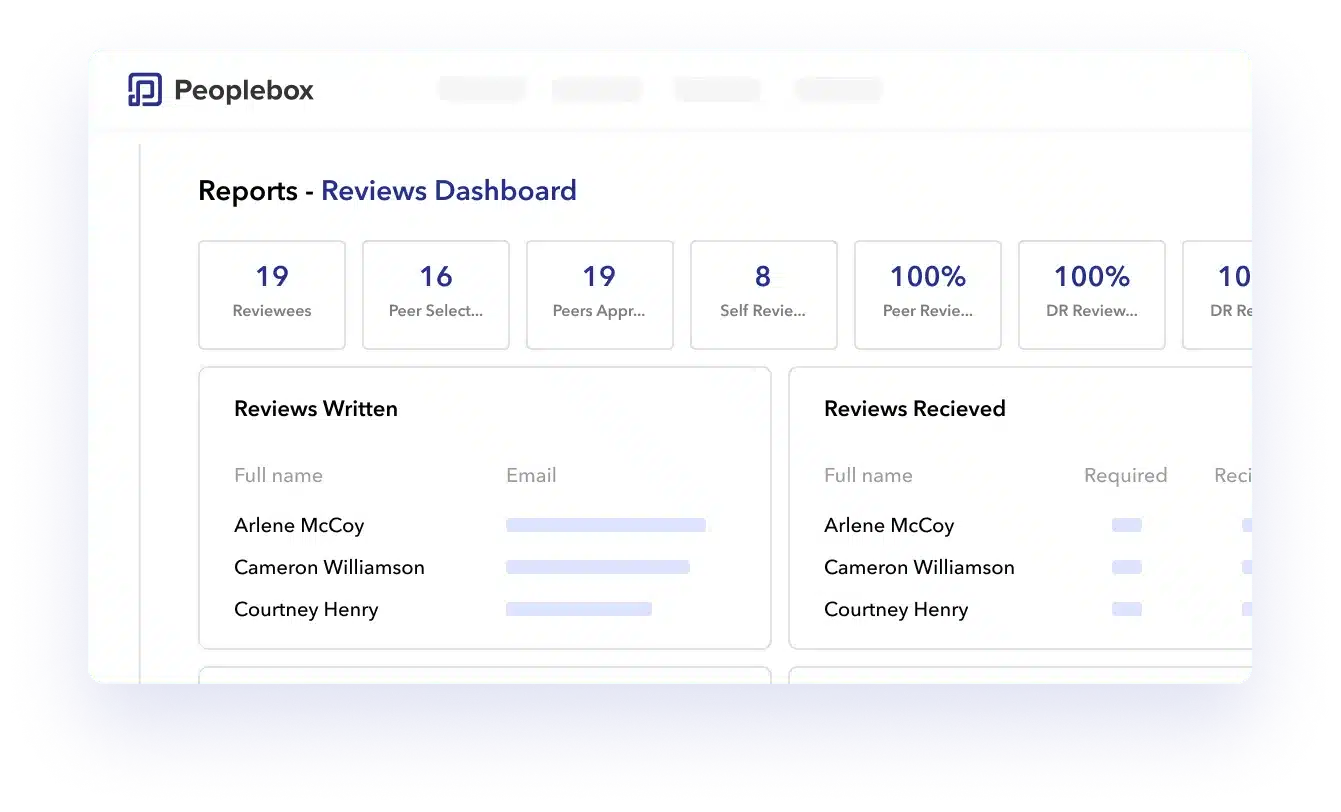
Peoplebox.ai generates real-time data-driven downloadable summary reports, providing HRs and managers with valuable insights into employee performance, trends and areas for improvement. These reports facilitate informed decision-making and actionable performance plans.
Enhancing Employee Development through Effective 1:1 Meetings
Beyond performance reviews, Peoplebox.ai empowers HRs to conduct effective 1:1 meetings with employees. These regular check-ins foster open communication and enable ongoing support for employees’ growth and development.
Examples of a Good Review and Phrases (5 Use Cases)
Use Case 1: Objective Setting and Progress Evaluation
Phrases to use:
1. “(Employee’s Name) demonstrated exceptional skills in setting clear and specific objectives aligned with the team’s and organization’s goals. Their objectives were well-defined and measurable, ensuring a focused approach to achieving desired outcomes.”
2. “I appreciate (Employee’s Name) ‘s dedication to regular check-ins and progress updates. Their proactive communication allowed for timely adjustments, resulting in smoother goal attainment and enhanced collaboration within the team.”
3. “(Employee’s Name) consistently achieved significant milestones. Their dedication to continuous improvement is evident through their commitment to self-assessment and openness to feedback.”
4. “I am impressed with how (Employee’s Name) effectively balanced challenging objectives while maintaining a high level of performance in their daily responsibilities. They demonstrated strong time management and prioritization skills.”
5. “It is evident that (Employee’s Name) values the feedback received and actively implements suggested improvements. They are receptive to guidance and consistently strive to develop their skills and capabilities.”
Example of review
| Employee Name: [Employee’s Name] Job Title: [Employee’s Job Title] Review Period: [Review Period Dates] Objective Setting:(Employee’s Name) demonstrated skills in setting clear and specific objectives which have been instrumental in driving their performance and the team’s success. They showed a strong understanding of the tasks at hand and how their work contributed to the overall success of the projects they were involved in. Progress Evaluation:I commend (Employee’s Name) for their proactive commitment to regular check-ins and progress updates. They actively engaged in productive discussions with team members and managers, seeking feedback and guidance whenever required. Achievements:(Employee’s Name) achieved notable milestones and exceeded expectations in multiple areas, including the successful completion of (mention specific project or task). They embraced constructive feedback with an open mindset, proactively implementing suggestions for improvement. They took ownership of their professional development, displaying diligence in enhancing their skills. Areas for Improvement:While (Employee’s Name) has achieved remarkable success in various aspects, there are areas for further improvement. I encourage them to engage in relevant training programs (mention specific skill or area) and seek mentorship opportunities to enhance their expertise in this area. Conclusion:(Employee’s Name) commitment to progress evaluations, openness to feedback, and achievements showcase dedication to personal and professional growth. With a continued focus on areas of improvement, (Employee’s Name) will make even greater contributions to the team and organization. Overall Performance Rating: [Performance Rating] |
Use Case 2: Skill Development and Training
Phrases to use:
1. “(Employee’s Name) consistently seeks out opportunities for skill development, proactively participating in relevant workshops and training programs to enhance their expertise in [specific skill].”
2. “During the review period, (Employee’s Name) demonstrated a proactive approach to identifying skill gaps and development opportunities.”
3. “(Employee’s Name) diligently tracked their skill development progress, seeking guidance from managers and mentors. “
4. “I am impressed by (Employee’s Name) for their enthusiasm in taking on challenging projects that require them to learn new skills. Their eagerness to expand their skill set has positively impacted their performance and overall team success.”
5. “I encourage (Employee’s Name)to continue exploring opportunities for skill development and training that align with their career goals. Engaging in cross-functional projects or seeking additional responsibilities can provide valuable experiences to further enhance their skills.”
| Employee Performance Review: Skill Development and Training
Employee Name: [Employee’s Name] Identifying Skill Gaps and Development Opportunities:(Employee’s Name) proactively identified skill gaps and sought feedback from peers and managers. They actively discussed career aspirations and the necessary skills to excel in their role. Acquiring New Skills:(Employee’s Name) enthusiastic pursuit of new skills and knowledge is commendable. They actively participated in relevant training programs and sought mentorship from seasoned professionals, exemplifying a commitment to continuous learning and growth. Progress and Observations:(Employee’s Name) diligently tracked their skill development progress, seeking guidance from managers and mentors. They effectively utilized feedback and resources to refine newly acquired skills, showcasing adaptability to new challenges. Recommendations for Continued Growth:Moving forward, I encourage (Employee’s Name)to continue exploring opportunities for skill development and training that align with their career goals. Engaging in cross-functional projects or seeking additional responsibilities can provide valuable experiences to further enhance their skills. Conclusion:(Employee’s Name) has shown exceptional dedication to skill development and training during the review period. Overall Performance Rating: [Performance Rating] |
Use Case 3: Recognition and Appreciation Review
Phrases to use:
1. “(Employee’s Name) consistently exceeded expectations, delivering exceptional results and making a significant impact on our team’s success.”
2. “I want to express appreciation for (Employee’s Name)’s hard work and dedication. Their contributions have been invaluable to our department’s achievements.”
3. “By recognizing (Employee’s Name)’s outstanding performance, we not only celebrate their success but also inspire others to excel.”
4. “Their positive attitude and willingness to take on new challenges have been a driving force behind their achievements.”
5. “With (Employee’s Name)’s continued commitment to excellence, I have no doubt they will accomplish even greater feats in the future.”
| Employee Performance Review: Recognition and Appreciation Review
Employee Name: [Employee’s Name] Performance:(Employee’s Name)consistently delivered outstanding results and demonstrated exceptional performance. They made valuable contributions to the team and organization, and their efforts have not gone unnoticed. Contributions:I want to express appreciation for their exceptional contributions. Their hard work and positive attitude have had a significant impact on team morale and productivity. Motivating and Inspiring Employees for Continued Success:(Employee’s Name) ‘s achievements and dedication serve as a motivating force for the entire team. Their passion for excellence and continuous improvement sets a high standard for others to follow. Conclusion:(Employee’s Name) deserves special recognition for their exceptional performance, dedication, and contributions. Their positive attitude, commitment to excellence, and willingness to go the extra mile have been invaluable to the team and organization. Reviewer Name: [Your Name] |
Use Case 4: Leadership and Managerial Skills
Phrases to use in this performance evaluation:
1. “(Employee’s Name) consistently demonstrated strong leadership qualities, inspiring and guiding the team towards achieving outstanding results.”
2. “Their ability to make effective decisions, even under challenging circumstances, showcases (Employee’s Name)’s exceptional judgment and problem-solving skills.”
3. “As a leader, (Employee’s Name) has set a powerful example. Their proactive approach to embracing change and adapting to evolving work situations serves as a source of inspiration for others, motivating them to follow suit.”
4. “Their commitment to nurturing talent and empowering team members to reach their full potential has been instrumental in the team’s growth and success.”
5. “I want to recognize (Employee’s Name)’s remarkable managerial achievements, which have significantly contributed to the department’s overall success.”
| Employee Name: [Employee’s Name] Job Title: [Employee’s Job Title] Review Period: [Review Period Dates] Leadership Qualities and Decision-Making Abilities:(Employee’s Name) demonstrated strong leadership qualities and exceptional decision-making abilities. They consistently displayed sound judgment and made effective decisions even under challenging circumstances. Providing Coaching and Mentoring Support:I have been impressed by (Employee’s Name)’s commitment to providing coaching and mentoring support to their team members. Their dedication to the professional growth of their team members has fostered a positive work environment in the team. Growth:As a leader, (Employee’s Name) has set a powerful example. They have successfully led their team to achieve remarkable results. Their commitment to self-improvement has also resulted in notable growth in their managerial skills. Conclusion:(Employee’s Name) has exhibited exceptional leadership and managerial skills. I am confident that their continued growth will lead to even greater accomplishments in the future. Reviewer Name: [Your Name] |
Use Case 5: 360-Degree Review
Phrases to use in this performance evaluation:
1. “(Employee’s Name) actively sought feedback from peers, subordinates, and supervisors, displaying a strong commitment to self-improvement and growth.”
2. “(Employee’s Name) demonstrated a keen understanding of the value of multiple perspectives, utilizing feedback from various sources to gain comprehensive insights into their performance.”
3. “Their receptiveness to feedback allowed (Employee’s Name) to identify opportunities for collaboration and improvement, positively impacting teamwork and productivity.”
4. “Proactively using feedback, (Employee’s Name) refined work processes, showcasing their dedication to continuous improvement and professional development.”
5. “By embracing the 360-degree review process, (Employee’s Name) proactively engaged in identifying areas for growth and fostering a positive work environment.”
| Employee Name: [Employee’s Name] Job Title: [Employee’s Job Title] Review Period: [Review Period Dates] General Feedback:(Employee’s Name) actively participated in the 360-degree feedback process, encouraging input from peers, subordinates, and supervisors. Their openness to receiving feedback from multiple perspectives demonstrated a commitment to self-awareness and continuous improvement. Identifying Opportunities for Improvement Based on Feedback:Throughout the 360-degree review process, (Employee’s Name) has proactively used feedback to refine their work processes, enhance teamwork, and foster a more productive work environment. Conclusion:(Employee’s Name)’s participation in the 360-degree review process has been commendable. Their willingness to gather feedback from peers, subordinates, and supervisors demonstrates their dedication to personal and professional growth. Reviewer Name: [Your Name] |
Conclusion
The process of evaluating employees’ performance, providing constructive feedback, and recognizing achievements bring a lot of benefits. It not only boosts motivation but also identifies areas for improvement, ultimately leading to a more productive and engaged workforce.
To streamline and enhance the performance review process, a tool becomes essential. And Peoplebox.ai serves as an efficient and effective solution.
By seamlessly integrating with collaboration platforms like Slack, Peoplebox.ai offers complete control over the review process, ensuring clear and specific objectives are set, and regular check-ins and feedback are facilitated.
With Peoplebox.ai as a trusted performance review tool, HR leaders can easily tie goals with performance reviews and appraisal, enabling employees and managers to streamline the review process effectively.
So don’t miss out on unlocking the full potential of your workforce with Peoplebox. Give it a try and take a demo today!
FAQs
What is an example of a positive performance review?
A positive performance review example could be: “Jane consistently exceeds her targets and demonstrates strong problem-solving abilities. She takes ownership of her projects, collaborates effectively with her team, and adapts quickly to new challenges. Her proactive approach and dedication make her a valuable asset to the team.” This highlights strengths and acknowledges specific contributions.
What should I write in a performance review example?
In a performance review, mention specific achievements, growth areas, and set future goals. For example, “Alex improved project delivery timelines by 20%, showing excellent organizational skills. Moving forward, focusing on leadership skills will help him manage larger projects. His commitment and willingness to learn are commendable.” Use concrete examples and be constructive in feedback.
What are positive performance review sentences?
Positive review sentences can include: “You have shown remarkable initiative in taking on additional responsibilities,” “Your attention to detail has greatly improved our team’s output,” and “Your problem-solving skills positively impact team performance.” These sentences acknowledge specific strengths and contributions.
What is an example of strength in a performance review?
An example of a strength in a performance review could be: “Maria’s communication skills enable her to effectively manage client relationships, ensuring satisfaction and repeat business. Her ability to stay calm and composed under pressure is a valuable strength that benefits the entire team.” Highlighting such strengths can boost morale and encourage continued excellence.
TABLE OF CONTENTS
RELEVANT ARTICLES
Our Customers Love us