


















Aditi




February 27, 2025
Your enterprise recruitment software stack isn’t keeping up with the talent war, is it? While competitors snag top candidates within days, your team is buried in spreadsheets, juggling multiple tools, and watching stellar applicants ghost your slow-moving process.
In 2025, leading enterprises aren’t just tracking applications; they’re leveraging AI-powered platforms that turn hiring into a competitive advantage.
Ready to join them? We’ve analyzed the 20 best enterprise recruitment solutions that are actually worth your investment. Let’s get started!
Best Enterprise Recruitment Software in 2025
Selecting the right enterprise recruitment software can transform your hiring process from a bottleneck into a competitive advantage. Here’s our analysis of the top enterprise recruitment platforms available today.
| Software | Key Features | Pricing |
| 1. Peoplebox.ai | AI-Powered Candidate Matching, Integrated Talent Management, Configurable Workflows, Easy Integration, Comprehensive Analytics | Talent Management: $7/month/person, OKR Platform: $8/month/person, Full Suite – Professional: $12/month/person, Full Suite – Premium: $15/month/person, Enterprise Plan: Custom pricing |
| 2. Manatal | AI-Powered Recommendations, Candidate Profile Enrichment, Extensive Job Board Integration | Professional: $15/user/month, Enterprise: $35/user/month, Enterprise Plus: $55/user/month |
| 3. iSmartRecruit | AI & Automation, Customizable Workflows, Client & Candidate Management | Custom pricing based on business requirements |
| 4. Ceipal | AI-Powered Sourcing Engine, Advanced Matching Algorithms, Contract Management & Onboarding | Not available on website |
| 5. Elevatus | Customizable Approval Workflows, Branch Management, Automated Video Interviewing | Custom pricing model based on organization size |
| 6. Zimyo Recruit | Intelligent Candidate Sourcing, Collaborative Hiring Workflow, Customizable Career Portal | ₹4,000 per recruiter per month |
| 7. Zoho Recruit | Intelligent Automation, Multi-Channel Sourcing, Extensive Integration Ecosystem | Forever Free: Basic features, 1 active job, Standard: ₹1,250/user/month, Professional: ₹2,500/user/month, Enterprise: ₹3,750/user/month |
| 8. Workable | AI Sourcing Technology, One-Click Job Distribution, Compliance Management | Starter: $249/month (2 active jobs), Standard: $349/month or $4,188/year, Premier: $679/month (annual billing only) |
| 9. Greenhouse | Structured Hiring Framework, Diversity, Equity & Inclusion Tools, Candidate Experience Management | Three tiers based on company size: Essential, Advanced, Expert (Custom pricing) |
| 10. Deel | Global Compliance Expertise, International Payroll Processing, Contractor Management | Custom pricing based on business requirements |
| 11. ClearCompany | Strategic Hiring Alignment, Candidate Engagement Automation, Paperless Onboarding | Modular pricing ($25,000-$60,000 annually for enterprise) |
| 12. SeekOut | AI-Powered Talent Search, Comprehensive Talent Profiles, Diversity Sourcing Tools | Custom enterprise pricing (Standard, Professional, Enterprise tiers) |
| 13. Fetcher | Automated Candidate Discovery, Personalized Outreach Campaigns, Diversity Sourcing | Custom pricing based on hiring volume |
| 14. Pinpoint | Candidate-Centric Application, Inclusive Hiring Tools, Automated Communication | Customizable pricing (contact sales) |
| 15. WorkBright | Digital Document Management, Mobile-First Experience, Compliance Automation | User-based pricing with volume discounts |
| 16. Tracker | Unified ATS/CRM, Automated Job Distribution, Placement Management | Flexible pricing based on user count and modules |
| 17. BambooHR | Streamlined Applicant Tracking, Seamless Onboarding Transition, Integrated Employee Records | Not publicly available |
| 18. LeverTRM | Proactive Sourcing Tools, Relationship Intelligence, Two-Way Integration Ecosystem | Depends on company size and specific needs |
| 19. LinkedIn Recruiter | Advanced Search Technology, InMail Messaging, Talent Pipeline Management | Recruiter Lite: $170/month or $1,680/year, Recruiter Corporate: Custom pricing, Recruiter Professional Services: Custom pricing |
| 20. Eightfold AI | AI Talent Intelligence, Skills Cloud, Career Pathing Intelligence | Enterprise pricing based on employee count and modules |
01. Peoplebox.ai
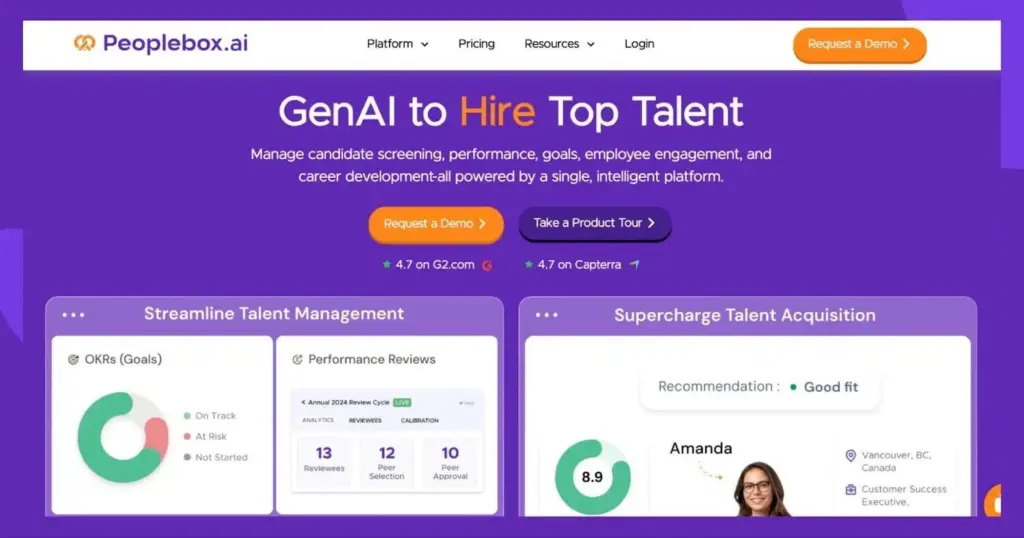
Peoplebox.ai is a talent acquisition and management platform that integrates recruitment, performance management, goal setting, and employee development into a single solution. By connecting the entire talent lifecycle, it eliminates the data silos that typically separate hiring from employee management.
The platform streamlines HR processes with workflow automation and an intuitive interface, helping teams save time and make more consistent decisions.
Key Features
AI-Powered Candidate Matching: Peoplebox.ai’s AI resume screening matches candidates to roles in seconds, not weeks with sophisticated AI algorithms that understand both explicit skills and implicit potential.
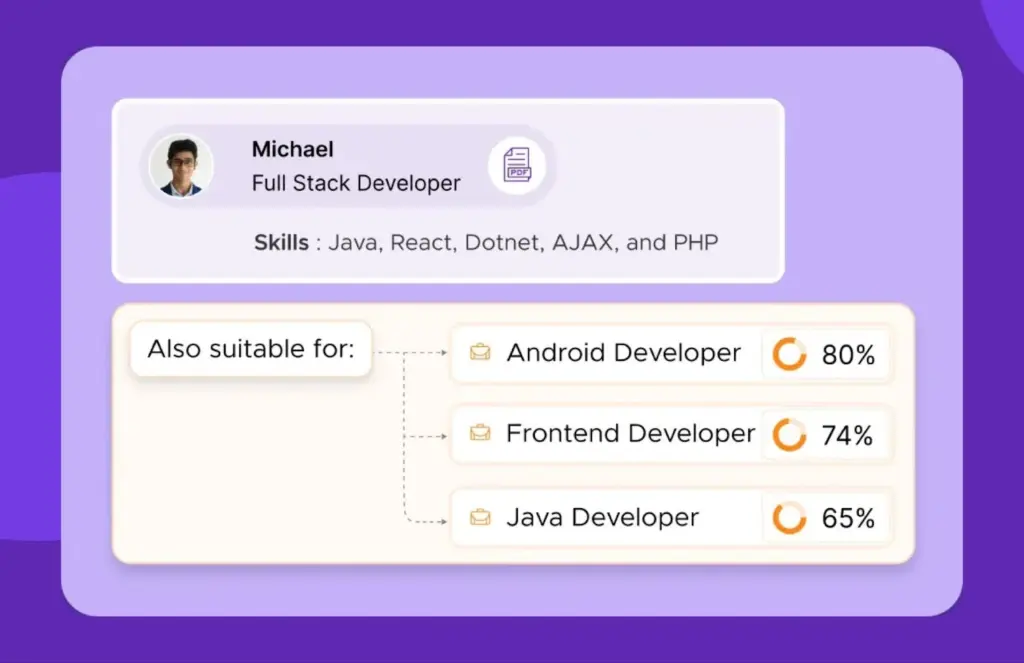
Integrated Talent Management: Organizations can seamlessly move from hiring to onboarding to performance management within a single platform, eliminating data silos and disconnected processes.
Configurable Workflows: Companies can tailor 50+ workflows to fit their specific HR needs without requiring IT support or custom development. From complex approval chains to document verification steps, every aspect of the recruitment process can be customized to match exact requirements and regulatory environments.
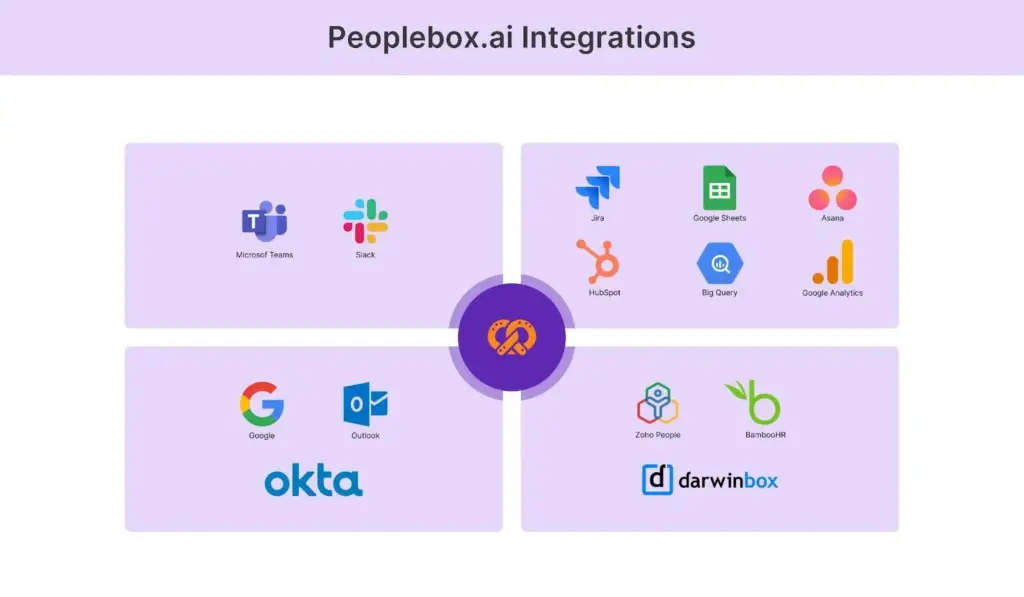
Easy Integration: Peoplebox.ai connects with existing HRIS, ATS, and talent systems without hassle through an extensive library of pre-built connectors and open API architecture.
Comprehensive Analytics: HR teams make data-driven decisions with powerful reporting tools that transform raw hiring data into actionable insights. The predictive modeling helps forecast hiring needs, identify bottlenecks, and measure the effectiveness of recruitment strategies across regions, departments, and roles.
Pricing
Peoplebox.ai offers five streamlined pricing tiers with annual billing:
- Talent Management: $7/month/person – Core performance management features including reviews, 1-1s, and surveys
- OKR Platform: $8/month/person – Goal-setting framework with business reviews and project management
- Full Suite – Professional: $12/month/person – Combines all features from both Talent Management and OKR plans
- Full Suite – Premium: $15/month/person – Adds dedicated success manager and implementation support
- Enterprise Plan: Custom pricing – Includes tailored solutions, custom integrations, and SSO capabilities
For enterprise recruitment needs, the Full Suite or Enterprise plans provide the most comprehensive capabilities. Minimum annual agreement of $4,000 applies to Premium plans.
02. Manatal
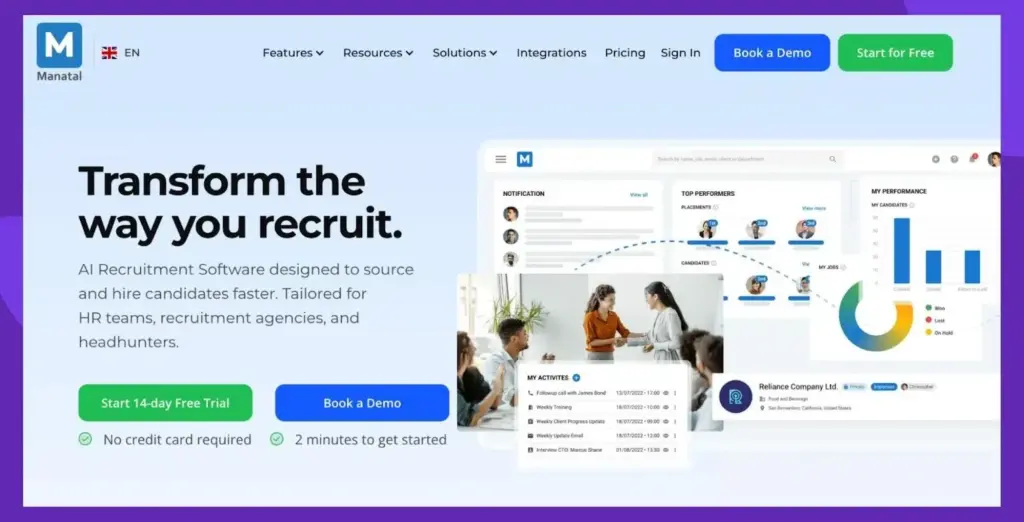
Manatal is an AI recruitment platform designed for HR teams and agencies across 135+ countries. The system combines an intuitive interface with powerful candidate sourcing and screening capabilities, focusing on simplifying hiring through automation and intelligent matching.
Key Features
AI-Powered Recommendations: The platform scores candidates based on job requirements to streamline screening processes and suggests the most qualified applicants. Manatal’s AI engine continuously learns from hiring patterns to improve match quality and reduce time spent on manual resume review.
Candidate Profile Enrichment: The system automatically collects data from 20+ platforms including LinkedIn and GitHub to create comprehensive candidate profiles beyond resume information.
Extensive Job Board Integration: Manatal posts openings to 2,500+ free and premium channels, including global platforms like Indeed, LinkedIn, and specialized industry boards. The platform allows organizations to manage all sponsored job advertising campaigns from a single interface, simplifying multi-channel recruitment marketing.
Pricing
Manatal offers four tiered pricing plans with annual billing options. The Professional plan ($15/user/month) serves small teams with limits of 15 jobs and 10,000 candidates. For growing organizations, the Enterprise plan ($35/user/month) removes these restrictions and adds workflow automation. The Enterprise Plus tier ($55/user/month) includes advanced reporting, SSO, and API access.
03. iSmartRecruit
Overview
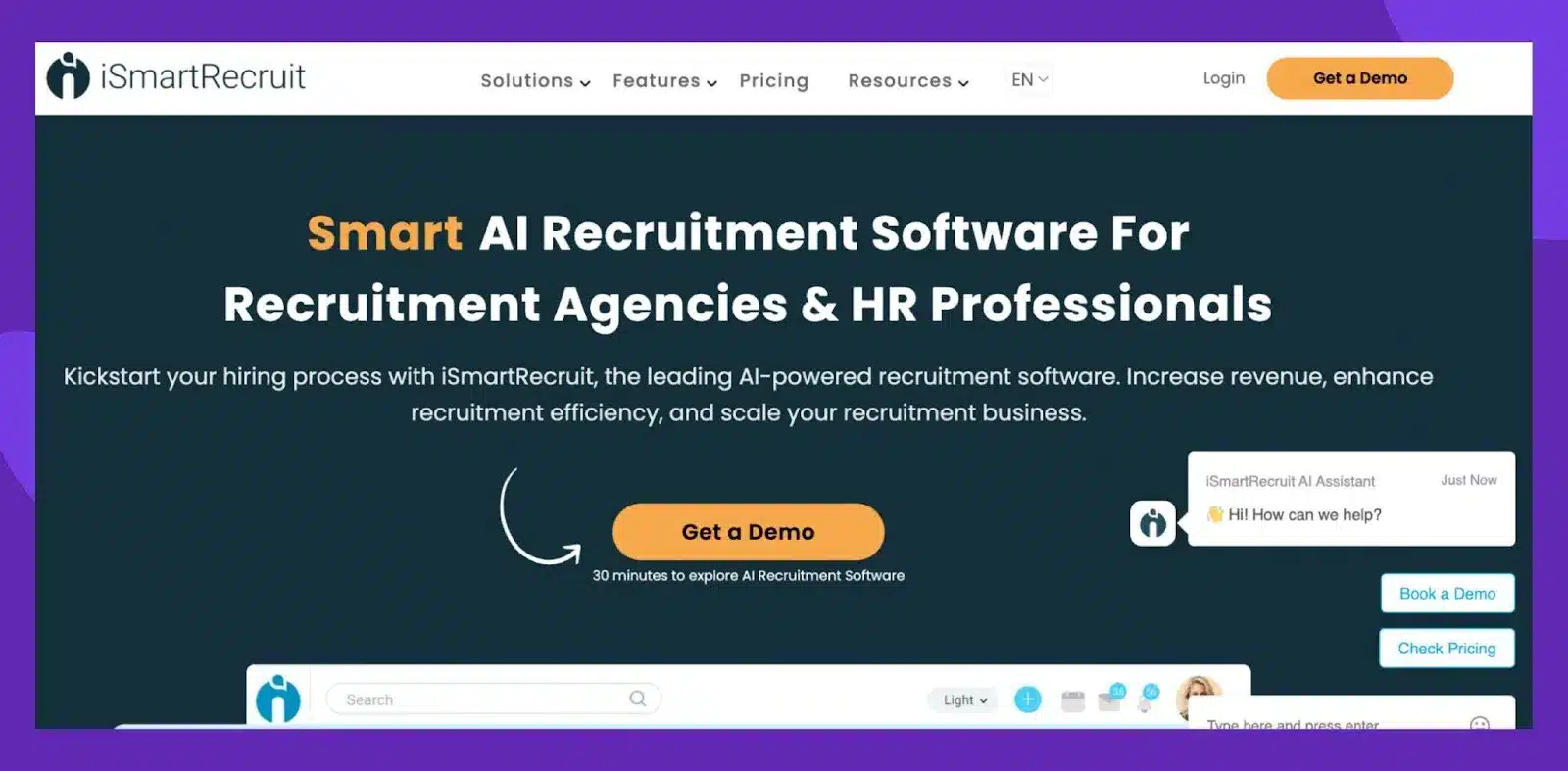
iSmartRecruit is an all-in-one recruitment solution designed to streamline and manage the complete recruiting lifecycle. Serving recruiters and HR professionals across multiple countries, the platform combines applicant tracking, recruiting CRM, recruitment marketing, and AI automation in a single system.
Key Features
AI & Automation: iSmartRecruit leverages artificial intelligence to automate repetitive tasks throughout the recruitment workflow. Its automated CV parsing technology extracts and organizes candidate information instantly, while AI screening matches candidates to job requirements with remarkable accuracy.
Customizable Workflows: The platform allows organizations to design tailored hiring processes that match their specific recruitment needs. Users can create custom stages, automate approval chains, and configure workflows for different departments or position types.
Client & Candidate Management: The integrated CRM functionality centralizes all communications and activities, enabling recruiters to build and nurture long-term relationships with both clients and candidates.
Pricing
iSmartRecruit offers customized pricing tailored to different business needs. Organizations can request a custom price quote based on their specific business requirements.
04. Ceipal
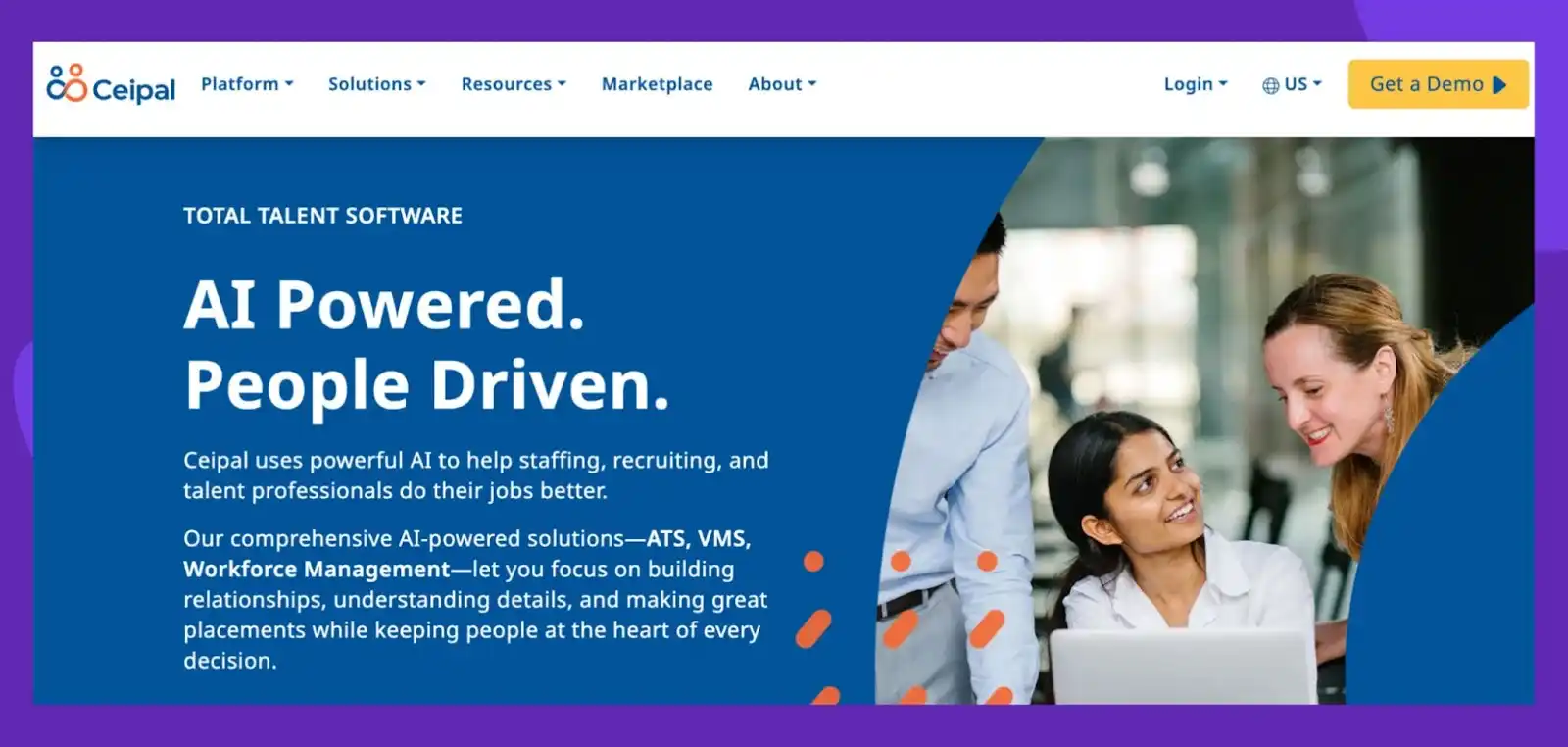
Ceipal is an AI-driven talent acquisition platform designed specifically for staffing and recruitment agencies. The system combines front and back-office functionality, enabling complete workforce management from sourcing to invoicing.
Key Features
AI-Powered Sourcing Engine: Ceipal’s proprietary AI technology searches across multiple platforms to identify qualified candidates, including passive ones. The system’s automated sourcing expands talent pools without requiring additional recruiter hours.
Advanced Matching Algorithms: The platform uses machine learning to evaluate candidates against job requirements, considering both hard skills and cultural fit. Its scoring system ranks candidates based on match quality, dramatically reducing screening time.
Contract Management & Onboarding: The platform streamlines the transition from candidate to employee with digital onboarding workflows, contract generation, and credential verification.
Pricing
Pricing unavailable on the website.
05. Elevatus
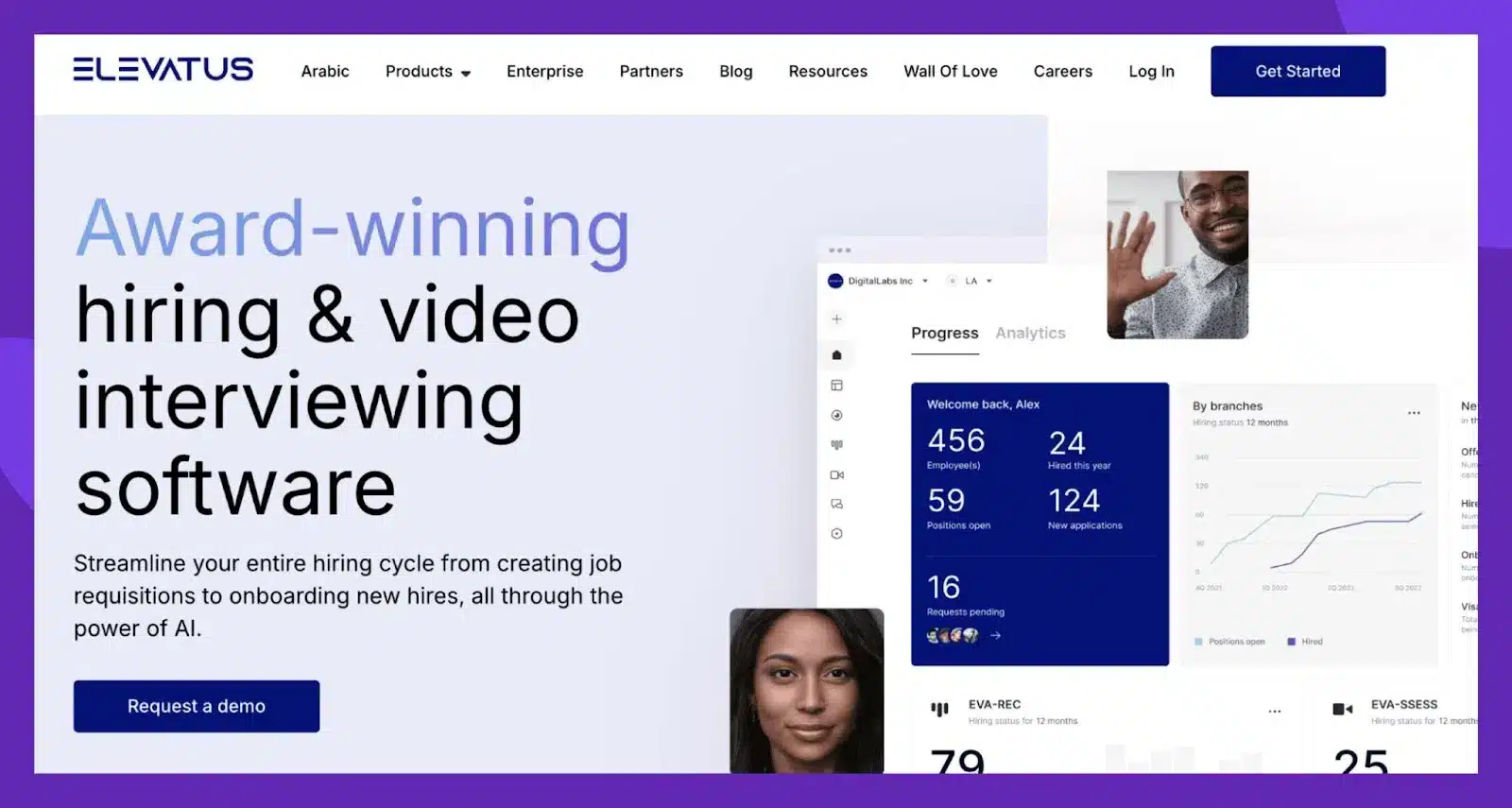
Elevatus delivers an end-to-end recruitment solution powered by its proprietary AI technology, EVA. The platform combines applicant tracking with advanced candidate evaluation tools, helping organizations identify top talent efficiently.
Key Features
Customizable Approval Workflows: Elevatus streamlines approvals for job offers, contracts, requisitions, referrals, and rehires through automated workflows. This functionality reduces administrative delays and standardizes decision processes across the organization.
Branch Management: The platform allows organizations to centralize or decentralize recruitment processes for groups or subsidiaries within a single hiring platform. Each branch can have its own authorization setup, hierarchy levels, and branded career page.
Automated Video Interviewing: Elevatus offers video assessment technology that can evaluate thousands of applicants simultaneously. The system streamlines communication and uses AI to automatically identify top talent from large candidate pools.
Pricing
Elevatus utilizes a customized pricing model based on organization size and selected modules. Organizations can contact them directly for more information on the price.
06. Zimyo Recruit
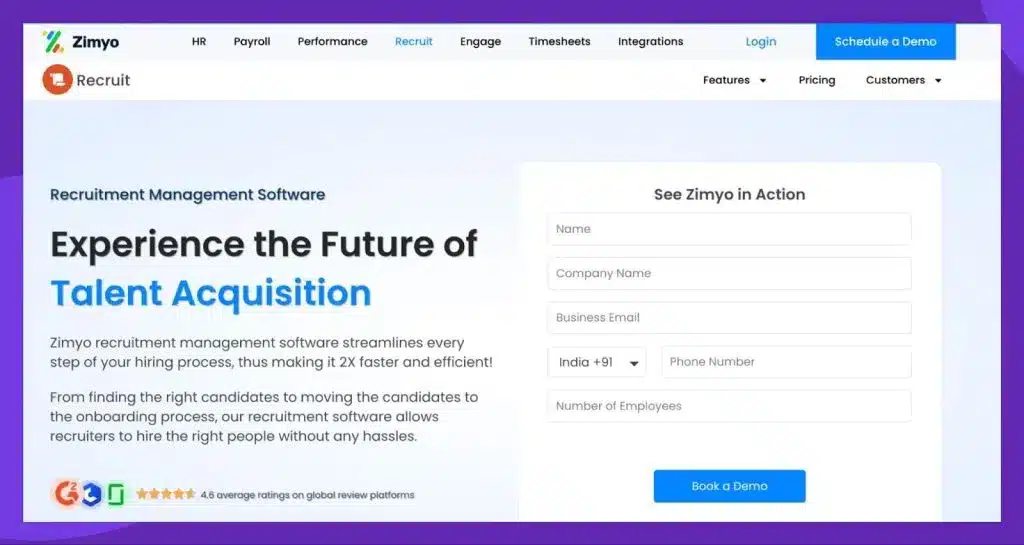
Zimyo Recruit is an AI-enhanced recruitment software that streamlines the entire hiring process from requisition to onboarding. As part of Zimyo’s comprehensive HR suite, the recruitment module integrates seamlessly with performance management, payroll, and employee engagement tools.
Key Features
Intelligent Candidate Sourcing: Zimyo leverages AI to help organizations discover qualified candidates across multiple channels. Its resume parsing technology extracts and analyzes candidate information to create searchable profiles automatically.
Collaborative Hiring Workflow: The platform facilitates team-based recruitment with shared candidate evaluations, interview feedback forms, and approval processes. This collaborative approach improves hiring decisions and reduces time-to-fill.
Customizable Career Portal: Zimyo offers branded career site capabilities with customizable application forms and a mobile-responsive candidate experience. The system’s intuitive interface helps attract and engage quality applicants.
Pricing
Zimyo Recruit is available as an add-on to Zimyo’s HR suite at ₹4,000 per recruiter per month, offering requisition management, AI-based resume screening, interview scheduling, and job board integration.
07. Zoho Recruit
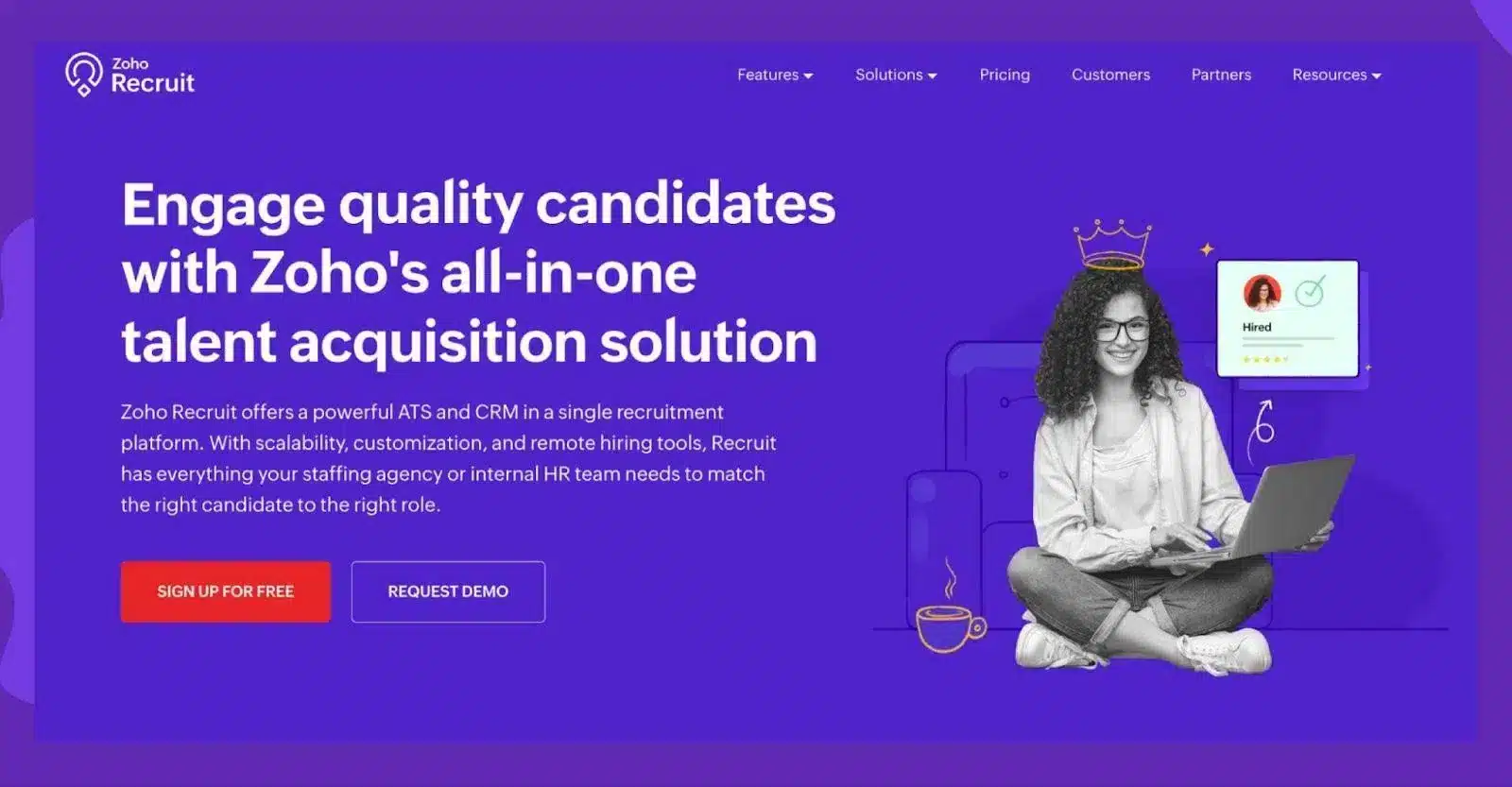
Zoho Recruit is a comprehensive applicant tracking system that serves both corporate HR teams and staffing agencies. As part of the wider Zoho ecosystem, it integrates seamlessly with other business applications including CRM, analytics, and marketing tools.
Key Features
Intelligent Automation: Zoho Recruit offers extensive workflow automation capabilities, from resume parsing to interview scheduling. Its AI assistant, Zia, helps recruiters with candidate matching, data analysis, and even conversational interactions.
Multi-Channel Sourcing: The platform connects with numerous job boards, social media platforms, and career sites to expand reach. Its candidate import tools consolidate applicants from various sources into a unified database.
Extensive Integration Ecosystem: Beyond Zoho’s own applications, the platform connects with third-party tools for background checks, video interviewing, and HRIS systems. This flexibility allows organizations to create tailored recruitment technology stacks.
Pricing
Zoho Recruit offers four pricing tiers: Forever Free (basic features, 1 active job), Standard (₹1,250/user/month, 100 active jobs), Professional (₹2,500/user/month, 250 active jobs with AI matching), and Enterprise (₹3,750/user/month, 750 active jobs with premium features). All paid plans include a 15-day trial and 45-day money-back guarantee.
08. Workable
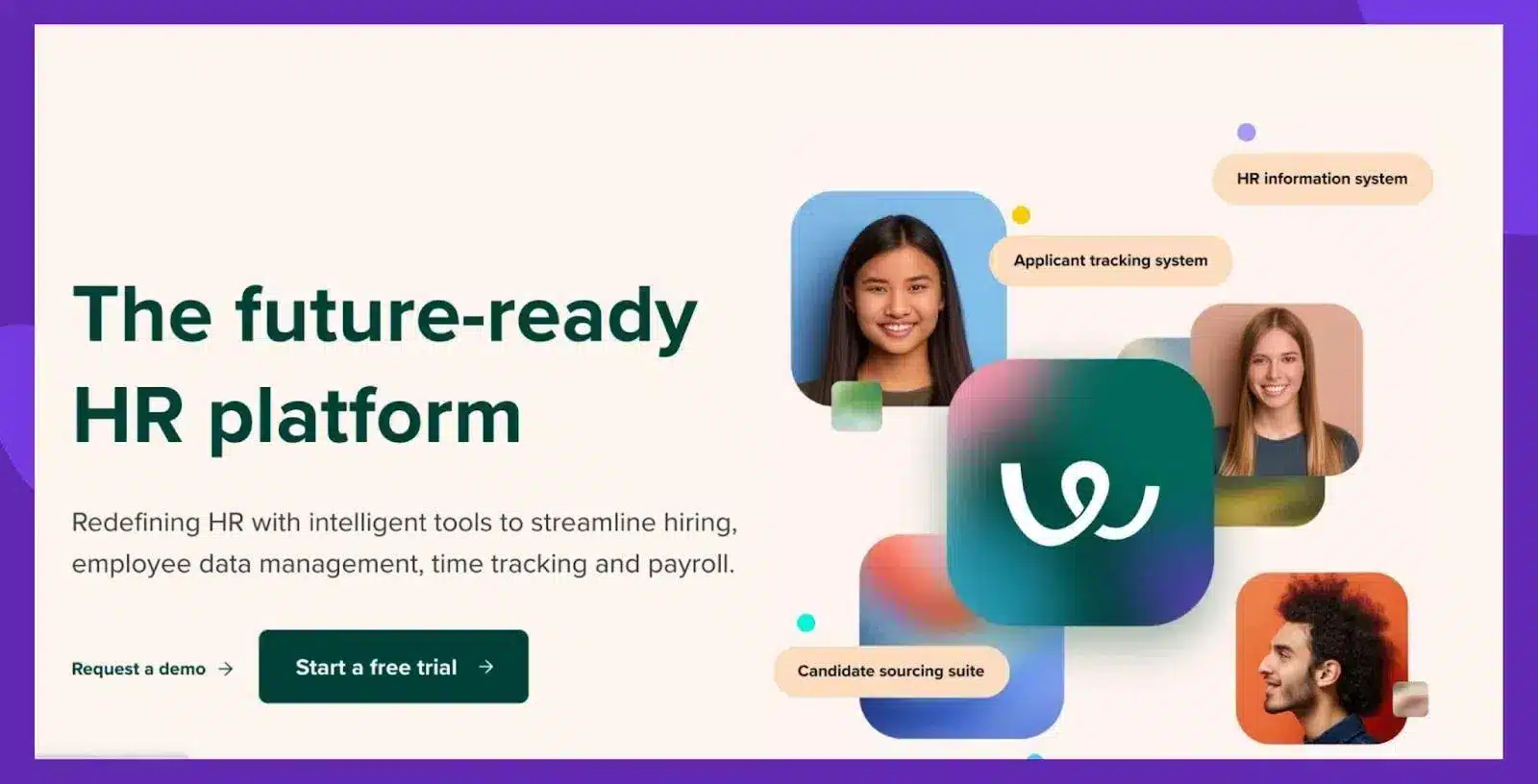
Workable delivers a complete hiring solution designed for mid-sized and enterprise organizations. The platform combines intuitive applicant tracking with powerful sourcing tools and AI-driven candidate matching.
Key Features
AI Sourcing Technology: Workable’s AI Recruiter automatically identifies qualified candidates from multiple sources based on job requirements. This proactive sourcing capability helps organizations find passive candidates who aren’t actively job hunting.
One-Click Job Distribution: The platform posts openings to 200+ job boards and social networks simultaneously, expanding reach while simplifying management. Its targeted advertising features optimize job visibility among relevant candidate segments.
Compliance Management: The system includes built-in tools for EEOC reporting, data retention policies, and GDPR compliance. These features help organizations maintain regulatory compliance across multiple jurisdictions.
Pricing
Workable offers three pricing tiers: Starter ($249/month) with 2 active jobs; Standard ($349/month or $4,188/year with 20% savings) with unlimited active jobs; and Premier ($679/month, annual billing only) which includes all premium recruiting tools. Pricing scales based on company size from 1-20 employees up to 500+.
09. Greenhouse
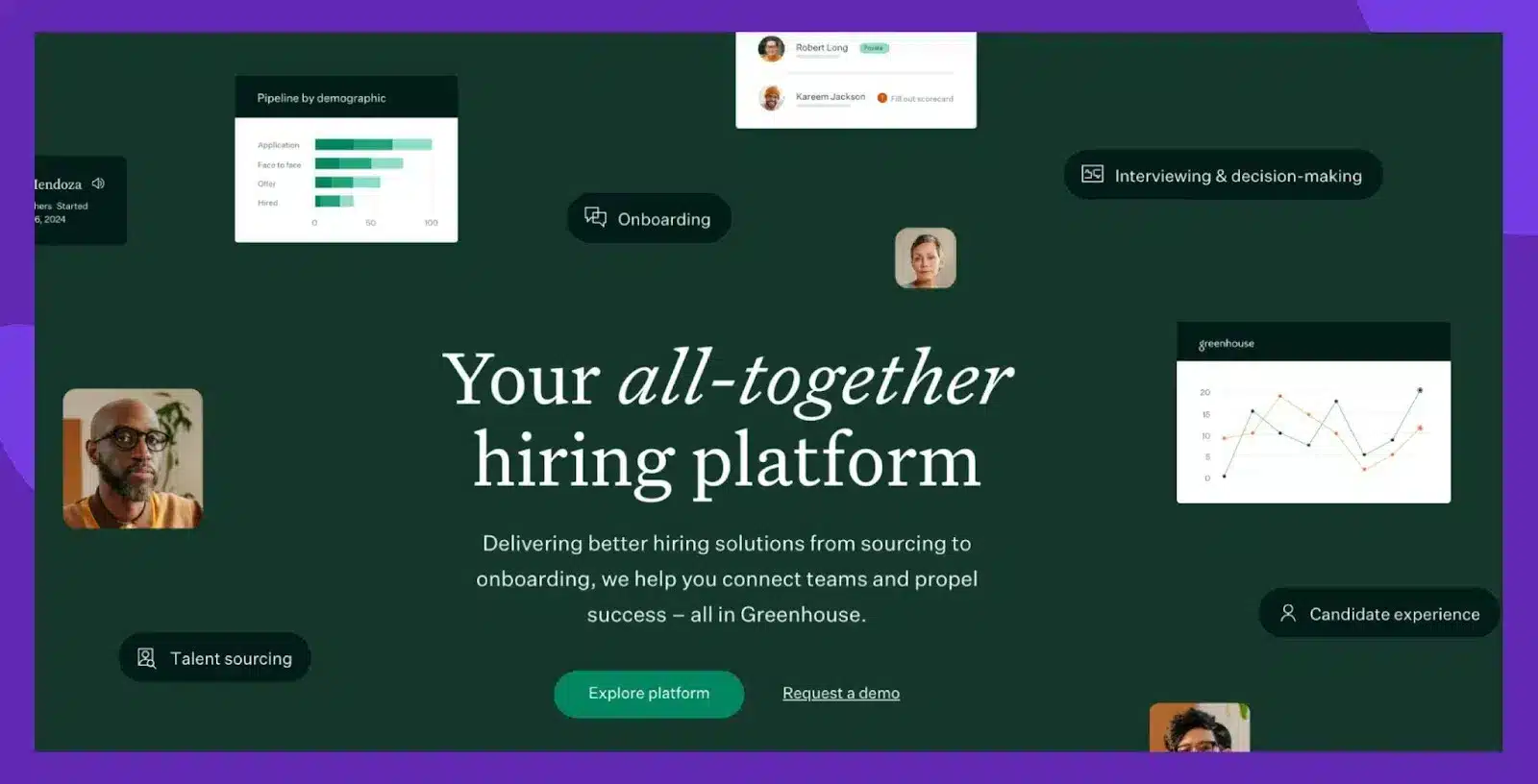
Greenhouse is an enterprise-grade recruitment platform known for its structured hiring methodology and emphasis on candidate experience. The system helps organizations implement consistent, scalable recruitment processes that reduce bias and improve quality of hire.
Key Features
Structured Hiring Framework: Greenhouse’s core philosophy centers on defining clear job criteria, creating consistent interview plans, and collecting objective candidate feedback. This structured approach ensures all candidates are evaluated fairly against the same requirements.
Diversity, Equity & Inclusion Tools: The platform includes features specifically designed to reduce unconscious bias, including anonymized screening, inclusive language analysis, and diversity sourcing analytics. These tools help organizations build more diverse teams.
Candidate Experience Management: Greenhouse provides branded career sites, mobile-friendly applications, and automated communication workflows that create a positive candidate journey. The system’s scheduling tools and interview kits enhance professionalism throughout the process.
Pricing
Greenhouse offers three company size-based pricing tiers: Essential (basic structured hiring with core DE&I features), Advanced (adds automation, self-scheduling, and custom reports), and Expert (includes unlimited CRM events, enhanced security, and specialized analytics). Custom pricing is provided through consultation with Greenhouse representatives.
10. Deel
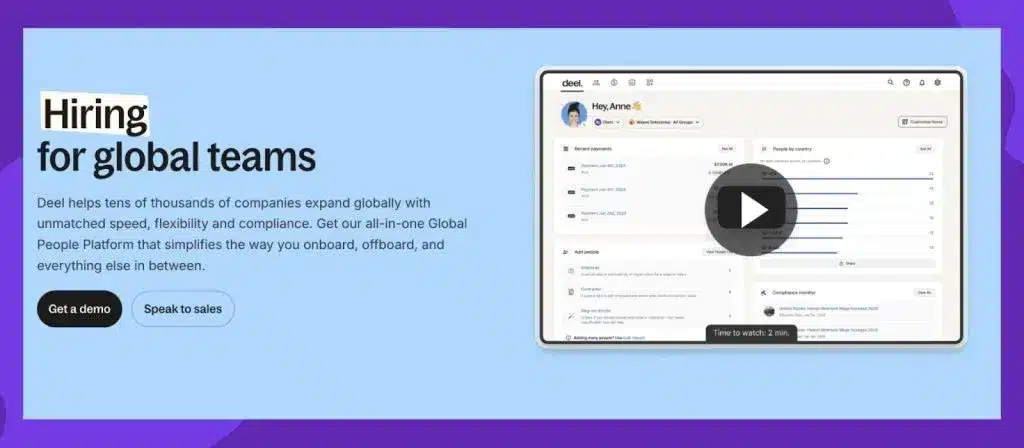
Deel is a specialized recruitment and employment platform focused on global hiring and compliance. The system enables organizations to recruit, onboard, and manage international employees and contractors without establishing local entities.
Key Features
Global Compliance Expertise: Deel provides country-specific employment contracts, tax documentation, and compliance guidance for 150+ countries. This legal infrastructure enables compliant hiring anywhere without local legal expertise.
International Payroll Processing: The platform handles multi-currency payments, tax withholding, and benefits administration for global teams. Its consolidated payment system simplifies what would otherwise be an extremely complex process.
Contractor Management: Deel offers specialized tools for managing international contractors, including compliant agreements, automated payments, and misclassification risk assessment.
Pricing
Deel offers customized pricing based on business requirements and company size.
11. ClearCompany
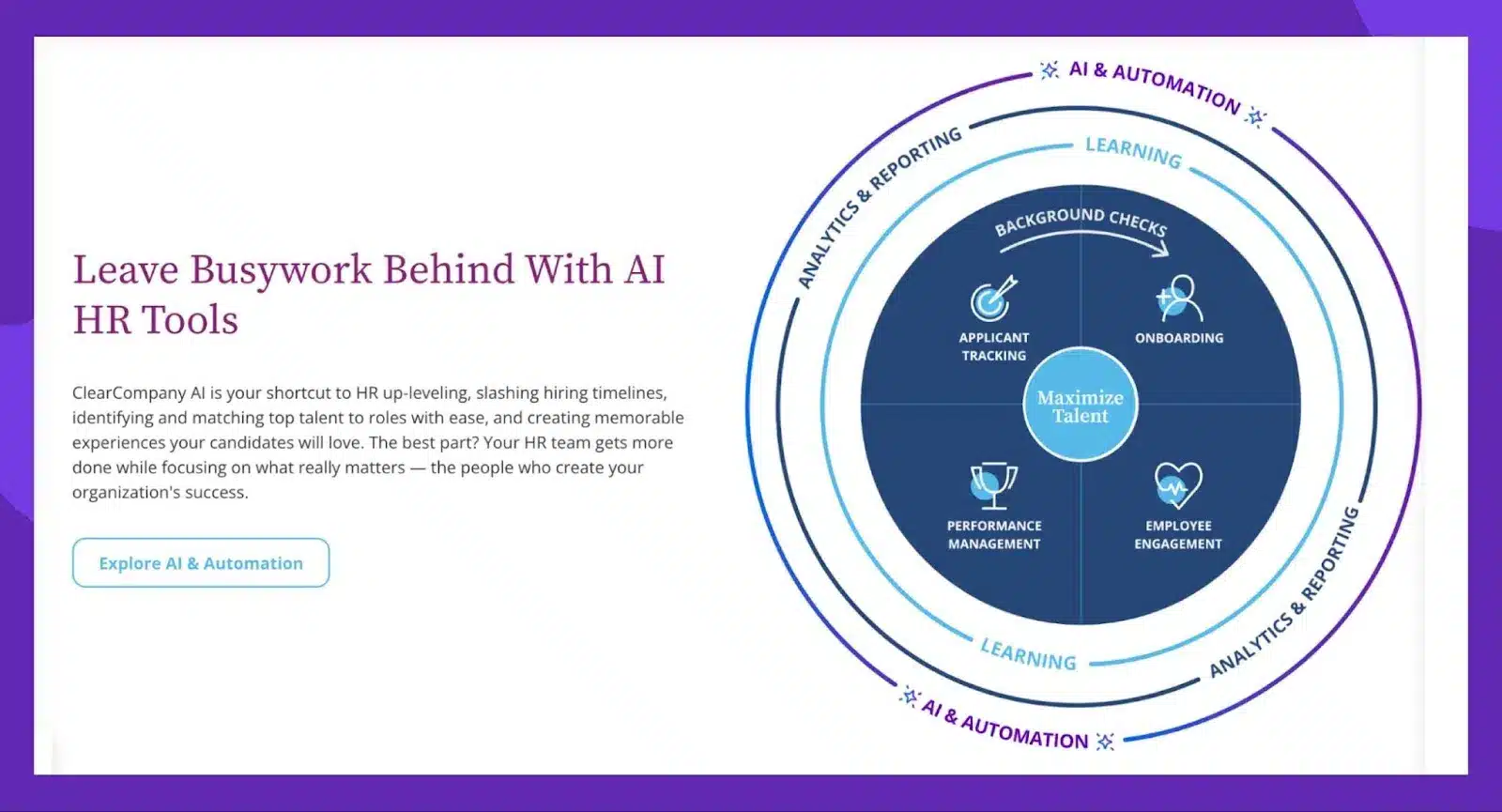
ClearCompany provides an integrated talent management platform that connects recruitment with performance management, engagement, and retention. This comprehensive approach enables organizations to align hiring decisions with long-term talent objectives and company goals.
Key Features
Strategic Hiring Alignment: ClearCompany helps organizations connect recruitment criteria with company goals and performance expectations. This strategic alignment ensures new hires have the capabilities needed for long-term success.
Candidate Engagement Automation: The platform includes sophisticated communication tools, including text messaging, personalized emails, and candidate portals. These engagement features create a responsive, transparent hiring experience.
Paperless Onboarding: ClearCompany streamlines the transition from candidate to employee with digital document management, task automation, and guided onboarding experiences. The system’s mobile-friendly design facilitates completion from any device.
Pricing
ClearCompany offers modular pricing based on selected functionality and organization size. Companies can choose from Recruitment, Onboarding, Performance Management, or complete platform licensing. Enterprise implementations typically range from $25,000 to $60,000 annually depending on scope and employee count.
12. SeekOut
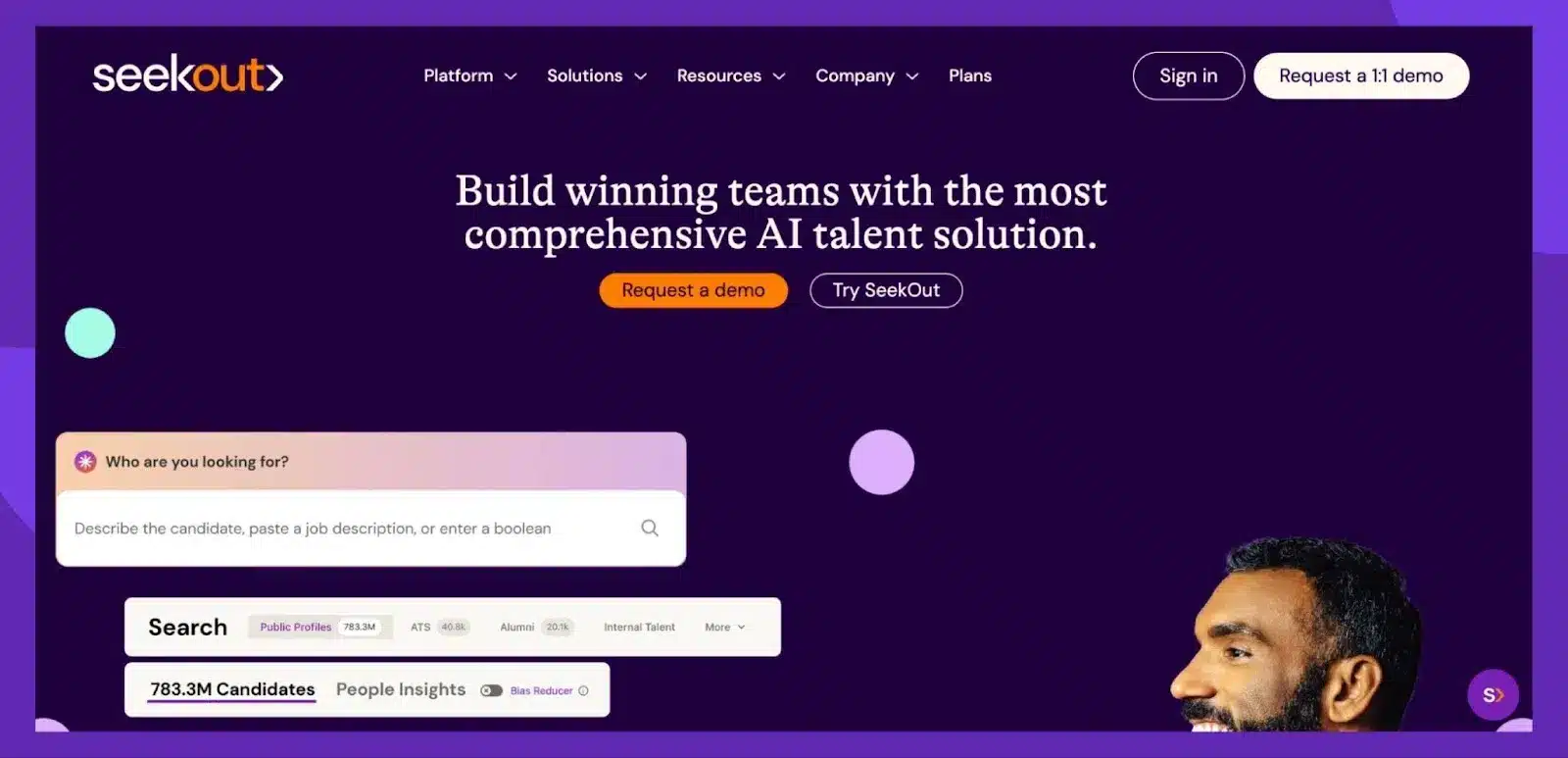
SeekOut is a specialized talent intelligence platform focused on advanced candidate sourcing and market analysis. Unlike traditional applicant tracking systems, SeekOut empowers proactive talent acquisition by uncovering qualified candidates who aren’t actively job hunting.
Key Features
AI-Powered Talent Search: SeekOut’s intelligent search capabilities go beyond keywords to understand skills, experience, and potential. Its natural language processing identifies candidates based on actual capabilities rather than just matching terms.
Comprehensive Talent Profiles: The platform aggregates candidate information from multiple sources, including professional networks, publications, projects, and public datasets. These enriched profiles provide deeper insights than traditional resumes.
Diversity Sourcing Tools: SeekOut includes specialized functionality for identifying diverse candidates across various dimensions including gender, ethnicity, and veteran status. These capabilities help organizations build more representative talent pipelines.
Pricing
SeekOut implements custom enterprise pricing based on users, search volume, and selected features. Their packages include Standard for basic sourcing, Professional for advanced search and analytics, and Enterprise for complete talent intelligence with custom integrations.
13. Fetcher
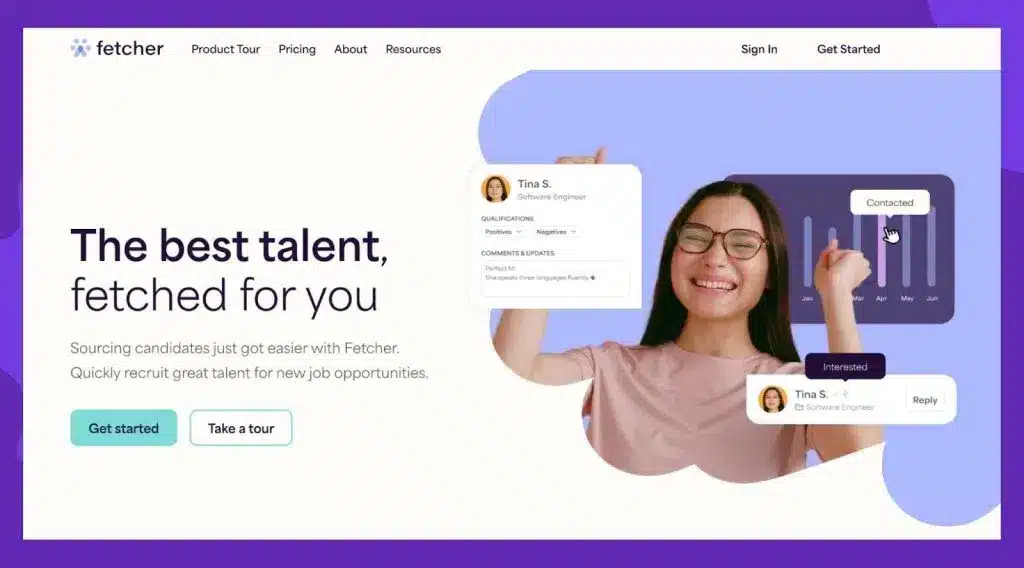
Fetcher combines AI-powered candidate sourcing with automated outreach capabilities to create a continuous pipeline of qualified talent. The platform focuses on reducing manual sourcing efforts while increasing candidate engagement.
Key Features
Automated Candidate Discovery: Fetcher’s AI continuously searches multiple sources to identify candidates matching specific role requirements. This automated sourcing dramatically reduces the time recruiters spend on manual search.
Personalized Outreach Campaigns: The platform includes sophisticated email sequence capabilities with personalization, optimal timing, and response tracking. These automated campaigns maintain a consistent outreach cadence without manual effort.
Diversity Sourcing: Fetcher’s algorithms incorporate diversity parameters that help organizations build more inclusive talent pipelines. The system provides transparency into pipeline diversity metrics throughout the sourcing process.
Pricing
Fetcher offers custom pricing based on hiring volume, selected features, and contract length. Their packages typically include Basic for essential sourcing, Standard for automated outreach, and Enterprise for complete recruitment pipeline automation.
14. Pinpoint
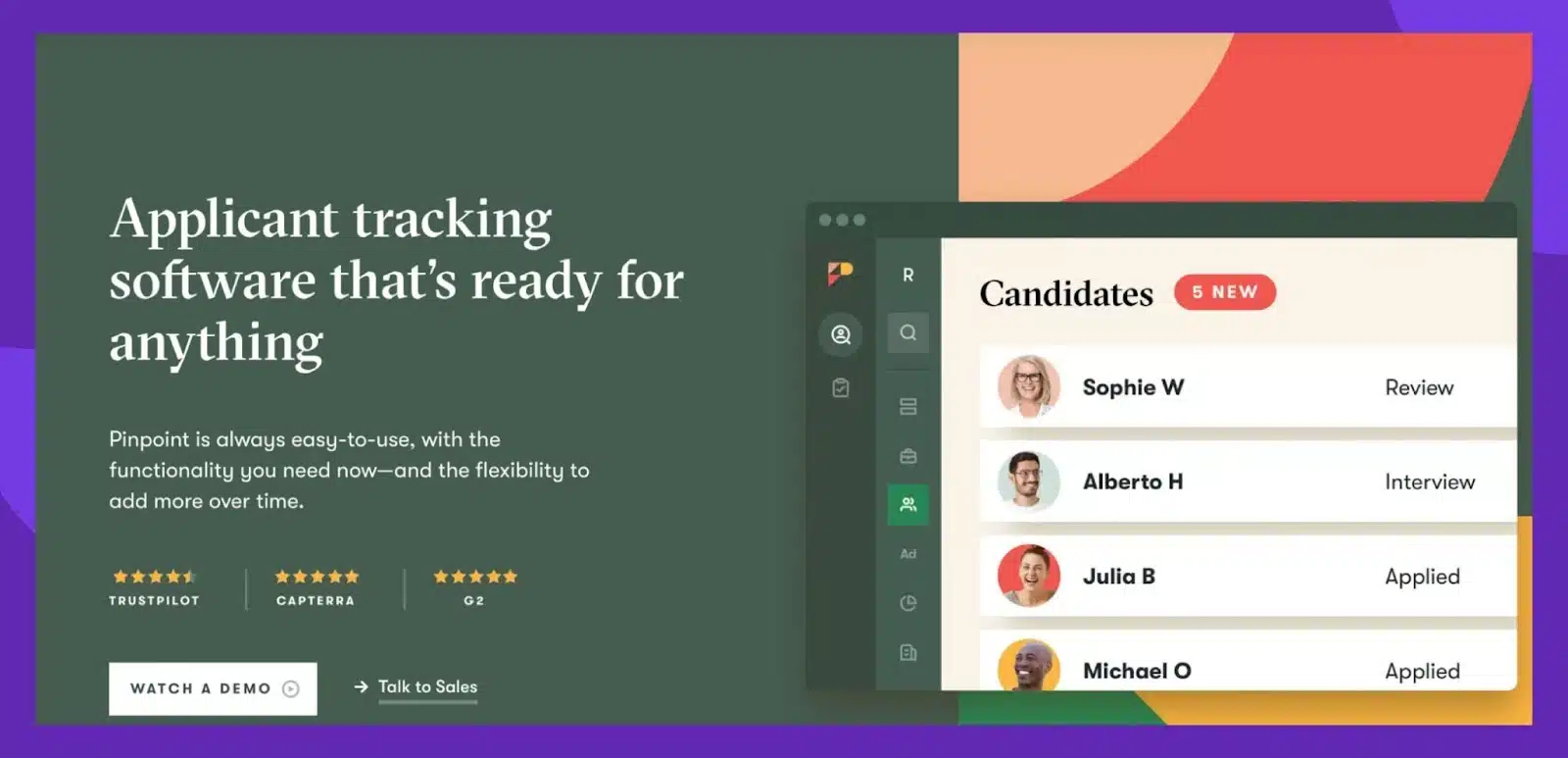
Pinpoint delivers a comprehensive applicant tracking system with a particular focus on candidate experience and inclusive hiring practices. The platform combines powerful automation with thoughtful design to create efficient, engaging recruitment processes.
Key Features
Candidate-Centric Application: Pinpoint provides a streamlined, mobile-friendly application process that respects candidates’ time and preferences. Its intuitive interface and progress saving features significantly improve completion rates.
Inclusive Hiring Tools: The platform includes features specifically designed to reduce bias, including blind screening options, structured assessment criteria, and inclusive language guidance.
Automated Communication: Pinpoint offers sophisticated candidate messaging with personalized templates, scheduled updates, and response tracking.
Pricing
Pinpoint’s pricing is customizable and can be enquired via a call with the sales team.
15. WorkBright
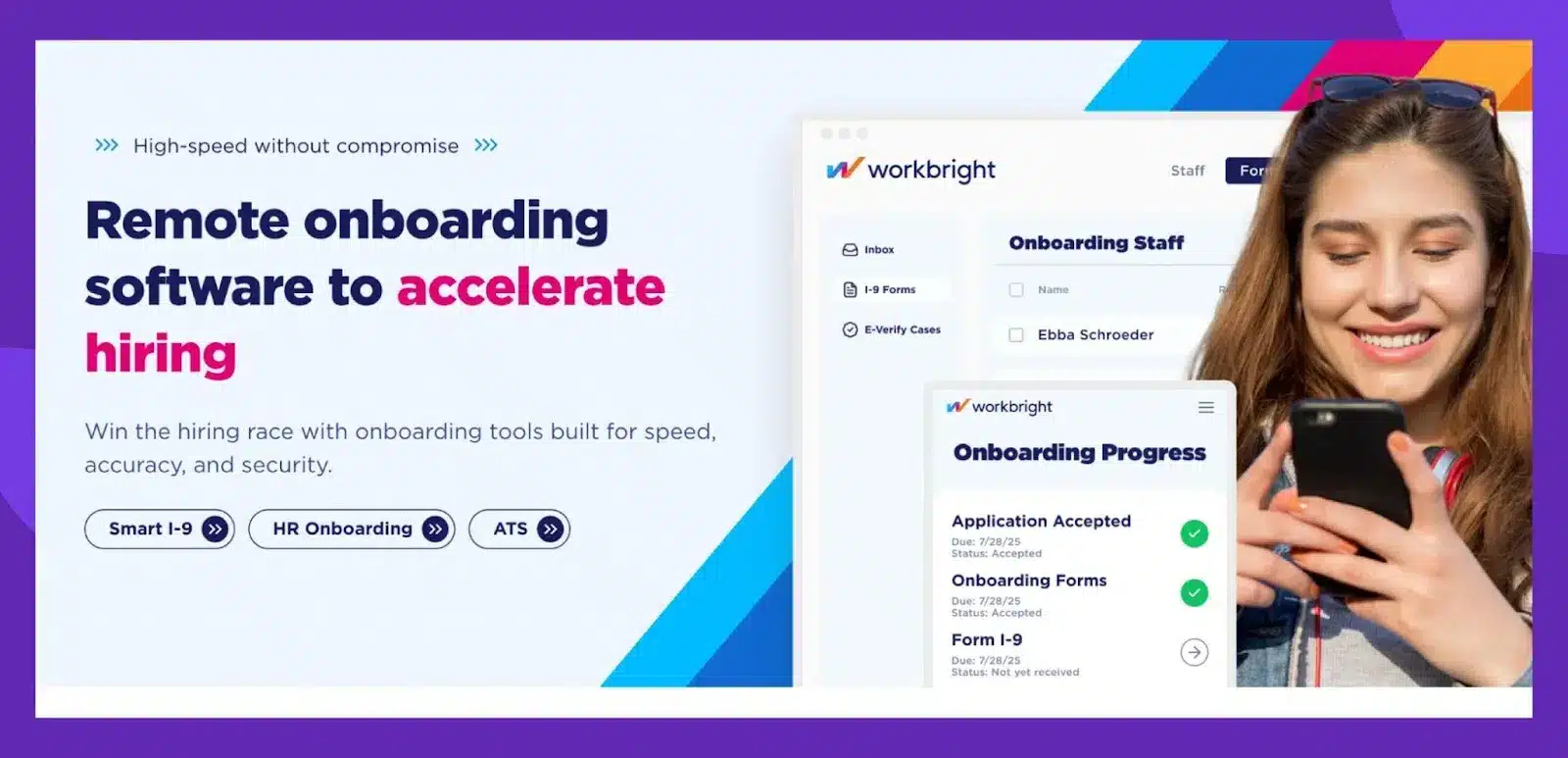
WorkBright is a specialized onboarding platform that transforms the critical transition from candidate to employee. Unlike general applicant tracking systems, WorkBright focuses exclusively on streamlining the post-hire paperwork and preparation process.
Key Features
Digital Document Management: WorkBright provides comprehensive tools for collecting, verifying, and storing employee documentation. Its intelligent form technology ensures accuracy and completeness while reducing manual review.
Mobile-First Experience: The platform’s responsive design allows new hires to complete onboarding tasks from any device, including document uploads via smartphone camera. This accessibility dramatically improves completion rates and time-to-productivity.
Compliance Automation: WorkBright includes built-in compliance features for I-9 verification, tax documentation, and industry-specific requirements. These automated checks reduce administrative burden while ensuring regulatory adherence.
Pricing
WorkBright implements user-based pricing. Enterprise packages include additional features like SSO, custom integrations, and advanced reporting. Volume-based discounts are available for organizations with high onboarding volume or seasonal hiring peaks.
16. Tracker
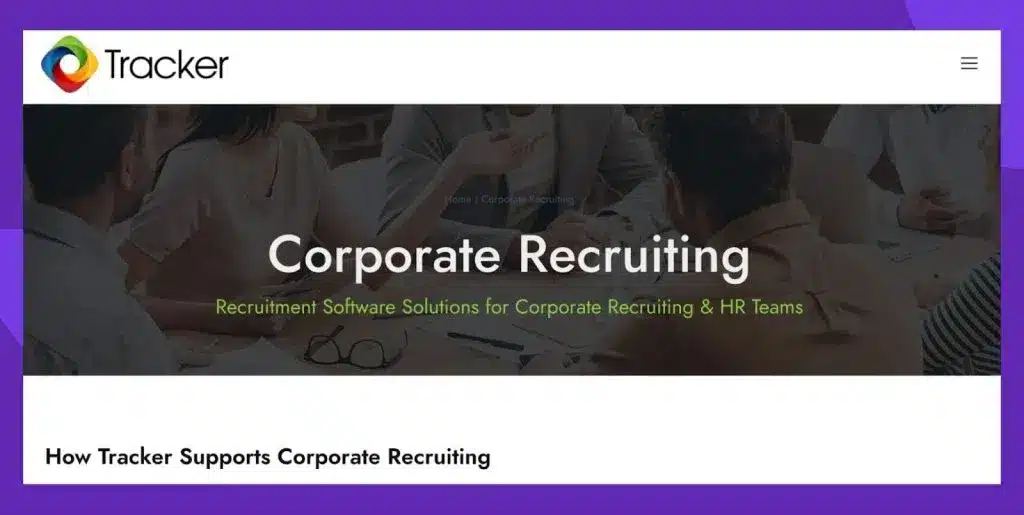
Tracker offers an integrated recruitment platform specifically designed for staffing agencies and recruiting firms. The system combines applicant tracking, client relationship management, and business operations tools in a unified solution.
Key Features
Unified ATS/CRM: Tracker seamlessly connects candidate management with client relationships, providing a complete view of recruitment activities. This integration eliminates the traditional divide between sales and recruitment functions.
Automated Job Distribution: The platform includes sophisticated job posting capabilities across multiple boards, social media, and career sites. Its automated matching suggests qualified candidates from the existing database for new job orders.
Placement Management: Tracker provides comprehensive tools for managing the placement process, including offer generation, credential verification, and start date coordination. These features ensure smooth transitions from candidate to placed employee.
Pricing
Tracker provides flexible pricing based on user count and selected modules.
17. BambooHR
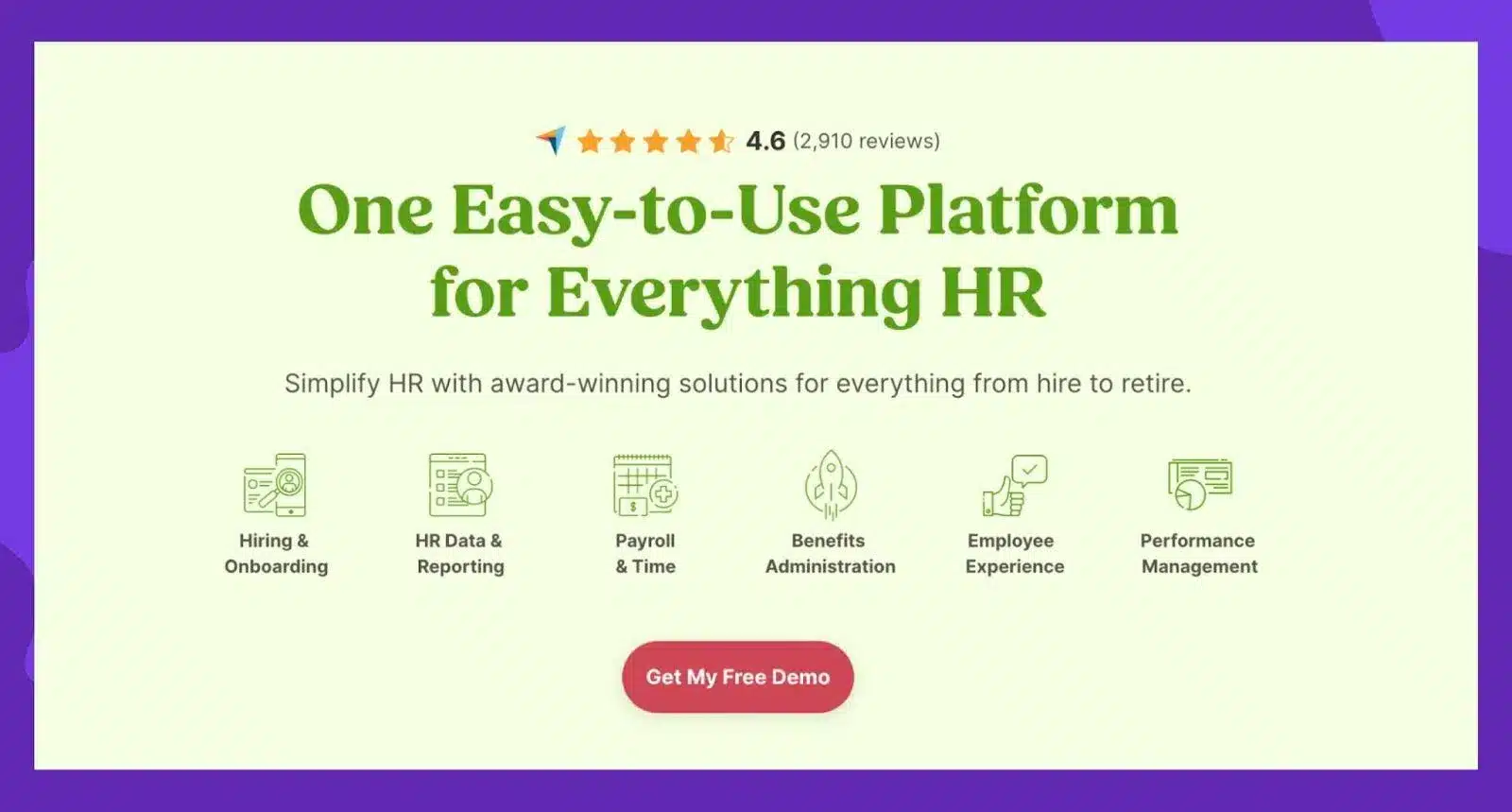
BambooHR delivers an integrated HR platform that connects recruitment with comprehensive employee management. Popular with mid-sized organizations, the system combines applicant tracking with onboarding, performance management, and HRIS functionality.
Key Features
Streamlined Applicant Tracking: BambooHR offers intuitive tools for job posting, application management, and collaborative hiring. Its user-friendly interface requires minimal training while still providing sophisticated workflow capabilities.
Seamless Onboarding Transition: The platform provides a smooth handoff from recruitment to employment with digital paperwork, automated welcome sequences, and structured onboarding plans. This continuity eliminates the common gaps between hiring and productivity.
Integrated Employee Records: BambooHR maintains a unified system of record for all employee information from application data through employment history. This central repository eliminates redundant data entry and provides a complete employee view.
Pricing
The pricing isn’t publicly available.
18. LeverTRM
LeverTRM pioneered the Talent Relationship Management approach, combining traditional applicant tracking with CRM capabilities and engagement tools. The platform emphasizes relationship building throughout the candidate journey, helping organizations create talent communities rather than transactional application processes.
Key Features
Proactive Sourcing Tools: LeverTRM provides sophisticated capabilities for identifying and engaging passive candidates. Its Chrome extension, email integration, and referral portal expand talent pools beyond active applicants.
Relationship Intelligence: The platform tracks all candidate interactions across multiple channels and team members, building comprehensive relationship timelines. This unified view prevents communication gaps and improves candidate experience.
Two-Way Integration Ecosystem: LeverTRM connects seamlessly with 150+ technology partners for assessments, background checks, HRIS systems, and more. These deep integrations enable data flow while maintaining Lever as the recruitment hub.
Pricing
LeverTRM pricing depends on the size of the company and the specific needs of the business.
19. LinkedIn Recruiter
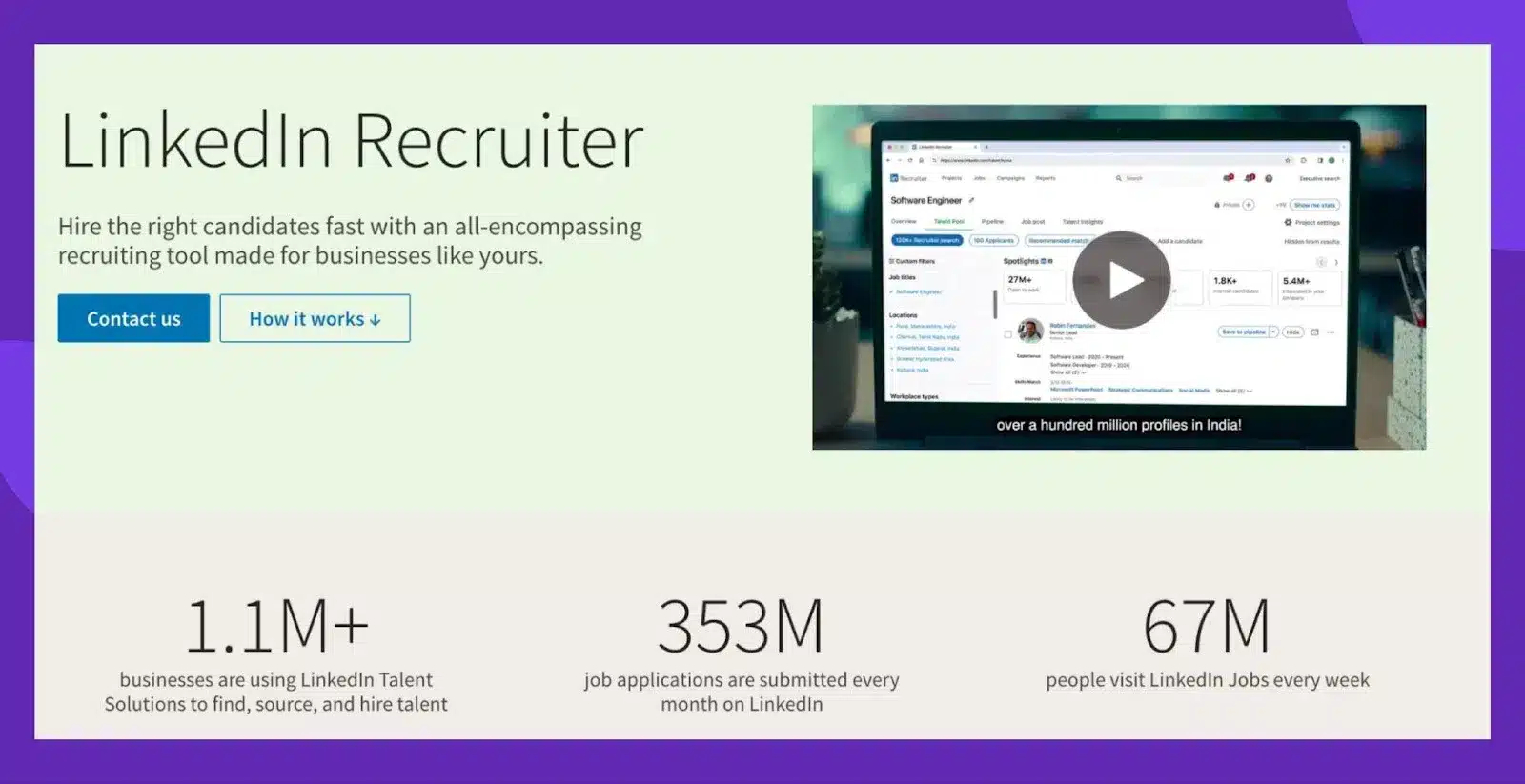
LinkedIn Recruiter provides direct access to the world’s largest professional network, with over 900 million members across industries and geographies. The platform combines sophisticated search capabilities with candidate engagement tools and pipeline management.
Key Features
Advanced Search Technology: LinkedIn Recruiter offers powerful search functionality with 40+ filters including skills, experience, education, and company background. Its intelligent algorithms suggest additional qualifications and candidates based on search patterns.
InMail Messaging: The platform provides dedicated recruitment messaging channels that reach candidates directly, even those outside your network. These messages achieve significantly higher response rates than traditional emails for cold outreach.
Talent Pipeline Management: LinkedIn Recruiter includes sophisticated tools for organizing candidates, tracking engagement, and managing long-term talent relationships. Its project-based structure helps teams collaborate on specific hiring initiatives.
Pricing
LinkedIn Recruiter offers tiered solutions for different business needs. Recruiter Lite (entry-level) costs $170/month for a single license or $1,680/year, with additional licenses (2-5) at $270/month or $2,670/year each. Recruiter Corporate (full-featured) and Recruiter Professional Services (for staffing firms) require contacting LinkedIn’s sales team for custom pricing.
20. Eightfold AI
Eightfold AI is a talent intelligence platform that uses artificial intelligence to help organizations with their talent acquisition and management processes. The platform is designed to understand the relationship between skills, roles, and career trajectories through data analysis.
Key Features
AI Talent Intelligence: Eightfold’s AI technology analyzes employment data to identify potential candidates based on their skills and capabilities. The system goes beyond keyword matching to understand how different skills relate to various roles.
Skills Cloud: The platform maintains a taxonomy of skills across industries and functions. This framework helps with matching candidates to positions based on their skill sets and identifying potential development areas.
Career Pathing Intelligence: Eightfold provides insights on typical progression paths between different roles and skills. This functionality can be used for both recruiting external candidates and planning internal career development.
Pricing
Eightfold AI implements enterprise pricing based on employee count, modules selected, and implementation scope. Their platform includes Talent Acquisition, Talent Management, and Talent Experience modules that can be licensed separately or as a complete suite.
Now that we’ve discussed the 20 top tools, let’s have a closer look at the features you MUST look for in these tools.
Must-Have Features in Modern Enterprise Recruitment Software
When evaluating enterprise recruitment platforms, focus on these critical features that directly impact your hiring success:
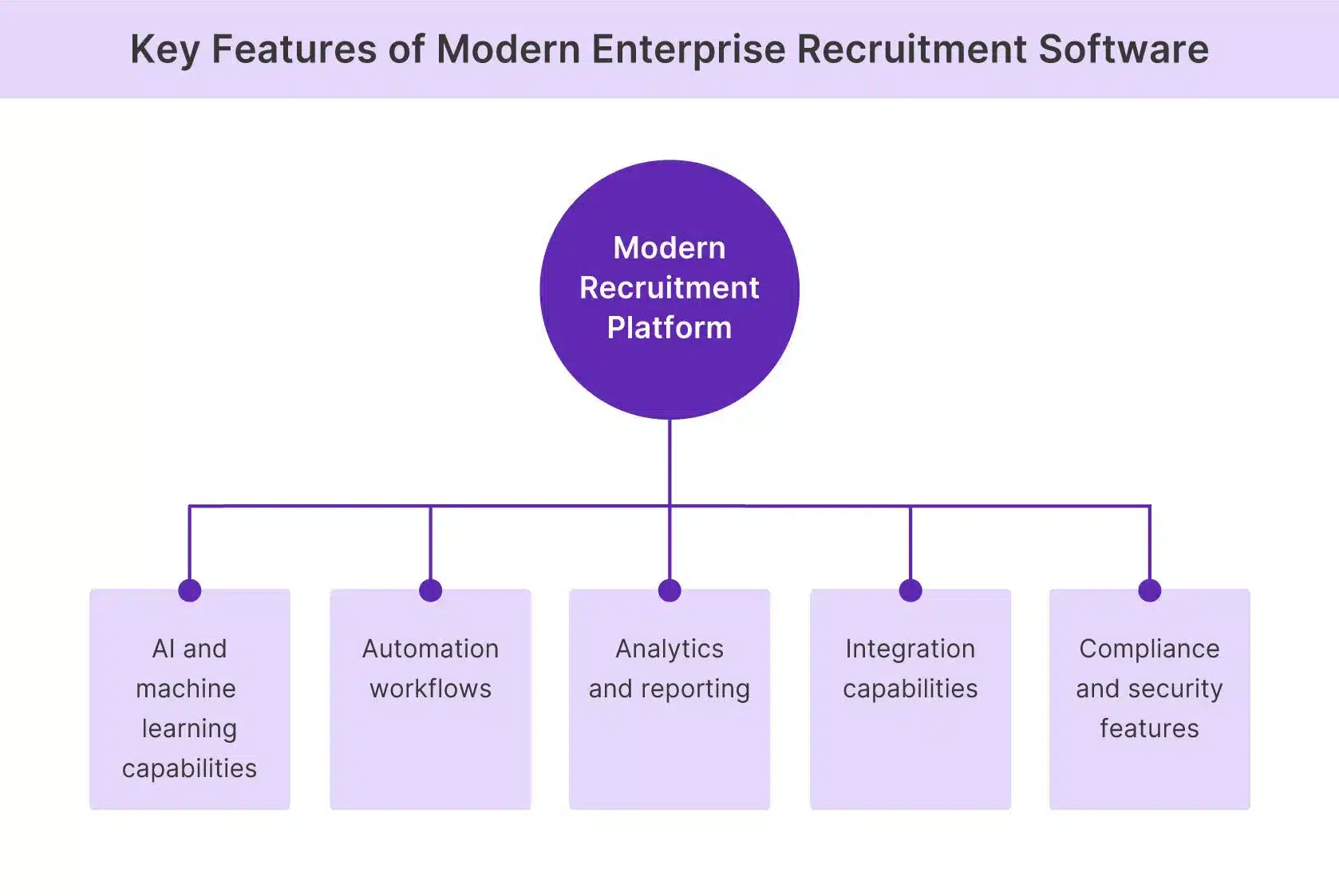
01. AI and Machine Learning Capabilities
At its best, AI turns your recruitment platform from a tracking system into a strategic partner. It should amplify your recruiters’ capabilities, eliminate repetitive decisions, and surface insights that humans might miss. When evaluating AI features, look beyond the buzzwords to capabilities that actually improve hiring outcomes.
Key checkpoints:
- Resume screening that catches potential beyond keywords
- Job description optimization that improves response rates
- Candidate matching that learns from your successful hires
- Bias detection in job posts and screening decisions
- Smart rankings based on actual hire success patterns
02. Automation Workflows
A well-designed automation system transforms how your team works. The right workflows eliminate administrative burden while preserving the human touch in critical moments. Your platform should handle routine tasks intelligently, freeing your recruiters to focus on building relationships and making strategic decisions.
Must-test workflows:
- One-click job post distribution across channels
- Smart interview scheduling that respects everyone’s calendar
- Automated (but personalized) candidate communications
- Document collection and verification workflows
- Offer letter approval and generation
Did you know, Peoplebox.ai has 50+ automated workflows that will help you hire smarter, faster, and better. Want to experience the future of recruitment? Get in touch with us today!
03. Analytics and Reporting
Modern recruitment analytics should tell you not just what happened, but why it happened and what to do next. Your platform needs to turn hiring data into actionable insights that drive better decisions. Look for systems that surface meaningful patterns and help predict hiring outcomes.
Here are some essential metrics to track:
| Metric | Description | Importance |
| Time to Hire | Average days from job posting to candidate acceptance. | Measures hiring efficiency. |
| Cost per Hire | Total expense to fill a position, including advertising and agency fees. | Assesses financial efficiency. |
| Quality of Hire | Performance and fit of new hires, often measured through reviews and retention. | Evaluates hiring effectiveness. |
| Source Performance | Effectiveness of sourcing channels by quality and quantity. | Helps optimize recruitment channels. |
| Applicant to Hire Ratio | Number of applicants per hire. | Indicates competition for roles. |
| Offer Acceptance Rate | Percentage of accepted job offers. | Reflects attractiveness of job offers. |
| First-Year Retention | Percentage of new hires retained after one year. | Measures long-term hiring success. |
| Recruiter Productivity | Effectiveness and efficiency of recruiters. | Assesses recruiter performance. |
| Diversity Data | Representation of diverse groups throughout the hiring process. | Ensures inclusive hiring practices. |
| Real-time Pipeline Health | Current status of candidates in the hiring process. | Facilitates timely decision-making. |
| Interview-to-Hire Ratio | Number of interviews conducted per hire. | Evaluates screening process effectiveness. |
| Applicant Satisfaction Rate | Candidates’ satisfaction with the recruitment experience. | Enhances candidate experience. |
| Employee Turnover Rate | Percentage of employees leaving the company over a period. | Identifies retention challenges. |
| Sourcing Channel Efficiency | Effectiveness of different sourcing methods (e.g., job boards, referrals). | Optimizes recruitment strategies. |
| Hiring Manager Satisfaction | Satisfaction of hiring managers with the recruitment process. | Ensures alignment with business needs. |
04. Integration Capabilities
Enterprise hiring requires seamless collaboration across multiple systems and teams. Your recruitment platform should act as a central hub, connecting smoothly with your existing tools while maintaining data integrity and user experience. The best integrations work so well you forget they’re there.
| Integration Type | Description |
| Core HR Systems | Integrations with HR information systems, payroll, performance management, learning management, and employee engagement platforms. |
| Communication & Collaboration | Integrations with calendar systems, email platforms, team messaging apps, video conferencing tools, and project management software. |
| Screening & Assessment | Integrations with background check providers, skills assessment platforms, video interviewing tools, coding assessment platforms, and reference checking systems. |
| Document Management | Integrations with e-signature platforms, document storage solutions, contract management systems, compliance tracking tools, and content management systems. |
| Job Advertising & Sourcing | Integrations with job boards, social media platforms, programmatic job advertising tools, career site builders, and recruitment marketing platforms. |
| Analytics & Reporting | Integrations with business intelligence tools, data warehouses, analytics platforms, custom reporting tools, and market intelligence platforms. |
| Specialized Tools | Integrations with vendor management systems, immigration management tools, interview scheduling platforms, talent communities, and employee referral platforms. |
05. Compliance and Security Features
Today compliance and security aren’t just checkboxes, they’re critical business functions. Your platform should make it easy to maintain compliance across regions while protecting sensitive data. The best systems build these protections into the natural workflow, not as friction points.
The best platform isn’t the one with the most features: it’s the one that makes your team more effective every day. Test these features with real scenarios, not demo data. Wondering
How to Choose the Right Enterprise Recruitment Software?
Finding the perfect enterprise recruitment software requires careful evaluation beyond feature checklists. Here’s a practical framework to guide your decision.
⚙️ Define Your Requirements First
Before diving into vendor demos and feature comparisons, you need clarity on what problems you’re actually trying to solve. Many organizations make the mistake of starting with vendor capabilities rather than their own needs. Let’s begin with a focused self-assessment to understand exactly what your organization needs.
Start with this 15-minute exercise:
- List your 3 biggest recruiting bottlenecks (e.g., “screening 500+ resumes per role”)
- Calculate hours spent on manual tasks weekly (e.g., “4 hours on interview scheduling”)
- Document your tech stack with integration needs (e.g., “Must sync with Workday HRIS”)
- Note your hiring scale (e.g., “2000 hires/year across 12 countries”)
You should be able to answer these questions:
- What are your current hiring bottlenecks and pain points?
- Which manual processes consume most of your recruiters’ time?
- How many hires do you make annually across different roles and regions?
- What existing HR systems must the new software integrate with?
- What are your data security and compliance requirements?
✅ Vendor Evaluation Checklist
With your requirements clear, it’s time to evaluate vendors. But rather than sitting through polished sales presentations, you need to dig deeper. Most software looks great in a standard demo. The key is to ask specific, scenario-based questions that reveal how the software will actually perform in your environment.
Technical Integration & Scalability
- Walk me through exactly how your system integrates with [your HRIS]. What data flows between systems?
- Show me how the system handles a sudden 3x increase in job openings.
- What happens if we need to add a new office in [region] next year?
Security & Compliance
- What encryption standards do you use for candidate data?
- How do you handle GDPR/CCPA compliance for international hiring?
- Can you share your latest security audit results and certifications?
Support & Training
- What’s your average response time for urgent technical issues?
- Do you provide dedicated support staff who understand enterprise recruiting?
- Show me your training materials and onboarding process for new users.
Want these questions answered ASAP? Talk to our team today!
Implementation Checklist
The implementation phase is where most enterprise software projects succeed or fail. Before signing any contracts, ensure you have concrete commitments and clear documentation for every critical aspect of the rollout.
Get written confirmation on:
Project Timeline & Milestones
- Detailed data migration schedule with testing phases
- Integration development and testing deadlines
- Configuration and customization timelines
- User acceptance testing periods
- Go-live date guarantees
Training & Support
- Training schedule for each user type (recruiters, hiring managers, admins)
- Train-the-trainer program details
- Support team availability during rollout
- Post-implementation support coverage
- Knowledge base and documentation access
Technical Scope
- Custom configuration specifications
- Integration development requirements
- migration scope and format
- report development
- setup and testing
Now that you know how to implement an enterprise recruitment software successfully, let’s discuss why Peoplebox.ai is the ultimate solution you need.
Why Peoplebox.ai is the Clear Winner
When comparing the enterprise recruitment solutions we’ve reviewed, Peoplebox.ai stands out through its comprehensive approach to talent management. By connecting recruitment with performance management and employee development in one platform, it eliminates the data silos that typically separate these functions.
Ready to see the difference for yourself? Schedule a personalized demo today and discover why leading enterprises trust Peoplebox.ai for their most critical hiring needs.
FAQs
What is enterprise recruitment software?
Enterprise recruitment software is a comprehensive platform designed to manage high-volume hiring needs across multiple locations, departments, and roles. Unlike basic applicant tracking systems, it includes advanced features for complex workflows, compliance management, and deep analytics.
How is enterprise recruitment software different from regular ATS?
While regular ATS focuses primarily on tracking applications, enterprise recruitment software offers significantly more capabilities:
- Handles complex approval workflows across departments
- Provides advanced analytics and forecasting
- Supports high-volume hiring across multiple locations
- Offers robust compliance and security features
- Enables sophisticated integration with existing HR systems
- Includes AI-powered candidate screening and match
How much does enterprise recruitment software cost?
Enterprise recruitment software typically costs between $10,000 to $100,000+ annually, depending on organization size and requirements. The cost structure usually includes:
- Base platform fee
- Per-user licensing costs
- Implementation and training fees
- Integration development costs
- Optional module fees
Companies like Peoplebox.ai often provide custom pricing. Check it here.
How long does it take to implement enterprise recruitment software?
Implementation of an enterprise recruitment software typically takes 2-4 months, depending on complexity and customization needs.
Which enterprise recruitment software is best for large companies?
Peoplebox.ai stands out as the leading solution for large enterprises due to its advanced AI capabilities and highly customizable workflows. The platform excels in handling complex hiring processes, offering powerful analytics, and providing seamless integration with existing HR systems. Its robust security features and dedicated enterprise support make it particularly suitable for large-scale operations.
Can enterprise recruitment software integrate with existing HR tools?
Yes, most enterprise recruitment platforms offer extensive integration capabilities with HRIS systems as well as background check providers, assessment platforms, video interviewing tools, job boards, career sites, and employee onboarding systems. These integrations ensure smooth data flow and process automation across the entire HR technology stack.
What are the benefits of enterprise recruitment software?
Enterprise recruitment software delivers significant improvements across the hiring process. Organizations typically see reduced time-to-hire by 30-50% and improved quality of hire through consistent processes. The software enhances candidate experience with automated communications while ensuring compliance and risk management. It enables data-driven hiring decisions, increases recruiter productivity, and creates a streamlined hiring manager experience.
What training is required for enterprise recruitment software?
Training requirements vary by user role, with recruiters typically needing 4-8 hours of system training, hiring managers requiring 1-2 hours of basic training, and administrators needing 8-16 hours of advanced training. Ongoing system maintenance training usually takes 2-4 hours monthly.
TABLE OF CONTENTS
RELEVANT ARTICLES
Our Customers Love us