


















Biswashree Roy

BLOG / Ai Interview, Blog
How Much Does It Cost to Post a Job on Indeed in 2026? (And How to Make That Spend Compound)
June 12, 2026
Expert Reviewed



Anyone thinking about posting jobs on Indeed runs into the same question early: how much does it cost to post a job on Indeed in 2026? The pricing breaks into four levers: free posts, sponsored jobs, the resume database, and subscription plans. Below is what each one costs, what’s included in each, and where the real Indeed bill hides.
If you’re hiring at scale, the second half of this guide is the part that moves the number on your invoice. It covers how to compound your Indeed spend instead of letting it evaporate.
How Much Does It Cost to Post a Job on Indeed: At a glance (2026)
| Lever | Cost | Best for | Minimum spend |
|---|---|---|---|
| Free job posts | $0 (up to 3/month) | Low-volume hiring, single roles | 30-day visibility |
| Sponsored Jobs – Standard | CPC, varies by role | Most active hiring | $5/day or $150/month |
| Sponsored Jobs – Premium | Higher CPC + targeting fees | Hard-to-fill or competitive roles | Custom |
| Resume Database – Standard | $120/month | Active outbound sourcing | 30 contact credits |
| Resume Database – Professional | $400/month | High-volume sourcing | 100 contact credits |
| Indeed Hiring Platform | Custom (not published) | Mid-market / enterprise teams | Contact sales |
Most employers touch at least two of these. The interesting question is what each one actually unlocks. That’s where most pricing guides stop.
What You Get with Each Indeed Tier
Indeed’s tiers are as much feature gates as price points. Here’s what each one actually gives you, from Indeed’s current employer documentation.
Free vs. Standard Sponsored vs. Premium Sponsored
| Feature | Free | Standard Sponsored | Premium Sponsored |
|---|---|---|---|
| Appears in relevant search results | ✓ | ✓ | ✓ |
| Employer Dashboard access | ✓ | ✓ | ✓ |
| Screener questions | ✓ | ✓ | ✓ |
| Indeed Apply integration | ✓ | ✓ | ✓ |
| Responsive Employer Badge | ✓ | ✓ | ✓ |
| Indeed Interview (virtual interviewing) | ✓ | ✓ | ✓ |
| Boosted visibility in search + alerts | : | ✓ | ✓ |
| Indeed homepage placement | : | ✓ | ✓ |
| Email notifications to relevant job seekers | : | ✓ | ✓ |
| Automated candidate messaging | : | ✓ | ✓ |
| Pay-for-performance budgeting | : | ✓ | ✓ |
| Advanced candidate + location targeting | : | : | ✓ |
| Proactive matching (invite candidates) | : | : | ✓ |
| “Urgently Hiring” label | : | : | ✓ |
| Company branding + visuals | : | : | ✓ |
| Available to staffing agencies | : | ✓ | ✓ |
Two things worth flagging.
Free posts still come with the core tools. Screener questions, Indeed Interview, and the Employer Dashboard are all included at no cost. The free tier’s limitation is purely on reach. Your posting sinks under sponsored listings within days.
Premium’s main upgrade is targeting. Standard already gives most teams 90% of what they need on a day-to-day basis. Premium layers on candidate targeting controls, proactive sourcing, and the “Urgently Hiring” badge. These are useful in competitive markets, less essential for hourly volume hiring.
Resume database tiers
| Feature | Standard ($120/mo) | Professional ($400/mo) |
|---|---|---|
| Monthly contact credits | 30 | 100 |
| Effective cost per contact | $4.00 | $4.00 |
| Search Indeed’s 245M+ candidate pool | ✓ | ✓ |
| Filter by location, skills, and experience | ✓ | ✓ |
| InMail-style direct contact | ✓ | ✓ |
| Best for | Targeted sourcing | High-volume outbound |
Per-contact cost is the same. The Professional plan just gives you more volume.
Indeed Hiring Platform
Indeed doesn’t publicly publish prices for its bundled Hiring Platform subscriptions.
Broadly plans bundle sponsored job credits, employer branding tools, and basic applicant management. Pricing scales with hiring volume. You’ll need a sales conversation to see your quote.
The PPA vs PPSA pricing model (and why older guides get this wrong)
Indeed changed its pricing in late 2023:
| Model | Status | When you’re charged | Default for |
|---|---|---|---|
| Pay-Per-Click (PPC) | Active | Candidate clicks your job | Daily budgets |
| Pay-Per-Started-Application (PPSA) | Active | Candidate clicks “Apply” | Monthly budgets |
| Pay-Per-Application (PPA) | Killed Dec 18, 2023 | Candidate completed an app | Deprecated |
What Indeed actually charges by role (third-party benchmarks)
Indeed doesn’t publish a CPC range. The figures below come from third-party 2026 benchmarks (Pin, Capterra, AdPredictor) across thousands of campaigns.
| Industry / Role | Typical CPC | Notes |
|---|---|---|
| Rural hourly / general labor | $0.10–$0.40 | Lowest-competition markets |
| Retail / QSR (hourly) | $0.50–$1.20 | High-supply roles |
| Skilled trades | $0.80–$1.80 | Demand-driven |
| Healthcare (non-RN) | $1.20–$2.50 | Shortage premium |
| Healthcare (RN, specialized) | $2.50–$5.00+ | Acute shortage markets |
| Tech / IT | $1.50–$4.00 | Major-metro premium |
| Logistics / warehouse | $0.60–$1.50 | Volume-dependent |
| Customer support | $0.50–$1.20 | High supply, high churn |
Your actual CPC is set by the auction at the moment of search. If your effective CPC is double the column for your industry, you’re being outbid, or your job’s relevance score is low.
Effective monthly Indeed spend by hiring volume
| Hiring profile | Typical monthly spend | What’s driving the cost |
|---|---|---|
| Micro-business (1–5 hires/year) | $0–$300 | Free tier, occasional sponsoring |
| SMB (1–3 hires/month) | $300–$1,000 | Daily budgets, single roles |
| Mid-market (4–15 hires/month) | $1,000–$5,000 | Multiple sponsored roles, mixed budgets |
| Staffing agency (small) | $2,000–$3,000 | 100% paid, recurring portfolio |
| Staffing agency (large) | $5,000–$15,000+ | Large portfolio, premium tiers, resume database |
| High-volume hourly (40+ locations) | $4,000–$8,000+ | Decentralized hiring across regions |
Now you know what the published bill looks like. The bigger question is what the real bill looks like.
Why Indeed’s sticker price isn’t your real cost-per-hire
Take a scenario. A mid-sized company is hiring an Operations Coordinator in a big US city. They spend $800/month on Sponsored Jobs. That brings in about 320 applications in 30 days.
The actual cost stack:
| Stage | Volume | Recruiter time | Loaded cost |
|---|---|---|---|
| Indeed spend | 320 applications | : | $800 |
| Resume screening | 320 × 4 min | 21 hrs | $1,050 |
| Phone screens | 60 × 25 min | 25 hrs | $1,250 |
| Hiring manager interviews | 12 candidates | : | (manager time not loaded) |
| Onsites | 4 candidates | : | (manager time not loaded) |
| Hires | 1 | : | : |
| Total all-in | ~$3,100 |
The Indeed CPC is the cheapest line. Recruiter screening labor is 3x larger.
And as the labor market loosens, more people apply to every job. More applications mean more screening hours. But the number of hires doesn’t go up at the same rate, because recruiters can’t get through everyone. Your Indeed bill could stay flat while your actual cost per hire climbs by 40% in a year. Most TA dashboards won’t catch it.
Three hidden costs that don’t appear on your Indeed invoice
| Hidden cost | What it is | Impact on your bill |
|---|---|---|
| Time-to-respond decay | Candidates ghost when recruiters take >24 hours to reach out | If 30% ghost before contact, you’ve overpaid CPC by 43% |
| Re-listing creep | Roles that don’t fill in 30 days get re-sponsored | Doubles or triples line item per hire |
| Recruiter opportunity cost | Triage time taken from sourcing harder-to-fill roles | The 10% of roles Indeed can’t fill go unsourced |
Add these to the screening cost. The CPC is the cheapest part of the bill. The hidden costs are 3–4 times higher. They grow with every extra application you receive, no matter what you paid Indeed.
Why Indeed is Expensive
| Pattern | Profile | Monthly Indeed spend | The trap |
|---|---|---|---|
| Multi-unit operator | 40–80 locations, shift leads + crew | $4,000–$6,000 | No coordinated budget; managers too busy to screen within 48 hours; 3-week re-sponsoring cycles |
| Mid-market healthcare | Nurses, MAs, technicians in shortage markets | $1,500–$2,500/role | CPC $1.20–$3.00; 40–80 apps/role; only 15 licensed in-state; cost-per-hire $4,000+ |
| Staffing agency | Light industrial, skilled trades, admin | $2,000–$3,000 (small) to $5,000+ (large) | 500–700 calls/week; recruiters screen only 30–40/week; 90% of paid traffic ages out unscreened |
If this sounds like your team, look at what happens after applicants come in. That’s where the cost is hiding. Indeed, it isn’t the first thing to fix.
How Peoplebox Nova can help you reduce the overall costs
You can negotiate your CPC down. You can re-bid. You can switch tiers. None of that fixes the real problem. Every application Indeed sends you costs your recruiters 10–15 minutes of screening time. That’s before they even know if the candidate is worth interviewing.
That’s where the bill keeps growing, no matter what Indeed charges per click.
To bring the total cost down, you have to stop spending recruiter time on candidates who were never going to be hired. That’s what Peoplebox Nova was built to do.
What Peoplebox Nova is
Nova is Peoplebox’s AI interviewer. It sits between your Indeed posting and your recruiter’s calendar.
Every candidate who applies through Indeed lands on your career page first. Nova talks to them in a human-like conversation, over chat, text, phone, or video, before they ever reach a recruiter.
What Nova actually does
- Engages every applicant in a human-like conversation on their preferred channel.
- Runs your knockout questions first (availability, licensing, location, transport) so unqualified candidates never reach a recruiter.
- Politely declines candidates who don’t pass the must-haves, without telling them why, so they can’t retry with a different answer.
- Scores every interview against the criteria you set, with the full transcript saved for review.
- Books qualified candidates directly onto your hiring manager’s calendar.
How does this immediately cut your Indeed bill
Take a real example. An organization spending $2,600/month on Indeed for hourly roles gets around 600 inbound applications a week. The recruiter team can only screen 30–40 of them. The other 540 age out unscreened.
That means roughly 90% of the Indeed spend produces nothing.
With Nova running the front of the funnel, every one of those 600 candidates is screened the moment they apply. The recruiter only sees the ones who passed the knockouts and scored well.
| Metric | Without Nova | With Nova |
|---|---|---|
| Indeed spend | $2,600/mo | $2,600/mo |
| Inbound applicants | 600/week | 600/week |
| Applicants actually screened | ~6% | 100% |
| Recruiter time on first screens | ~30 hrs/week | <3 hrs/week |
| Time-to-first-conversation | 4–7 days | <1 hour |
| Pre-screen-to-decision time | 4–6 weeks | One conversation |
Same Indeed bill. Every candidate gets evaluated. 90%+ of recruiter screening time freed up.
How your Indeed spend starts compounding with Nova
Most teams pay Indeed every month for the same kind of role, over and over. A warehouse hire in March means a new Indeed post for the next warehouse opening in May. Same money, different candidate.
Nova changes that loop.
Every candidate Nova talks to gets saved into a searchable, scored talent pool tied to your career page. That includes candidates who didn’t fit the role they applied for. The next time you have a similar opening, you start by looking through the people you’ve already screened, not by paying Indeed again.
For organizations placing 40–60 people a month, the pool grows fast:
- Month 0–3: Build the pool. Screen ~600 candidates a month through Nova.
- Month 6: Pool hits ~4,000 candidates. A meaningful share of placements starts coming from re-engagement.
- Month 12: Pool exceeds 7,000 candidates. Indeed becomes a top-up channel, not the main source.
In plain terms, you stop paying Indeed for the same kind of candidate twice.
Want to see what this looks like on your own career page? [Book a 15-minute Peoplebox Nova walkthrough.]
When Indeed is still the right channel (and when it isn’t)
| Role type | Indeed fit | Why |
|---|---|---|
| Hourly retail / QSR | Excellent | High volume, supply outstrips demand |
| Frontline / warehouse | Excellent | Largest active candidate pool |
| Hospitality | Excellent | Strong inbound volume |
| Light industrial | Excellent | Cost-effective at scale |
| Admin / clerical | Good | Decent supply, predictable CPC |
| Mid-level professional | Mixed | LinkedIn often better |
| Senior engineering | Poor | Passive candidates won’t apply via Indeed |
| Executive / C-suite | Poor | Wrong channel entirely |
| Niche clinical / specialized | Poor | Outbound sourcing required |
Knowing which roles go in which bucket is the work. Use Indeed for what it does well. Stop paying it for what it doesn’t.
Indeed Alternatives
| Factor | Indeed | ZipRecruiter | |
|---|---|---|---|
| Pricing model | CPC / PPSA | CPC + subscription | Subscription / pay-per-post |
| CPC range (typical) | $0.10–$5.00+ | $4.00–$8.00 | $0.30–$3.00 (with CPC) |
| Best for | Hourly, frontline, high-volume | Professional, B2B, white-collar | SMB hiring, low-volume |
| Free tier | Up to 3 posts/month, 30 days | Free job posts available | 4-day free trial |
| Resume database | $120–$400/month | Recruiter Lite: $170+/month | Built-in |
| Staffing agency policy | Paid only | Allowed | Allowed |
| Reach (US, monthly) | 245M+ visitors | 310M global, 100M+ US | ~50M visitors |
Indeed wins on hourly and frontline at any volume. LinkedIn wins on professional/specialized. ZipRecruiter is cheaper for low-volume SMB hiring but loses efficiency at scale.
FAQs
How much does it cost to post a job on Indeed in 2026?
Indeed offers both free and paid options. Free job posts cost $0 and are available for up to 3 roles per month, but visibility fades quickly. Sponsored Jobs use a cost-per-click (CPC) model starting at around $5/day or $150/month. The Resume database runs $100–$250/month depending on volume, and Indeed’s subscription plans (Standard and Professional) start at around $100–$200/month with additional perks like targeting and proactive candidate matching.
Are Indeed job postings free?
Yes, Indeed allows employers to post jobs for free: up to 3 active postings per month at no cost. Free posts include access to screener questions, the employer dashboard, and Indeed Interview tools. However, free posts lose visibility quickly as newer sponsored listings push them down in search results, typically within a few days of posting.
How does Indeed's Sponsored Jobs pricing work?
Indeed Sponsored Jobs use a cost-per-click (CPC) model, meaning you only pay when a job seeker clicks on your listing. You set a daily or monthly budget: the minimum is $5/day or $150/month. Indeed automatically adjusts how prominently your listing appears based on your bid relative to competitors. Higher budgets generally mean more visibility and faster applicant flow. You can pause or adjust your spend at any time.
What is the difference between Indeed Standard and Professional plans?
Indeed Standard and Professional are subscription-based hiring plans. Standard provides sponsored job listings, pay-per-click budgeting, and automated candidate messaging. Professional adds advanced targeting controls, location-based filtering, proactive candidate sourcing, and the “Urgently Hiring” badge: which makes your listing stand out in search results. Professional also includes company branding features and visuals. The right plan depends on your hiring volume and how competitive your market is.
How can I reduce my Indeed job posting costs?
To reduce Indeed costs, use screener questions to filter unqualified applicants before they click through, reducing wasted CPC spend. Set clear daily or monthly budget caps to avoid overspending. Optimize your job titles and descriptions with keywords candidates actually search for, which improves organic (free) visibility. Pause sponsored listings once you have enough applicants in the pipeline, and track your cost-per-hire to identify which roles need sponsoring versus which ones perform well organically.
Author

Top Picks



YOU'VE READ THE PLAYBOOK
Now see it running - live, on your org chart
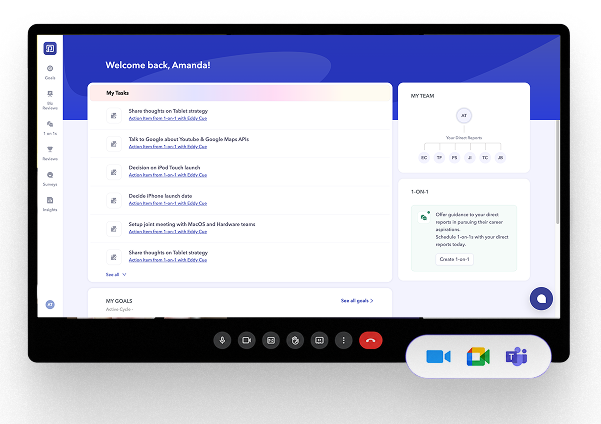
A 30-minute walkthrough of reviews, goals and 1:1s inside Slack & MS Teams. No slides, just the product.
Request a Demo