















Biswashree Roy

BLOG / Performance Management
Continuous Performance Management Process: The Complete Guide
April 17, 2026
Expert Reviewed


Designing a continuous performance management process is less about understanding the concept and more about getting the structure right.
What does a complete process look like across a quarter? How do goals, check-ins, feedback, and reviews connect in a way that stays consistent across teams? And what does “good” actually look like in practice?
High-performing organizations don’t treat these as separ
ate activities. They built a system in which each part reinforces the others.
In this guide, we’ll break down a clear, end-to-end continuous performance management process and how to structure it to work consistently at scale
What Is Continuous Performance Management?
The continuous performance management process is an ongoing cycle where managers and employees collaborate to set goals, track progress, exchange feedback, and evaluate performance throughout the year, not just at annual review time.
Unlike annual reviews, where feedback arrives too late to change anything, the continuous process keeps goals aligned to how priorities actually move, gives employees ongoing visibility into where they stand, and gives managers documented evidence when it matters most.
Annual Review vs. Continuous Performance Management
The difference isn’t just frequency, it’s what the data is based on and what you can do with it.
| Criteria | Annual Review | Continuous performance management |
|---|---|---|
| Frequency | Once a year | Ongoing, with quarterly formal reviews |
| Feedback timing | End of cycle | In the moment |
| Goal visibility | Set and forgotten | Tracked in real time |
| Manager role | Evaluator | Coach |
| Bias risk | High, recent events dominate the rating | Lower, based on full-year data |
| Employee experience | Stressful, often surprising | Predictable, development-focused |
| Decision quality | Based on recall | Based on documented evidence |
The Continuous Performance Management Process: A 5-Step Framework
Step 1: Set and Align Goals
Most companies set annual goals in January and revisit them in December. By March, priorities have shifted, but goals haven’t. By December, the review is measuring a plan that no longer exists.
Quarterly goal-setting fixes this. Whether your organization uses OKRs, KRAs, KPIs, or SMART goals, the framework matters less than the cadence. Goals that reset every quarter stay aligned with how priorities actually move; goals that reset annually don’t.
The process looks the same regardless of framework: leadership sets company objectives, managers translate those into team-level targets, and employees define their individual contributions. Cross-functional teams can share ownership of the same goal, making interdependencies visible before they become blockers.
The goal hierarchy should be visible to everyone in one system, with progress tracked automatically where possible, Jira for engineering, Salesforce for sales, and Google Sheets for ops. The moment goal updates depend on someone manually entering numbers, the data becomes stale within weeks.
What good looks like: Company objective → Team goals → Individual targets, visible in one system, progress updating automatically rather than waiting for someone to remember to log in.
Step 2: Establish a Regular Check-in Cadence
The check-in is the operating mechanism of continuous performance management, the recurring conversation that keeps goals visible, surfaces blockers early, and creates the documented record that makes quarterly reviews meaningful.
- Weekly 1-on-1s (15–30 min): Manager and direct report. The manager’s role here is to coach, not to evaluate. This is a working conversation, not a performance assessment. A consistent agenda makes the difference between a check-in that drives accountability and one that drifts into small talk:
- Open action items from last session (5 min)
- Goal progress, what’s moved, what’s stuck (10 min)
- Blockers and support needed (5 min)
- Feedback in either direction (5 min)
- Priorities for next week (5 min)
The single most important habit: action items from the previous 1:1 open every session, so nothing gets reconstructed from memory.
- Monthly team reviews (30–45 min): Team-level OKR progress. What’s on track, what’s at risk, what needs to change. Cross-functional dependencies surface here before they become problems at the quarterly review.
- Quarterly business reviews: Company-level OKR review with leadership. Each team presents progress against key results. This is where individual 1:1 data aggregates into a picture of organizational performance and where leadership can see alignment ( or misalignment) in real time.
The most common mistake: launching check-ins without structured templates. Without a consistent format, managers default to status updates, which don’t create the documented record that makes quarterly reviews meaningful.
Step 3: Enable Continuous Feedback
Check-ins create a regular feedback rhythm, but they can’t capture everything. Continuous feedback channels fill that gap: a manager praising a strong presentation the day it happens, a peer flagging a concern before it compounds, or a colleague requesting input on work that intersects with theirs.
Three feedback directions matter:
- Manager to employee: Most organizations have this, the problem is that it stays informal and undocumented. Moving it into a system creates a record that feeds quarterly reviews with actual evidence rather than recalled impressions.
- Peer to peer: Colleagues closest to the work have performance insight that managers don’t. Peer feedback reduces bias from a single evaluator.
- Upward feedback: When employees rate their managers on coaching quality and feedback frequency, the check-in cadence improves without HR enforcing it. It creates accountability at every level, not just for individual contributors.
What useful feedback actually looks like:
- Weak: “Good job on the presentation.”
- Strong: “The way you pre-empted the CFO’s pricing objection in the second slide was the right call; it stopped that question from describing the rest of the session. Do that again on the board deck next week.”
Specificity is what separates a coaching culture from a compliment culture. Feedback should be tied to a specific behavior, delivered within a week of the event, and focused on what to do differently.
Step 4: Track Progress with Real-Time Data
Manual tracking breaks down faster than most teams expect. One company we spoke with had separate Google Sheets files per department, KPIs updated monthly, when someone remembered. By the time any goal was flagged at-risk, two months had already passed.
The solution is automated progress tracking from the tools that teams already use:
- Engineering: Jira sprint completion auto-updates engineering OKRs
- Sales: Salesforce pipeline data feeds revenue key results automatically
- Operations: Google Sheets integration syncs operational metrics without manual entry
Beyond goal tracking, the data layer, a continuous performance management system, should surface falls into three categories:
Leading indicators: Goal completion rates, 1:1 completion rates, and feedback frequency. These predict performance before the formal review confirms it. If a manager’s 1:1 completion rate drops to 40% mid-quarter, it’s visible before it shows up in review data.
Lagging indicators: Review completion rates, rating distributions, calibration outputs. These confirm what the leading indicators suggested.
Manager accountability data: Which managers are conducting 1:1s, which teams have low review completion, and which employees haven’t had a documented conversation in three weeks. When this data is visible to leadership, manager behaviour changes, not because HR issued a policy, but because the gap between what’s expected and what’s happening is no longer invisible.
Step 5: Run Lightweight Quarterly Performance Reviews
The quarterly review is the formal evaluation point in a continuous performance management cycle. Unlike the annual review, which requires managers to reconstruct 12 months of performance from memory, the quarterly review synthesizes what’s already documented: check-in notes, feedback records, and goal progress data.
The quarterly review structure:
- Self-assessment opens the cycle. The employee reflects on goal progress, contributions, and development areas before the manager review opens. This gives managers a baseline to respond to rather than starting from scratch.
- Manager review follows. Informed by check-in history and accumulated feedback data, the manager is rating what’s documented, not recalling what they remember. The difference in quality between a review backed by 12 weeks of check-in notes and one backed by memory is measurable.
- Optional peer feedback is included for roles where managers have limited visibility; the right mix depends on which types of performance reviews fit your team structure into day-to-day work quality, project-based roles, cross-functional contributors, and client-facing teams.
- Calibration: HR and managers compare ratings across teams before they’re published. Performance calibration surfaces inconsistency, managers who rate everyone “exceeds expectations” are identifiable and correctable before results reach employees.
- Quarterly scores feed annual decisions: Four quarterly reviews consolidate into an annual performance record. That annual record, not any individual quarterly score, informs compensation and promotion. When employees know a single quarterly review won’t directly affect their pay, the development conversation stays honest.
Why Switch to Continuous Performance Management?
The case isn’t just theoretical. Here’s what changes when companies make the shift:
- Higher employee engagement: Employees who have frequent goal conversations with their manager are 2.8x more likely to be engaged (Gallup). The mechanism is simple: when employees know their manager is paying attention week-to-week, they feel both accountable and supported. When the only formal conversation happens once a year, most employees spend 11 months uncertain about where they actually stand.
- Lower turnover risk: Organizations with regular feedback have 14.9% lower turnover (Gallup). When employees understand where they stand and where they’re headed, they don’t leave to find out.
- Better goal alignment: Annual goals become stale within three months as priorities shift. Continuous performance management builds a quarterly reset into the process, and employees and managers revisit priorities together rather than spending December reviewing goals that stopped being relevant in April.
- Reduced recency bias: Annual reviews disproportionately reflect the last 6-8 weeks of performance. When check-in notes and feedback are documented throughout the year, the formal review draws on the full picture, not just what the manager can reconstruct from memory.
- Faster skill development: Feedback that arrives six months after a behaviour can’t change that behaviour. Feedback that arrives within a week can. Continuous performance management compresses the feedback loop so development is actionable rather than historical.
How to Implement Continuous Performance Management in Your Organization
Get leadership buy-in first
Frame continuous performance management as a business initiative, not an HR initiative. The ROI case is straightforward: higher engagement drives lower turnover, and better goal alignment reduces wasted effort on work that doesn’t connect to priorities. Present this to leadership before rolling out to managers.
Communicate the shift to employees
Annual reviews create anxiety because the outcome is unknown until the last moment. Continuous performance management reduces that anxiety; employees know where they stand throughout the year. Frame the change to employees as: “Nothing in your quarterly review should be a surprise. If it is, we’ve failed at the process.”
Choose the right software
A spreadsheet-based continuous performance management process breaks within one quarter. The check-in cadence alone generates more documented data than manual tracking can sustain. Look for a platform that handles OKR management, 1-on-1 documentation, continuous feedback channels, and review cycles in one system, and connects to Slack or Teams so managers don’t need to log into a separate tool for every interaction.
Phase the rollout
Don’t launch the full process across the entire organization simultaneously. Start with one team or department:
- Pilot (Month 1–2): One team, full process. Get 1-on-1 templates running, establish weekly check-ins, and complete the first quarterly review.
- Expand (Month 3–4): Roll out to department heads and their teams. Use pilot data to address common manager questions.
- Org-wide (Month 5–6): Full deployment. By this point, the process is documented, managers have been trained, and early evidence from the pilot can be shared to build credibility.
Common mistakes to avoid in the continuous performance management process
- Launching 360 feedback in the first cycle: It adds complexity before the basic check-in cadence is established. Start with manager-to-employee feedback only, then add peer and upward feedback in cycle two or three.
- Tying quarterly reviews directly to compensation: This turns development conversations into salary negotiations. Decouple the two: quarterly reviews are development-focused, annual records inform compensation.
- Training managers on the tool, not the conversation: Managers who can navigate the interface but don’t know how to have a coaching conversation will produce low-quality data, so train both.
- Setting goals annually: Quarterly OKRs aren’t optional. Annual goals quickly become misaligned and leave the check-in cadence without a meaningful reference point.
Best Continuous Performance Management Tools
The tools below are compared on what continuous performance management requires day-to-day: 1:1 management, Slack and Teams integration, goal tracking automation, and feedback between review cycles.
Peoplebox.ai – Best all-in-one continuous performance management platform
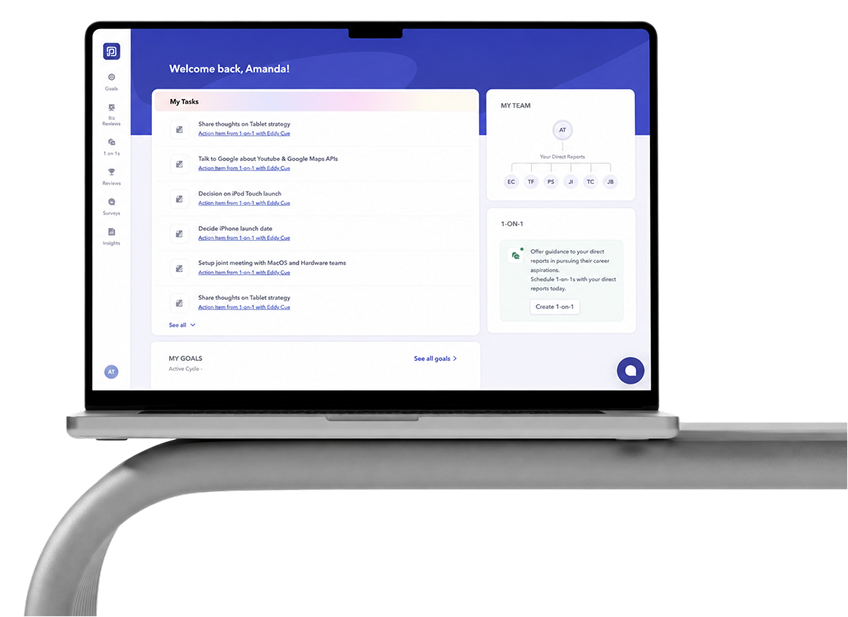
Combines OKRs, performance reviews, 360-degree feedback, 1-on-1 management, and engagement surveys in one platform. Goal progress updates automatically from Jira, Salesforce, and Google Sheets. The Slack and Teams native workflow means managers complete check-ins and give feedback without logging into a separate tool, which is where most continuous performance management tools lose adoption.
- OKRs cascade from the company to the individual, with cross-functional shared ownership
- 1:1 agendas, action items, and completion analytics in one place
- The calibration matrix lets HR compare ratings across managers before publishing
- Implementation included, no separate onboarding fee
| See Peoplebox in action
OKRs, 1:1s, continuous feedback, quarterly reviews, and calibration, all in one platform, with Slack-native workflows so managers don’t need to log in separately. |
Lattice – Best for mid-market analytics depth
Strong analytics layer connecting performance, engagement, and compensation data in one system. Well-suited for mid-market companies with dedicated HR ops that can manage a complex setup.
- Performance reviews, OKRs, engagement surveys, and compensation in one platform
- Analytics across performance and engagement data are strong
- Configuration-heavy, requires a dedicated admin to get full value
15Five – Best for building a continuous feedback culture
Built around the weekly check-in as the primary feedback mechanism. Better suited for teams where building a feedback culture is the primary objective rather than OKR alignment.
- Weekly check-in format drives consistent manager-employee communication
- AMAYA AI coaching agent gives managers specific, data-backed recommendations
- OKR functionality is less robust than dedicated goal platforms
Culture Amp – Best for engagement-led continuous performance management
Started as an engagement survey platform and has expanded into performance management. The engagement analytics layer, which links survey data to performance trends, adds unique value.
- Psychometrically validated surveys with industry benchmarking
- AI Coach for manager recommendations based on survey and performance data
- OKR and goal cascading functionality are limited relative to dedicated performance management platforms
If you’re past the process stage and evaluating tools, see the best comparison of continuous performance management software.
Bottom Line
Continuous performance management doesn’t require a transformation. It requires adding one thing at a time: quarterly goals before check-ins, check-ins before feedback channels, feedback channels before quarterly reviews. The companies that get it right don’t overhaul their performance management process; they layer structure onto what already exists, one quarter at a time.
The process only breaks in two places: when managers treat check-ins as status updates rather than coaching conversations, and when quarterly reviews get tied directly to compensation before either side trusts the process. Get those two things right, and the rest follows.
FAQs
What is continuous performance management?
Continuous performance management is an ongoing process of setting goals, monitoring progress, providing regular feedback, and conducting quarterly reviews throughout the year. It replaces the single annual review with a year-round rhythm that makes formal evaluations a synthesis of documented evidence rather than a reconstruction of recalled impressions.
What is the difference between continuous and traditional performance management?
Traditional performance management concentrates evaluation into one annual review, which is typically based on what managers can recall. Continuous performance management distributes feedback, goal tracking, and check-ins across the year so that formal reviews reflect a full year of documented performance. The outcome is less recency bias, fairer compensation decisions, and employees who aren’t surprised by their review results.
How often should continuous performance reviews happen?
Formal reviews should happen quarterly, four times per year. Between formal reviews, weekly 1-on-1s, and continuous feedback channels, keep the conversation ongoing. The quarterly review synthesises what’s been documented across check-ins and feedback rather than adding new information.
What are the key components of a continuous performance management process?
Five components: goal setting and alignment (using OKRs on a quarterly cadence), regular check-ins (weekly 1-on-1s), continuous feedback channels (peer, manager, and upward feedback), real-time progress tracking (automated from work tools), and quarterly performance reviews with calibration.
what tools support continuous performance management?
What tools support continuous performance management? The most effective continuous performance management tools are ones that support all five components in one platform: OKR tracking, 1-on-1 management, continuous feedback, goal progress automation, and review cycles. Peoplebox.ai, Lattice, 15Five, and Culture Amp all offer versions of this. The key differentiator is whether the tool works inside Slack and Teams (where managers already spend time) or requires a separate login for every interaction.
Author

Content Writer & SEO Specialist
I’m Rohitha Polavarapu, a Content Writer Associate at Peoplebox.ai, where I research and write about the evolving world of HR, AI, and employee experience. I joined the Peoplebox.ai editorial team in March 2025 after completing my MBA in Digital Marketing and Business Analytics from CMR University.
At Peoplebox.ai, I focus on creating content that simplifies complex HR and technology concepts from AI interviewers to performance management software and turns them into actionable insights for HR leaders and recruiters. My writing helps organizations make smarter, data-backed talent decisions while keeping the human element at the core of hiring and performance.
I explore topics such as recruitment automation, employee engagement, and the future of work, examining how AI empowers people leaders to make better decisions. When I’m not writing, I’m usually reading about new HR tech innovations or brainstorming ways to make HR content more engaging and relatable.
View profile 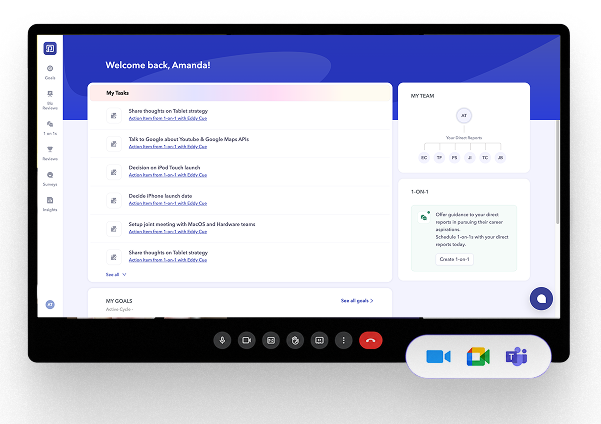
Top Picks



YOU'VE READ THE PLAYBOOK
Now see it running - live, on your org chart
A 30-minute walkthrough of reviews, goals and 1:1s inside Slack & MS Teams. No slides, just the product.
Request a Demo