
Key Takeaways:
If you’re comparing AI screening tools, here are the top 5 options:
- Peoplebox.ai: Best for AI screening connected to performance and long-term talent intelligence
- HackerEarth: Ideal for technical hiring and coding assessments
- Ideal: Great for high-volume resume screening with bias-aware AI
- Eightfold AI: Best for enterprise talent intelligence and rediscovery
- iMocha: Strong skills-based assessments with a large test library
Finding the right talent has become one of the toughest challenges for recruiters.
Hiring teams today deal with a lot of applications, and many resumes look almost the same. Recruiters spend hours reviewing profiles, scheduling calls, and following up and by the time they’re done, great candidates often choose other offers.
That’s where smart AI screening tools help to take care of the repetitive work like sorting resumes and shortlisting candidates, so teams can spend more time having real conversations and making thoughtful hiring decisions.
According to LinkedIn’s 2025 Future of Recruiting report, 73% of talent acquisition professionals agree that AI will change the way organizations hire, with those using generative AI saving an average of 20% of their work week equivalent to a full workday saved weekly.
In this guide, we’ll compare the ten leading AI screening tools reviewing their features, pricing, advantages and drawbacks to help you choose the right solution for your organization’s hiring needs in 2026.
What is an AI Screening Software?
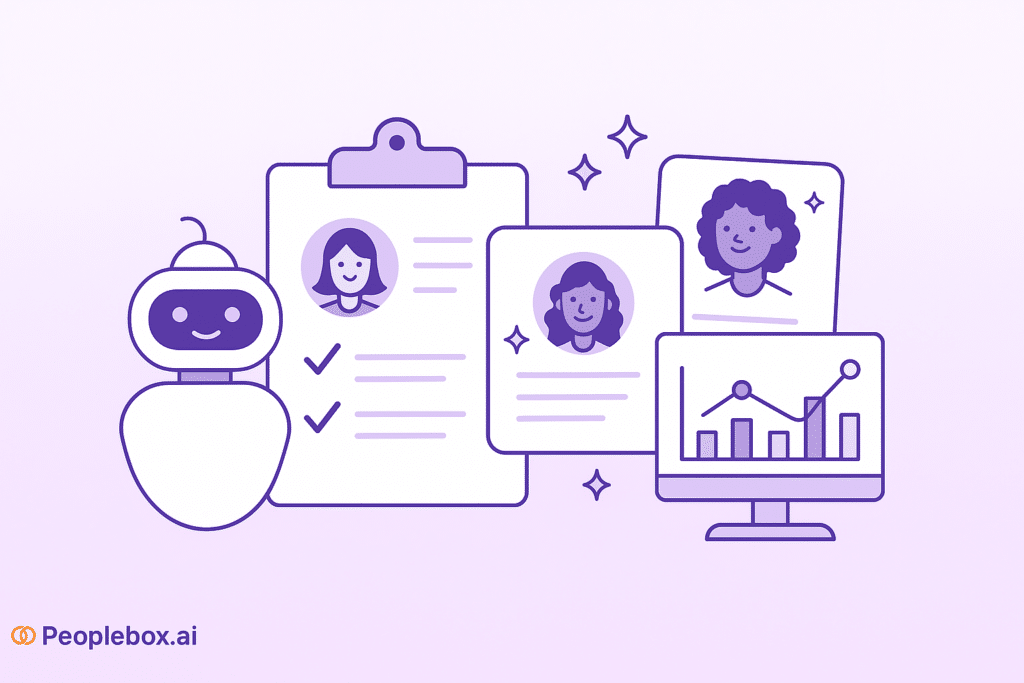
AI screening software helps recruiters quickly identify the right candidates without spending hours reviewing resumes manually. It analyzes resumes, skills tests, and interview responses to highlight top matches so hiring teams can focus on people, not paperwork.
It automates early-stage hiring tasks like resume screening, chat-based Q&As, and skills or video assessments. By understanding job context through machine learning, it can match similar roles (like “backend engineer” and “software developer”) and surface the most relevant candidates instantly.
Key Features
- AI resume screening that reads and scores resumes automatically
- Smart candidate matching and ranking based on skills and experience
- AI candidate screening via chat or guided Q&A to pre-qualify applicants
- Video or voice interview analysis for communication and soft skills
- Integration with ATS and HR tools for seamless data flow
Recruiters use AI screening tools to handle large volumes of applicants efficiently, make consistent and data-driven decisions, and reduce bias in the hiring process. It shortens time-to-hire, improves candidate quality, and frees up teams to focus on relationship-driven hiring instead of manual screening.
What Features Your AI Screening Tool Must Have?
Choosing the right AI screening software is about finding a tool that truly improves your hiring results while saving recruiters valuable time.
Here are the must-have features to look for:
1.Smart Resume Parsing and Enrichment
Your AI screening tool should automatically read resumes, extract details like skills, education, and experience, and enrich candidate profiles with public data from platforms like LinkedIn.
This helps recruiters get complete profiles before shortlisting even begins.
2.AI Candidate Matching and Ranking
Look for platforms that rank candidates using AI candidate screening algorithms. These tools assign fit scores based on skills, experience, and past hiring patterns so your team sees the strongest applicants first.
3.Multi-Stage Screening Support
The best tools go beyond AI resume screening to include chat-based pre-screens, video interviews, and skills assessments. This ensures consistent evaluation at every stage of the hiring funnel.
4.Bias Reduction and Fairness Controls
Leading platforms anonymize resumes, detect biased language, and ensure each candidate is evaluated objectively. Fair and transparent scoring helps promote inclusive hiring.
5.Automation and Smart Workflows
A good AI screening tool should automatically move candidates between stages, schedule interviews, and send notifications cutting down manual coordination and admin work.
6.Integration with ATS and HR Systems
Choose tools that sync directly with your applicant tracking system (ATS) or HR software. Seamless integrations reduce data duplication and make your screening workflow smoother.
Comparison Table: Top 10 AI Screening Tools to Watch in 2026
Before finalizing a platform, review this comparison table covering pricing models, features, and G2 ratings:
|
Tool |
Best For |
Standout AI Screening Features |
|
Peoplebox(Nova) |
AI-driven resume screening + talent intelligence across the lifecycle |
AI resume screening, multi-role matching, candidate insights linked to performance & OKRs |
|
HackerEarth |
Tech hiring & coding assessments at scale |
Large coding question bank, AI-driven proctoring, code quality analytics |
|
Ideal (by Ceridian) |
High-volume hiring & resume screening |
Predictive analytics, AI matching, diversity-focused workflows |
|
Eightfold AI |
Enterprise talent intelligence & long-term talent pools |
Talent rediscovery, AI career pathing, large profile & skills graph |
|
iMocha |
Skills-first hiring across tech & non-tech roles |
10K+ assessments, AI proctoring, multi-skill evaluation |
|
Glider AI |
Full-funnel tech screening & interviews |
AI-guided interviews, question auto-generation, anti-fraud proctoring |
|
Xobin |
SMBs & mid-market companies with skill-based hiring |
Role-based skill tests, psychometrics, video interviews, AI answer evaluation |
|
Vervoe |
Skills-based hiring using job simulations |
Job simulations, AI scoring, automated ranking based on real-world performance |
|
TestGorilla |
High-volume skills testing & shortlisting |
350+ test library, AI-driven skills matching, strong reporting |
|
hireEZ |
AI-driven sourcing + applicant screening |
AI sourcing, Applicant Match screening, fake-resume detection |
Top 10 AI Screening Tools to Watch in 2026
If you’re looking to reduce manual screening time, improve hire quality, and automate evaluation workflows, these AI screening tools will help you identify the best match.
1. Peoplebox — Best All-in-One AI Screening Software
Peoplebox is an AI screening platform built for fast-growing startups and mid-market companies with 100–5,000 employees. It combines AI resume screening, candidate shortlisting, and talent insights in a single system, helping HR teams save time and make smarter hiring decisions.
Peoplebox’s standout feature, Nova, goes beyond simple keyword matching. It builds rich candidate profiles, ranks applicants across multiple roles, and links hiring data to post-hire performance, giving teams a strategic edge in selecting top talent.
Teams choose Peoplebox for its end-to-end view of talent from resume screening to performance tracking making it ideal for organizations that want AI candidate screening tightly connected with long-term growth and success metrics.
Best For
Mid-market and scaling companies looking to streamline hiring with automated AI resume screening, multi-role matching, and actionable talent insights.
Key Features
- AI Resume Screening with Profile Enrichment — Nova scans resumes, enriches profiles with LinkedIn and public data, and ranks candidates by fit to your job requirements.
- Multi-Role Matching — Matches applicants across all open positions simultaneously to uncover the best fits and maximize your talent pool.
- Candidate Insights— Provides clear info on strengths, gaps, and potential red flags, so decisions are faster and more confident.
- Seamless ATS Integration — Connects with Greenhouse, Lever, Workday, and other systems to automatically sync candidate data.
- Performance-Linked Hiring Intelligence — Uses post-hire outcomes like OKRs and reviews to refine the ideal candidate profile over time.
Pros
- End-to-end talent view from resume screening to performance growth.
- Reduces manual screening while keeping human control over final hiring decisions.
- Strong fit for companies using performance management, OKRs, and AI hiring in one ecosystem.
Cons
- Requires initial setup to integrate fully with ATS and HR systems.
- Best suited for growth-focused organizations rather than low-volume, occasional hiring.
Customer Review:
|
Since we started using Peoplebox.ai, we have been able to bring all of our leadership across the organization together and show them how all of our goals align. Jaclyn Hoover Senior Director HR, Propel School |
G2 Rating: ⭐ 4.5/5
Pricing:
Custom enterprise pricing typically ranges from $7–$12 per user per month, depending on employee count and selected modules. Free trial available with personalized demo. View updated pricing details on the pricing page.
Watch Nova, our AI interviewer, in action.
Ready to See Nova in Action?
If you’re exploring AI screening tools and want hiring that’s faster, smarter, and aligned with long-term performance—not just resume matching—Nova is worth a look.
Request a Demo and experience smarter screening today.
2. HackerEarth — Best for Technical Hiring and Coding Assessments
HackerEarth is a technical assessment and candidate evaluation platform built for engineering and technical hiring teams with 100–10,000 employees. It helps recruiters screen developers, data scientists, and other technical roles with structured tests rather than manual resume review.
The platform is known for its coding challenge library and automated scoring that goes beyond pass/fail results. Candidates are scored on code quality, readability, and problem-solving ability. These insights help teams make data‑driven hiring decisions without sorting through piles of applications.
Companies choose HackerEarth when they need resume screening that leads directly into skills validation, especially for roles where practical coding ability matters most. Its scalability makes it a strong fit for large hiring drives and technical evaluations at scale.
Best For
Tech hiring teams that need AI resume screening combined with coding challenges and deep technical assessments.
Key Features:
- Extensive coding library — Thousands of pre-built challenges across languages (Python, Java, JavaScript, C++, etc.) and domains with automatic scoring.
- AI proctoring — Monitors candidate behavior to detect tab switches, copy-paste attempts, and other integrity issues.
- Code quality evaluation — Assesses readability, complexity, maintainability, and adherence to best practices.
- Hackathons & challenges — Supports competitions that double as screening events, enhancing employer branding.
- ATS integrations — Connects with Greenhouse, Lever, Workday, and others to sync candidate data and trigger assessments automatically.
Pros:
- Very strong fit for engineering, data, and tech roles with deep technical assessment capabilities that evaluate practical coding skills rather than theoretical knowledge alone.
- Scales well for campus hiring, hackathons, and large candidate volumes, handling thousands of simultaneous assessments without performance issues or technical glitches.
- Deep analytics on candidate performance including code quality metrics, time-to-completion, problem-solving approaches, and benchmarking against other candidates or industry standards.
Cons:
- Less relevant for non-technical roles — Focused exclusively on technical assessment, lacking behavioral interviews, soft skills evaluation, or general screening capabilities for non-engineering positions.
- May feel heavy for smaller teams looking for simple candidate assessment tools, with extensive features that require configuration and learning investment.
- Limited resume screening capabilities — Strong for technical testing but doesn’t offer comprehensive resume parsing or multi-stage screening workflows beyond coding assessments.
Pricing:
- Growth: $99/month for small teams
- Scale: $399/month for mid‑market companies
- Enterprise: Custom pricing based on volume and features
3. Ideal (by Ceridian) — Best for High-Volume Resume Screening
Ideal is an AI-driven resume and profile screening platform built for organizations with 500+ employees managing high-volume hiring across multiple departments. It focuses on predicting candidate success using historical hiring data, reducing time spent on manual resume review.
The platform leverages predictive analytics to score candidates on their likelihood of success and integrates seamlessly with existing ATS workflows. It also emphasizes diversity and fairness, helping teams reduce unconscious bias in hiring decisions.
Companies choose Ideal when they need to efficiently screen large applicant pools while maintaining consistent evaluation standards. Its focus on resume screening makes it ideal for organizations with enough historical hiring data to train predictive models.
Best For
High-volume hiring teams seeking AI resume screening combined with bias-aware candidate evaluation.
Key Features:
- AI-driven candidate matching — Learns from past hires to score new applicants based on similarity to top performers.
- Predictive hiring analytics — Forecasts candidate success probabilities using historical hiring data.
- ATS integrations — Works with Greenhouse, Lever, Workday, and others, enriching records without workflow changes.
- Bias reduction tools — Anonymizes candidate info, flags biased language, and supports equitable hiring practices.
- Automated candidate communication — Sends personalized status updates, rejection emails, and engagement messages automatically.
Pros:
- Strong fit for teams managing huge applicant volumes, reducing manual resume review time by up to 90% while maintaining consistent evaluation standards across all candidates.
- Clear focus on diversity and fair screening with transparency features that help HR teams understand and improve bias in their hiring processes.
- Works well as a layer on top of existing ATS systems, requiring minimal workflow disruption and leveraging investments already made in recruiting infrastructure.
Cons:
- Works best when you have enough historical hiring data — Predictive models require training data from past hires to be effective, limiting value for new organizations or entirely new roles.
- Less focused on deep skills testing (coding, simulations, etc.) — Specializes in resume screening rather than technical assessments, behavioral interviews, or hands-on skills evaluation.
- Limited interview and assessment capabilities — Doesn’t conduct interviews or skills tests itself, requiring integration with other tools for comprehensive candidate evaluation.
Pricing
Custom enterprise pricing, typically $15K–$50K+ annually depending on organization size and features.
4. Eightfold AI — Best for Enterprise Talent Intelligence
Eightfold AI is a talent intelligence platform built for enterprises with 5,000+ employees. It helps organizations rediscover past applicants, map career paths, and build long-term talent pools beyond immediate hiring needs.
Unlike traditional screening tools, Eightfold uses AI trained on a massive global graph of profiles and skills to match candidates not only to current roles but also to potential future positions. It enables enterprises to plan internal mobility, succession, and workforce development strategically.
Organizations choose Eightfold when they want to transform passive ATS archives into active talent pools and gain insights into internal mobility opportunities. Its focus on enterprise-scale hiring and strategic talent management makes it ideal for complex global organizations.
Best For
Enterprises looking for AI-powered talent intelligence, internal mobility, and long-term workforce planning.
Key Features:
- AI-based screening and matching for new applicants — Evaluates incoming candidates against current openings using deep learning models trained on billions of data points from global talent profiles.
- Talent rediscovery from past applicants and ATS archives — Automatically resurfaces previous candidates who may fit new openings or have gained relevant experience since their initial application.
- Skills and career path mapping for internal mobility — Identifies internal candidates for new roles, promotions, or lateral moves based on skills, experience, and career trajectory analysis.
- DEI-focused capabilities and transparency features — Provides diversity analytics, bias detection, and equitable matching algorithms designed to improve representation across hiring and promotion decisions.
- Global talent pool and workforce planning — Maintains living talent pools segmented by skills, location, and potential fit for future hiring needs and strategic workforce planning.
Pros:
- Ideal for large enterprises with complex, global hiring needs, providing strategic talent intelligence rather than transactional recruiting support.
- Strong for re-engaging existing talent pools and maximizing ROI from past recruiting investments by automatically identifying previously overlooked candidates.
- Long-term view of talent supporting internal mobility, succession planning, and workforce development rather than just filling individual requisitions.
Cons:
- Setup, configuration, and change management can be intensive, requiring significant upfront investment in implementation, data integration, and organizational adoption.
- Overkill for early-stage or small recruiting teams without the volume, complexity, or strategic talent needs that justify enterprise-grade talent intelligence platforms.
- Requires substantial historical data to train models effectively, limiting immediate value for organizations without extensive ATS archives or hiring history.
Pricing: Custom enterprise pricing, typically $50K–$200K+ annually depending on modules and organization size.
5. iMocha — Best for Skills-First Hiring
iMocha is a skills assessment platform for organizations with 200–10,000 employees. It focuses on evaluating candidates based on demonstrated abilities rather than just resumes or credentials.
The platform offers pre-built assessments covering technical, functional, cognitive, and language skills across 300+ roles. iMocha emphasizes hands-on evaluations like coding tests, case studies, and simulations to help organizations hire for practical job performance.
Companies choose iMocha when they need skills-first hiring for technical, functional, or customer-facing roles. Its broad assessment coverage and AI-based proctoring ensure credible and unbiased evaluation at scale.
Best For
Organizations focusing on skills-based hiring across technical, functional, and cognitive roles.
Key Features:
- 10,000+ skills assessments across 300+ roles — Comprehensive test library covering programming languages, cloud platforms, data science, marketing, sales, customer support, cognitive abilities, and language proficiency.
- Coding tests and case-style assessments — Hands-on coding challenges, real-world case studies, and job simulation exercises that evaluate practical problem-solving rather than theoretical knowledge.
- AI-based remote proctoring to prevent cheating — Monitors candidate behavior through webcam, screen recording, tab monitoring, and behavioral analysis to detect and flag integrity violations.
- Multilingual support and global reach — Offers assessments in multiple languages with localized content that accommodates diverse candidate populations across different regions.
- Custom assessment creation and branding — Allows organizations to build role-specific tests, customize evaluation criteria, and white-label assessment experiences with company branding.
Pros:
- Very broad coverage of skills and job roles, supporting skills-based hiring across technical, functional, and soft skill domains with ready-made assessments.
- Good fit for businesses that want skills-based hiring beyond just coding, including sales, marketing, customer support, and other functional roles requiring practical competency.
- Strong proctoring and candidate monitoring that maintains test credibility for remote assessments without requiring in-person supervision.
Cons:
- Some organizations still complement it with manual review of edge cases, particularly for nuanced roles requiring subjective judgment beyond automated scoring.
- Needs thoughtful configuration to avoid overwhelming recruiters with too many test options or creating assessment fatigue for candidates.
- Limited resume screening capabilities — Focuses on skills testing rather than comprehensive candidate screening, requiring integration with ATS or resume screening tools.
Pricing
14-day trial available; paid tiers are custom/quote-based, typically $10K–$40K+ annually.
6. Glider AI — Best for AI-Guided Interviews
Glider AI is a full-funnel screening platform for organizations with 500–5,000 employees. It combines candidate assessments with AI-guided interviews to standardize early-stage evaluation.
The platform automatically generates interview questions based on job descriptions and evaluates responses across multiple competencies using AI. This allows recruiters to save prep time and ensure consistent candidate scoring.
Organizations choose Glider AI for standardized interviews, automated scoring, and client-ready reporting. It is particularly effective for staffing agencies or teams needing high-quality, consistent interviews at scale.
Best For
Teams requiring AI-guided interviews and structured candidate assessment for tech and non-tech roles.
Key Features:
- AI-generated interview questions from job descriptions — Automatically creates role-specific interview questions based on job requirements, competency frameworks, and industry best practices without manual question writing.
- AI-based scoring of candidate responses — Evaluates answers across dimensions like relevance, depth, communication clarity, and problem-solving approach using natural language processing and machine learning.
- Anti-fraud detection and proctoring — Monitors candidate behavior during assessments and interviews, detecting identity fraud, plagiarism, and integrity violations through behavioral analysis.
- ATS integrations and client-ready reports — Connects with major ATS platforms and generates formatted candidate reports suitable for client presentation, making it popular with staffing agencies.
- Skills assessments and coding challenges — Includes technical testing capabilities for software engineering, data science, and other technical roles requiring hands-on evaluation.
Pros:
- Saves prep time for recruiters and hiring managers by automating interview question generation and eliminating manual question research and writing.
- Great fit for agencies or teams needing standardized interview quality with consistent evaluation frameworks across multiple clients, roles, or hiring managers.
- Strong candidate experience with structured interviews that feel professional and well-organized rather than ad-hoc or inconsistent.
Cons:
- Advanced analytics and reports may need training to interpret effectively, particularly for teams unfamiliar with competency-based assessment frameworks.
- Less focused on deep coding challenges compared to specialist technical assessment platforms like HackerEarth or specialized competitive programming tools.
- Question generation quality varies by role complexity—highly specialized or niche positions may require manual question refinement.
Pricing
Custom pricing, typically $15K–$60K+ annually depending on features and candidate volume.
7. Xobin — Best for SMBs and Mid-Market Teams
Xobin is a full-stack candidate assessment platform designed for small to mid-market companies (50–2,000 employees). It combines skill tests, psychometric assessments, video interviews, and basic ATS features in a single system.
The platform offers pre-built assessments and straightforward workflows, making it quick to implement without enterprise-level complexity. It helps SMBs move from manual hiring processes to structured, data-driven screening.
Organizations choose Xobin for its value-for-money, combining multiple assessment tools in one platform. It is ideal for growing companies that need professionalized hiring without dedicated HR technology teams.
Best For
SMBs and mid-market teams seeking a full assessment stack with simple workflows and quick setup.
Key Features:
- 2,500+ pre-built skill tests and 150K+ questions — Extensive library covering technical skills (coding, databases, cloud), functional skills (sales, marketing, finance), cognitive abilities, and personality assessments.
- Video-first job application forms (XoForms) — Allows candidates to submit video introductions along with resumes, providing richer first impressions than text-only applications.
- AI-generated evaluation of open-ended answers — Uses natural language processing to score written and video responses, reducing manual grading time while maintaining evaluation consistency.
- Psychometric and behavioral assessments — Includes personality tests, behavioral inventories, and culture-fit evaluations that assess soft skills and team compatibility.
- Integrated candidate tracking and workflow — Provides basic ATS functionality with candidate pipeline management, email templates, and hiring team collaboration without requiring separate applicant tracking systems.
Pros:
- Very strong value for money for SMBs and mid-market companies, offering enterprise-grade assessment capabilities at affordable price points typically accessible to smaller organizations.
- Combines multiple point solutions into one platform, eliminating need for separate tools for assessments, video interviews, and candidate tracking.
- High G2 rating and good user satisfaction reflecting ease of use, responsive support, and reliable platform performance.
Cons:
- Integrations and advanced proctoring can still improve based on user reviews—some customers report wanting deeper ATS connections or more sophisticated monitoring features.
- May lack some deep enterprise analytics of more expensive platforms, with reporting focused on assessment results rather than strategic workforce insights.
- Best for straightforward hiring processes rather than highly complex, multi-stage workflows requiring extensive customization and approval chains.
Pricing
Starts at $699/year for the basic assessment suite; higher tiers custom-priced.
8. Vervoe — Best for Skills-Based Job Simulations
Vervoe is a skills-based assessment platform for organizations with 100–5,000 employees. It focuses on evaluating candidates through practical job simulations rather than resumes or credentials.
The platform creates realistic task-based assessments that mirror actual job responsibilities. Candidates are ranked based on performance, helping organizations “hire for skills, not credentials.”
Companies choose Vervoe when they want practical, objective evaluation of job readiness, reducing bias and improving candidate quality. It is ideal for roles where demonstrated competency matters more than educational pedigree.
Best For
Skills-based hiring using real-world job simulations and AI scoring.
Key Features:
- AI-built assessments from job descriptions — Automatically generates role-specific assessments and simulations based on job requirements, reducing manual test creation time.
- Job simulations and task-based questions — Creates realistic scenarios (e.g., handling customer complaints, analyzing marketing data, debugging code) that mirror actual job responsibilities.
- Automated scoring and ranking based on performance — Uses AI to evaluate simulation results across multiple dimensions, ranking candidates objectively based on demonstrated skills rather than interviewer impressions.
- Integrations with popular ATS platforms — Connects with Greenhouse, Lever, BambooHR, and other systems to sync candidate data and trigger assessments automatically.
- Customizable evaluation criteria — Allows hiring teams to weight different skills and competencies according to role importance, ensuring assessments align with actual job priorities.
Pros:
- Strong alignment to “hire for skills, not CVs” philosophy, helping organizations reduce credential bias and focus on practical job readiness.
- Good for reducing bias by focusing on task performance rather than demographic factors, educational background, or resume formatting.
- Candidate experience is generally positive for practical tests that feel relevant to actual job responsibilities rather than abstract or arbitrary evaluations.
Cons:
- Some users report occasional UI or performance glitches, particularly with video-based simulations or complex multi-part assessments.
- Best results require well-designed tasks and scenarios, necessitating upfront investment in creating realistic job simulations that accurately reflect role requirements.
- Limited resume screening capabilities — Focuses on skills assessment rather than comprehensive candidate screening workflows including resume parsing and matching.
Pricing: Pay-As-You-Go $300 (10 candidates); subscription plans custom-priced based on volume.
9. TestGorilla — Best for High-Volume Skills Testing
TestGorilla is a skills-based assessment platform for organizations with 50–10,000 employees. It offers a large library of pre-validated tests covering cognitive, technical, language, and personality skills.
The platform enables high-volume hiring teams to deploy assessments quickly without custom test creation. It also provides AI-powered sourcing from pre-assessed talent pools to speed up candidate identification.
Companies choose TestGorilla when they need standardized, validated assessments and side-by-side candidate comparison at scale. It’s ideal for organizations implementing skills-first hiring across multiple roles.
Best For
High-volume skills screening with a large ready-made test library.
Key Features:
- 350+ tests covering cognitive, technical, language, and personality skills — Comprehensive library including programming languages, software tools, cognitive abilities (numerical reasoning, attention to detail), language proficiency, and Big Five personality assessments.
- Detailed candidate reports with side-by-side comparisons — Generates comprehensive score breakdowns, percentile rankings, and visual comparisons that help hiring panels make collaborative decisions.
- AI-powered sourcing from pre-assessed talent pool — Access to candidates who have already completed TestGorilla assessments, allowing proactive outreach to pre-qualified talent.
- Integrations with major ATS and HR systems — Connects with Greenhouse, Lever, Ashby, BambooHR, and others to automate assessment triggers and sync results without duplicate data entry.
- Custom test creation and branding — Allows organizations to build proprietary assessments, combine multiple tests into custom batteries, and white-label candidate experiences.
Pros:
- Great choice if you want a broad ready-made test library, eliminating need for psychometric expertise or test development resources.
- Strong reporting and comparison tools for panel decisions, making collaborative hiring easier with clear, objective candidate data.
- Supports skills-first hiring across many roles, from software engineers to customer support representatives to sales professionals.
Cons:
- Some users want more flexible customization for niche roles or highly specialized positions requiring industry-specific knowledge or unique competencies.
- Pricing can climb with very high candidate volumes, making it potentially expensive for organizations assessing thousands of candidates monthly.
- Test quality varies by category — while core assessments are well-validated, some niche tests receive mixed reviews regarding accuracy and job-relevance.
Pricing
Free tier available; Core $142/month (annual billing); Plus custom pricing for enterprise.
10. hireEZ — Best for Sourcing + AI Screening
hireEZ (formerly Hiretual) is a recruitment platform for organizations with 500–10,000 employees. It combines outbound candidate sourcing with AI resume screening in a single platform.
The platform searches LinkedIn, GitHub, Stack Overflow, and other sources using AI-powered Boolean search and Applicant Match to identify top-fit candidates. It also supports automated outreach campaigns and pipeline tracking.
Organizations choose hireEZ for competitive talent markets where proactive sourcing is critical. It reduces tool sprawl by combining sourcing, screening, and CRM-style candidate management in one system.
Best For
Teams needing combined sourcing and AI resume screening to manage outbound and inbound recruiting.
Key Features:
- AI sourcing from multiple channels — Searches LinkedIn, GitHub, Stack Overflow, and other platforms using AI-powered Boolean search, profile parsing, and contact information enrichment.
- Applicant Match for AI resume screening within your ATS — Automatically scores inbound applicants against job requirements, ranking them by fit and surfacing top candidates for recruiter review.
- Automated outreach and campaigns — Manages multi-touch email sequences, InMail campaigns, and engagement tracking with personalization and A/B testing capabilities.
- Analytics and dashboards for pipeline health — Tracks sourcing effectiveness, candidate engagement rates, conversion metrics, and recruiter productivity across outbound and inbound channels.
- CRM-style candidate relationship management — Maintains candidate history, interaction logs, and relationship strength indicators for long-term talent pool development.
Pros:
- Excellent for teams doing heavy outbound recruiting, providing sourcing tools that rival dedicated sourcing platforms while including screening functionality.
- Combines sourcing, engagement, and screening in one platform, reducing tool sprawl and maintaining unified candidate data across recruiting workflows.
- Appreciated for ease of use and powerful filters, with intuitive interface that doesn’t require extensive Boolean search expertise to find relevant candidates.
Cons:
- More focused on sourcing than deep assessment testing, lacking comprehensive skills tests, coding challenges, or behavioral assessments compared to specialist assessment platforms.
- Feature-rich, so new teams may need time to adopt everything and develop best practices around sourcing workflows, CRM usage, and applicant screening integration.
- Applicant screening is less sophisticated than dedicated AI screening tools—strong for basic resume matching but limited in multi-stage screening or advanced evaluation.
Pricing
Custom pricing, typically $15K–$75K+ annually depending on seats, features, and organization size.
How to Choose the Right AI Screening Tool?
Choosing the best AI screening tools isn’t about picking the flashiest platform, it’s about finding a solution that fits your team, your hiring process, and your candidates.
1. Seamless integrations
Pick a tool that connects easily with your ATS, HRIS, or CRM. This ensures candidate data syncs automatically, resumes are screened instantly, and pipelines stay up to date without manual effort.
2. Screening formats that match your needs
Different roles require different evaluations. Look for platforms that support resume screening, skill assessments, coding tests, and even video or chat-based pre-screening.
3. Actionable insights
Choose tools that provide structured scoring, candidate ranking, and predictive indicators rather than just pass/fail outcomes. This helps make data-driven decisions instead of guesswork.
4. Budget-friendly options
From free or entry-level tools to enterprise-grade platforms, consider total costs including licensing, setup, training, and ongoing support to ensure a sustainable solution.
5. Ease of use
Intuitive interfaces make it simple for recruiters and candidates alike, reducing learning curves and speeding up the screening process.
6. Fairness and compliance
Ensure the platform supports bias reduction, anonymized scoring, and compliance with GDPR or EEOC standards to maintain equitable hiring practices.
If you want a solution that handles both screening and candidate shortlisting, check out our guide on the best AI resume screening tools.
Frequently Asked Questions (FAQs)
1. What is AI assessment software and how does it help in hiring?
AI assessment software uses artificial intelligence to evaluate candidates’ skills, experience, and fit for a role. It automates resume screening, skill tests, and job-relevant analysis, helping recruiters find the best candidates faster and reduce bias.
2. How do online assessment tools speed up candidate screening?
These tools process hundreds or thousands of applications at once, automatically ranking candidates based on skills and fit. This cuts screening time from days or weeks to minutes, letting recruiters focus on interviews and hiring decisions.
3. What features should a good recruitment assessment tool have?
Key features include: AI-powered resume parsing, candidate-to-job matching, chat/video interviews, skills tests, bias reduction, customizable scoring, workflow automation, ATS integration, real-time analytics, and compliance with data privacy standards.
4. Are AI hiring tools reliable for large-scale recruitment?
Yes, top AI tools can handle thousands of candidates at once without losing accuracy. They maintain consistent evaluations, provide audit trails, and improve hiring speed, but human oversight is still important for final decisions.
5. How do AI screening tools differ from AI interview tools?
AI screening tools focus on early steps like resume parsing and candidate shortlisting. AI interview tools conduct conversations via video, voice, or chat, evaluating communication, soft skills, and cultural fit. Some platforms, like Peoplebox.ai, combine both for end-to-end hiring.