
TL;DR
Background check screening has become essential for fast and compliant hiring in 2026. Modern platforms verify candidate identity, employment history, education, criminal records, and more, all automatically.
AI screening tools eliminate manual backlog, reduce hiring risks, detect inconsistencies early, and accelerate hiring decisions. With automated background checks integrated into the recruitment workflow, companies now hire faster, safer, and more confidently.
In 2026, hiring the right candidate means being quick, spot-on and reliable. Now that remote and global teams are the norm, companies can’t just count on interviews and resumes to figure out who to hire.
That’s why background checks are a must in hiring today. By checking things like who someone is, where they went to school, their job history, if they’re allowed to work and if they’re the right fit and meet all the expectations then, companies can lower risks and hire with confidence.
In this blog, we break down everything you need to know about background check screening in 2026, in the simplest way possible.
What Is Background Check Screening?
Background check screening is the process of verifying a candidate’s personal, professional and legal information before hiring. It helps employers ensure that the applicant is qualified, credible and aligned with workplace safety standards.
A background screening typically verifies:
- Identity and personal information
- Employment history
- Education credentials
- Criminal records (depending on country regulations)
- Work authorization and compliance
- Professional licenses and certifications
In short, background check screening confirms that the information presented during hiring is accurate and trustworthy.
How Does Background Check Screening Work?
Employers use employee background checks as part of the pre-employment screening process. In 2026, the workflow is more streamlined and AI-assisted:
- Candidate consent is collected.
- Screening provider accesses global databases, records and registries.
- Information is validated and cross-matched with the candidate’s resume and job application.
- Red flags, mismatches, violations, fraud are flagged automatically
- A consolidated report is generated for recruiters and hiring managers
Modern background screening integrates directly with ATS and interview systems, enabling hiring teams to review everything in one place rather than chasing separate reports.
Types of Background Check Screening for Employers
Different roles require different levels of verification. The most common employment background screening categories include:
| Type of Screening | What It Verifies | Common Use Cases |
| Identity Verification | Legal identity of candidate | All roles |
| Employment History Check | Past experience & job roles | Corporate & managerial roles |
| Education Verification | Degrees, certifications, institutions | Technical, professional, leadership |
| Criminal Record Check | Legal offenses | Security-sensitive roles |
| Global Sanctions & Watchlist Screening | Financial or legal sanctions | Finance, executive, compliance |
| Reference Checks | Professional reputation | All roles |
| Credit Check | Financial responsibility | Finance & procurement roles |
| Social Media Reputation Screening (optional) | Public online conduct | Customer-facing & leadership |
What Employers Should Look for in Background Check Screenings
Not all screening providers are equal. In 2026, HR teams prioritize background checks that offer:
- Fast turnaround with global database access
- Compliance with regional regulations (GDPR, DPDP Act, FCRA, etc.)
- AI-powered fraud & mismatch detection
- Transparent scoring (not just reports)
- Seamless ATS / HR tech integration
- Role-based screening options
Ultimately, the best background screening tools enable hiring teams to evaluate candidate qualifications without slowing down recruitment.
The Future of Background Check Screening in Hiring
Background checks have evolved far beyond manual verification. In 2026 and beyond, we see three major trends:
- AI-Driven Screening Reports
AI analyzes candidate data for fraud risk, job alignment, and resume-to-real-record consistency. - Continuous Employment Screening
Screening moves beyond pre-hire companies monitor license status, compliance and security flags throughout employment. - Integrated Talent & Risk Scoring
Background data blends with interview performance and skill assessments to form a unified hiring score.
Overall, background check screening is becoming a predictive talent and risk evaluation system, not just verification.
How Peoplebox.ai Can Help
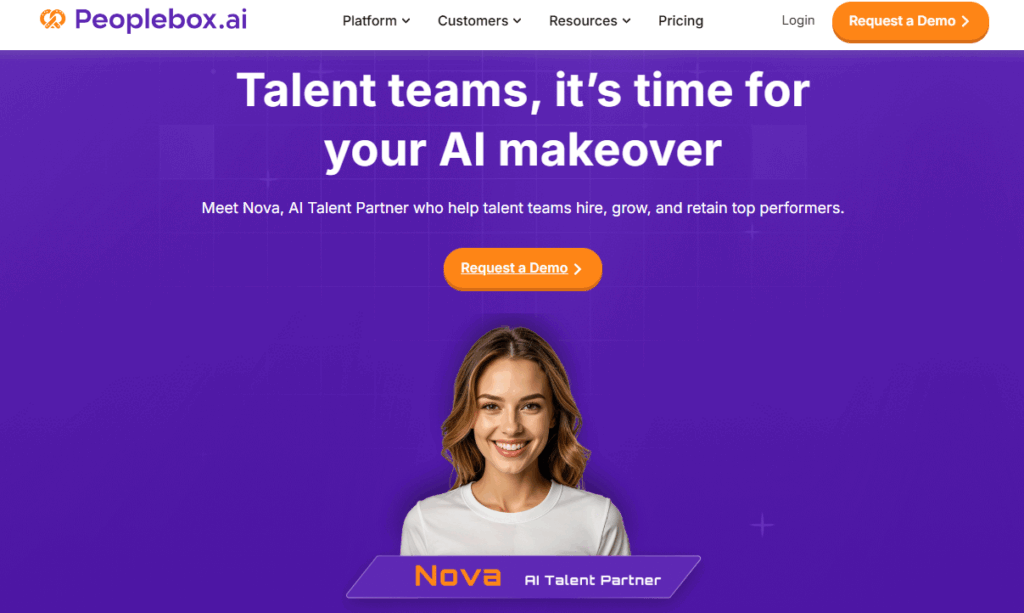
Peoplebox.ai transforms hiring by combining AI candidate screening + AI interviewing + background screening workflows inside one unified platform. Instead of recruiters spending hours reviewing resumes, scheduling interviews, and manually validating candidate data, Peoplebox.ai automates the entire early-to-mid hiring cycle.
What makes Peoplebox.ai different?
Unlike traditional screening tools that only verify information or score resumes, Peoplebox.ai evaluates candidates the way a senior interviewer would, with context, reasoning and skill relevance.
It can:
- Automatically analyze resumes and detect exaggerated/misleading claims
- Compare candidate profiles against job requirements and historical hiring success
- Recommend top-fit candidates instantly
- Trigger background screening workflows based on job role and location
- Automatically generate structured hiring reports for interviewers and leadership
Recruiters don’t need to jump between ATS, interview tools, documents, or screening dashboards,everything lives in one ecosystem.
Meet Nova — Your AI Interviewer & Screening Partner
Nova is the AI interviewer built into Peoplebox.ai, designed to deliver human-like, structured conversations with candidates while ensuring fairness and consistency.
Watch Nova, our AI interviewer, in action
What Nova does:
| Function | Description |
| Conducts human-like interviews | Evaluates communication, domain knowledge, behavioral fit & problem solving. |
| Asks follow-up questions dynamically | Adjusts the conversation based on candidate answers, like a real interviewer |
| Generates instant reports & scorecards | Structured insights ready for hiring managers & leadership |
| Detects role-specific competencies | Uses job-aligned question banks and skill matrices |
| Supports multilingual hiring | Interviews candidates across regions in their native language |
| Ensures unbiased hiring | Same rubric, same scoring model, no favoritism or inconsistency. |
Nova doesn’t just record responses, it understands them, interprets tone, evaluates context and compares outcomes against predefined skill frameworks.
| Hire 5× Faster with Peoplebox.ai + Nova Traditional hiring is slow, resume screening takes 5–7 days, pre-screening calls another 3–5 days, and the first interview can take 1–2 weeks. With Nova, the AI recruiter, screening and interviews happen instantly, round-2 interviews start within 30 minutes, and candidate drop-off is reduced by 80%. 👉 See Nova in Action — Request a Demo |
Conclusion
As hiring expands across borders and skill-based roles become more competitive, background check screening is no longer optional, it’s essential for responsible, risk-free hiring. Automating checks reduces hiring delays, eliminates manual errors, prevents fraud, and protects organizational culture and compliance.
Companies investing in fast, accurate, AI-enhanced screening systems will lead the future of recruitment, combining speed with trust.
Frequently Asked Questions (FAQs)
What is a background check in the hiring process?
A background check in the hiring process is a formal screening used by employers to verify a candidate’s identity, qualifications, and history before making a hiring decision. It helps confirm if the individual is truthful about their education, employment history, criminal record, and other relevant details to ensure workplace safety and compliance.
How do background checks work during the hiring process?
During the hiring process, background checks are typically performed after the candidate clears the initial screening or interview. Employers request consent from the applicant and then use certified background screening services to verify records such as identity, education, employment, criminal record, and sometimes credit or reference checks. Results are reviewed for accuracy and risk assessment before extending an offer.
What is included in a pre-employment background check?
A pre-employment background check usually includes:
- Identity verification
- Education and qualification verification
- Previous employment history
- Criminal record check
- Reference check
- Professional license verification (if applicable)
- Credit history check (for finance-related roles)
Some industries may require additional checks, such as drug screenings or global database scans for remote/international hiring.
What is employment background screening and how is it done in 2026?
Employment background screening in 2026 refers to a comprehensive, AI-enabled verification process used by employers to ensure candidate authenticity and workplace risk mitigation. Modern screening is:
- Digital and automated instead of manual
- Integrated with ATS and HR systems for faster decision-making
- Global to support cross-border hiring
- Bias-free and compliance-driven with detailed reporting
AI in 2026 accelerates turnaround time from weeks to hours, detects inconsistencies across documents, flags risk patterns, and ensures compliance with regional laws—making screening both fast and reliable.