



















Aditi


BLOG / Strategic Planning and Execution
Strategic Talent Management: Definition, Implementation, and Best Practices
Written by:

December 17, 2025
TL;DR
Every sector, including HR, is rapidly adopting AI in 2024. As of early 2024, about 38% of HR leaders are actively piloting or have already implemented generative AI technologies within their operations, showing a significant increase from 19% in mid-2023. This is in line with another survey where 61% of CHROs planned to invest in AI in 2024.
Strategic talent management is not just a buzzword; it is a transformative approach that can redefine how organizations attract, develop, and retain their most valuable asset: their people.
In this article, we will discuss the importance of strategic talent management, explore effective strategies, and provide actionable steps to implement a robust talent management plan. Let’s get started!

What is Strategic Talent Management?
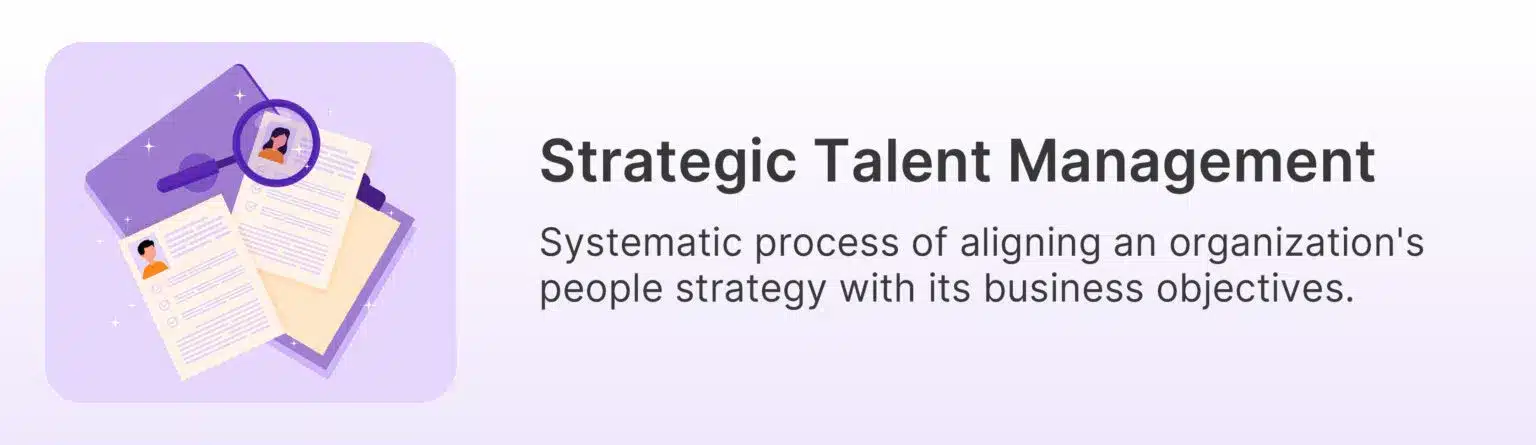
Strategic talent management is the systematic process of attracting, developing, and retaining employees in a way that aligns with an organization’s long-term goals and objectives.
It goes beyond traditional human resources practices by integrating talent management into the overall business strategy. This approach ensures that the right people are in the right roles, equipped with the necessary skills to drive organizational success.
Why is Strategic Talent Management Important?
Strategic talent management is essential for organizations that want to maximize their workforce’s potential and achieve their business goals. Here’s why:
⏫ Enhanced Employee Performance
Strategic talent management significantly improves employee performance by aligning individual goals with the company’s objectives. When employees understand how their work contributes to the organization’s success, they are more motivated and productive.
For example, a company implementing a strategic talent management approach might set specific, measurable goals for each employee that directly support broader business objectives.
This clarity and direction help employees stay focused and perform at their best, ultimately driving the company’s success.
Increased Employee Engagement and Retention
A well-implemented talent management strategy positively impacts employee engagement and retention. Engaged employees are more committed to their work and less likely to leave the company.
For instance, providing opportunities for professional growth and recognizing achievements can significantly boost engagement levels. When employees feel valued and see clear career paths within the organization, they are more likely to stay, reducing turnover rates.
This not only saves costs associated with hiring and training new employees but also fosters a more stable and committed workforce.
Competitive Advantage
Investing in strategic talent management gives companies a competitive edge in the market. Organizations that attract, develop, and retain top talent are better positioned to innovate and grow.
For example, companies with strong talent management practices can quickly adapt to market changes and seize new opportunities. This adaptability and focus on continuous improvement enable these organizations to stay ahead of competitors.
By prioritizing talent management, companies ensure they have the skilled workforce needed to drive long-term success and maintain a leadership position in their industry.
Now that we’ve established the significance of strategic talent management, let’s look at how you can go about developing a talent management strategy at your organization.
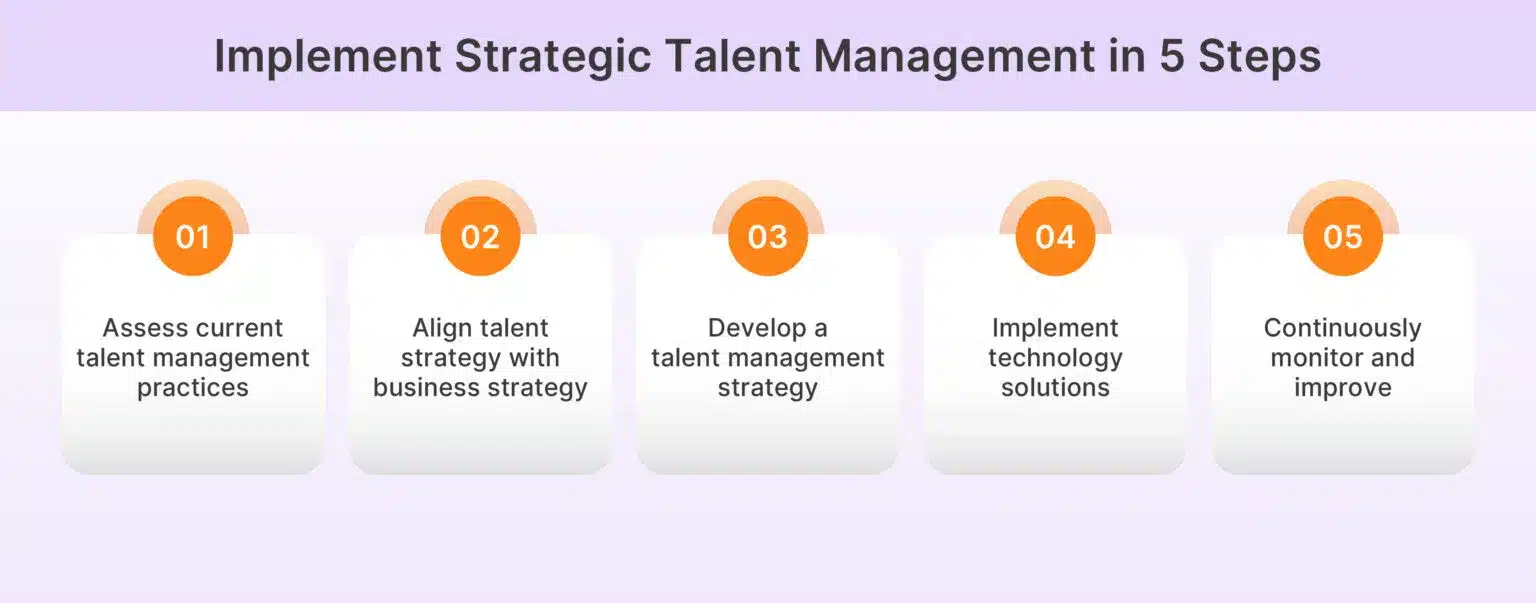
5 Steps to Implement Strategic Talent Management
Implementing strategic talent management involves a series of steps that help organizations effectively attract, develop, and retain their workforce. Here’s a guide to get you started.
Step 1: Assessing Current Talent Management Practices
The first step in implementing strategic talent management is to thoroughly evaluate your existing practices. This assessment will help you identify strengths, weaknesses, and areas for improvement. Here’s a checklist of key areas to assess:
Recruitment Processes
❓ Are you attracting the right candidates for your open positions?
❓ How effective are your job descriptions in highlighting the key responsibilities and qualifications?
❓ Are you utilizing a diverse range of sourcing channels to reach top talent?
❓ Do your interview processes effectively assess candidates’ skills, experience, and cultural fit?
❓ Are you providing a positive candidate experience throughout the recruitment journey?
Training and Development Programs
❓ Do your training and development programs effectively address the skill gaps within your organization?
❓ Are the programs relevant, engaging, and accessible to all employees?
❓ Do you offer a variety of learning modalities, such as classroom training, online courses, and on-the-job learning opportunities?
❓ Are your programs aligned with your employees’ career aspirations and your organization’s strategic goals?
❓ How do you measure the effectiveness and impact of your training programs?
Performance Evaluation Systems
❓ Are your performance review processes fair, transparent, and consistent across the organization?
❓ Do you provide regular, constructive feedback to employees on their strengths, areas for improvement, and career development opportunities?
❓ Are your performance metrics clearly defined, measurable, and aligned with your organization’s objectives?
❓ Do you recognize and reward high-performing employees through promotions, bonuses, or other incentives?
❓ How do you address underperformance and provide support for struggling employees?
Employee Engagement and Retention
❓ Are your employees satisfied with their jobs and committed to your organization’s success?
❓ Do you regularly measure employee engagement through surveys, focus groups, or other feedback mechanisms?
❓ Are you addressing the key drivers of engagement, such as work-life balance, career growth opportunities, and recognition?
❓ What is your employee turnover rate, and what are the primary reasons for employees leaving the organization?
❓ Do you have effective employee retention strategies in place, such as competitive compensation, flexible work arrangements, and mentorship programs?
By thoroughly assessing these areas, you can gain valuable insights into your current talent management effectiveness and identify opportunities for improvement.

This assessment will serve as a foundation for developing and implementing a strategic talent management strategy that aligns with your organization’s goals and supports the growth and development of your workforce.
Step 2: Aligning Talent Strategy with Business Strategy
Aligning your talent management initiatives with your company’s strategic objectives is crucial for organizational success. This alignment ensures that your workforce is equipped to drive the organization forward, contributing to both short-term goals and long-term vision.
Here are some steps and questions to help you achieve this alignment.
2.1: Set Clear Goals
Defining specific talent management goals that support your business objectives is the first step in aligning your strategies.
Questions to Ask:
What are the key business objectives for the upcoming year?
How can talent management initiatives support these objectives?
Are there specific skills or competencies needed to achieve these goals?
For instance, if your company plans to expand into new markets, focus on developing skills relevant to those markets, such as cultural awareness or language proficiency.
Establish measurable goals, such as increasing the number of employees trained in these areas by a certain percentage within a specified timeframe.
Looking for an effective and easy goal-setting framework? Try OKRs. Not sure what they are or how to set them? Check out our free OKR cheat sheet today!
2.2: Communicate Effectively
Once you have set clear goals, it is essential to communicate them effectively throughout the organization. This ensures that everyone understands how their roles contribute to the larger vision.
Questions to Ask:
How can I best share our talent management goals with the team?
Are there regular meetings or updates that can facilitate ongoing communication?
How can I encourage feedback from employees regarding these goals?
Consider using various communication channels, such as team meetings, one-on-ones, newsletters, and internal platforms, to share updates and progress. Regularly discuss how individual contributions align with the overall strategy, fostering a sense of ownership and accountability among employees.
With employee engagement platforms like Peoplebox, you can easily schedule one-on-ones so you never have to miss a meeting again! Try it yourself!
2.3: Engage Stakeholders
Engaging key stakeholders in the alignment process is crucial for gaining buy-in and ensuring that your talent strategy reflects the needs of the organization.
Questions to Ask:
Who are the key stakeholders in my organization, and how can I involve them in the talent strategy development?
What insights can they provide regarding the skills and competencies needed to meet business objectives?
How can I ensure that their expectations and concerns are addressed in the talent management plan?
Involve leaders from various departments in discussions about talent needs and strategic goals. Their input can provide valuable perspectives on the skills required for success and help identify potential gaps in your current talent pool.
2.4: Monitor and Adjust
Aligning talent strategy with business strategy is not a one-time effort; it requires ongoing monitoring and adjustment to remain effective.
Questions to Ask:
How will I measure the success of our talent management initiatives in relation to business goals?
What key performance indicators (KPIs) should I track to assess progress?
How often should I review and adjust our talent strategy based on changing business needs?
Establish a framework for measuring the effectiveness of your talent management initiatives. This could include tracking employee performance, engagement levels, and calculating turnover rates. Regularly review these metrics and be prepared to adjust your strategy to address any challenges or shifts in business priorities.

Step 3: Developing a Talent Management Strategy
Creating a detailed talent management strategy is essential for ensuring that your organization has the right people in place to meet its future challenges. This strategy involves several key steps that help identify, develop, and retain top talent.
3.1: Identify Key Talent
The first step in developing a talent management strategy is to identify the roles that are critical to your organization’s success and pinpoint high-potential employees within those roles.
Questions to Ask:
Which positions are essential for achieving our strategic goals?
Who are the high-potential employees in these roles, and what skills do they possess?
What competencies are necessary for success in these critical roles?
To identify key talent, conduct a thorough analysis of your organization’s structure and strategic objectives. Collaborate with department heads to determine which roles have the most significant impact on business outcomes.
Utilize performance data, employee feedback, and succession planning tools to identify individuals who demonstrate leadership potential and align with the company’s values and goals.
3.2: Create Development Plans
Once you have identified key talent, the next step is to design training and development initiatives tailored to the needs of your employees and the organization.
Questions to Ask:
What skills and competencies do our employees need to develop to succeed in their current roles and prepare for future positions?
Are our current training programs effective in addressing these needs?
How can we incorporate various learning modalities (e.g., workshops, online courses, mentorship) to enhance employee development?
Development plans should be comprehensive and include a mix of formal training, on-the-job learning, and mentorship opportunities.
For example, consider implementing mentorship programs where experienced employees guide newer team members, fostering knowledge transfer and professional growth. Additionally, invest in online learning platforms that allow employees to access training resources at their convenience.
3.3: Set Up Succession Plans
Preparing for future leadership needs is a vital aspect of talent management. Establishing succession plans helps ensure that your organization has qualified candidates ready to step into key positions when necessary.
Questions to Ask:
Who are the potential successors for critical roles within the organization?
What development opportunities can we provide to prepare these individuals for future leadership positions?
How often should we review and update our succession plans to reflect changes in the organization?
Identify high-potential employees and create personalized development plans that include leadership development training, cross-functional projects, and exposure to different areas of the business.
Regularly review these plans to ensure they remain relevant and aligned with the organization’s evolving needs.

Step 4: Implementing Technology Solutions
Technology plays a vital role in enhancing strategic talent management by streamlining processes, improving data-driven decision-making, and fostering a more engaged workforce.
By leveraging various tools and software, organizations can optimize their talent management efforts and ensure they are effectively meeting their strategic objectives.
4.1: Applicant Tracking Systems (ATS)
Applicant Tracking Systems (ATS) are designed to manage the recruitment process efficiently. They help streamline the hiring process by tracking candidates from application to hire, automating communications, and facilitating collaboration among hiring teams.
Implementation Questions:
What specific recruitment challenges are we facing that an ATS could address?
How will the ATS integrate with our existing HR systems?
What features are essential for our hiring process (e.g., mobile accessibility, customizable workflows)?
4.2: Learning Management Systems (LMS)
HR Learning Management Systems (LMS) provide a platform for delivering training programs, tracking employee progress, and managing learning resources. They facilitate continuous learning and development within the organization.
Implementation Questions:
What types of training programs do we currently offer, and how can an LMS enhance these offerings?
How will we measure the effectiveness of our training initiatives through the LMS?
Are there specific compliance training requirements that the LMS needs to address?
4.3: Performance Management Software
Performance management software facilitates continuous feedback, performance evaluations, and goal tracking. It helps create a transparent and effective performance management process.
Implementation Questions:
What performance metrics are most relevant to our organization’s success?
How can we ensure that managers and employees are trained to use the performance management software effectively?
What processes will we put in place to gather and act on feedback from employees regarding the performance management system?
Performance management software like Peoplebox is a game changer for forward thinking businesses. Try it yourself and experience the future of talent management.
Step 5: Continuous Monitoring and Improvement
The final step in implementing strategic talent management is to regularly review and refine your strategies. Continuous monitoring ensures that your talent management practices remain effective and aligned with changing business needs.
Here are some guidelines to help you measure effectiveness, gather feedback, and make necessary adjustments to your talent management approach.
5.1: Measure Effectiveness
To assess the success of your talent management initiatives, it’s crucial to establish key performance indicators (KPIs) and regularly track them. These metrics will help you identify areas of strength and opportunities for improvement within your talent management strategy. Some important KPIs to consider include:
| Key Performance Indicator | Description |
| Turnover Rate | Measures the percentage of employees who leave the organization over a specific period. |
| Employee Satisfaction Score | Assesses employee satisfaction through surveys, typically on a scale from 1 to 10. |
| Training Completion Rate | Tracks the percentage of employees who complete training programs. |
| Internal Promotion Rate | Measures the percentage of open positions filled by internal candidates. |
| Time to Fill Open Positions | Calculates the average time taken to fill job vacancies. |
| Employee Engagement Score | Measures the level of employee engagement through surveys and feedback. |
| Performance Review Ratings | Analyzes the results of performance evaluations conducted on employees. |
| Diversity Hiring Metrics | Tracks the diversity of new hires in terms of gender, ethnicity, and other factors. |
| Retention Rate of High-Potential Employees | Measures the percentage of high-potential employees who remain with the organization. |
| Employee Net Promoter Score (eNPS) | Gauges employees’ likelihood to recommend the organization as a great place to work. |
By regularly reviewing these KPIs and setting targets for improvement, you can gauge the overall effectiveness of your talent management strategy and identify areas that require more attention.
5.2: Gather Feedback
In addition to quantitative metrics, it’s essential to gather qualitative feedback from employees and managers to gain a deeper understanding of the impact of your talent management initiatives.
Regular feedback sessions, focus groups, and surveys can provide valuable insights into the strengths and weaknesses of your approach. Some key questions to ask include:
What aspects of the talent management strategy are working well, and why?
What areas need improvement, and how can we address them?
What challenges have employees faced in accessing or utilizing talent management resources?
How well do employees feel their career development needs are being met?
What suggestions do employees have for enhancing the talent management strategy?
Gathering feedback from a diverse range of employees and managers can help you identify potential blind spots and ensure that your talent management strategy is meeting the needs of your entire workforce.
5.3: Make Adjustments
Based on the insights gathered from measuring effectiveness and gathering feedback, be prepared to adapt your talent management strategy as needed. Flexibility is key to maintaining a successful approach in the face of changing business needs and employee expectations.
Some potential adjustments you may need to make include:
Realigning talent management initiatives with updated business goals and priorities
Enhancing or modifying training and development programs to address skill gaps
Revising compensation and benefits packages to remain competitive in the job market
Improving communication and transparency around talent management processes
Investing in new technologies or tools to streamline and enhance talent management efforts
Remember that talent management is an ongoing process, and your strategy should evolve alongside your organization.
By continuously monitoring, gathering feedback, and making necessary adjustments, you can ensure that your talent management approach remains effective and impactful in driving organizational success.
Best Practices for Strategic Talent Management
Implementing effective strategic talent management requires adherence to several best practices that can enhance organizational performance and employee satisfaction. Here are some key practices to consider:
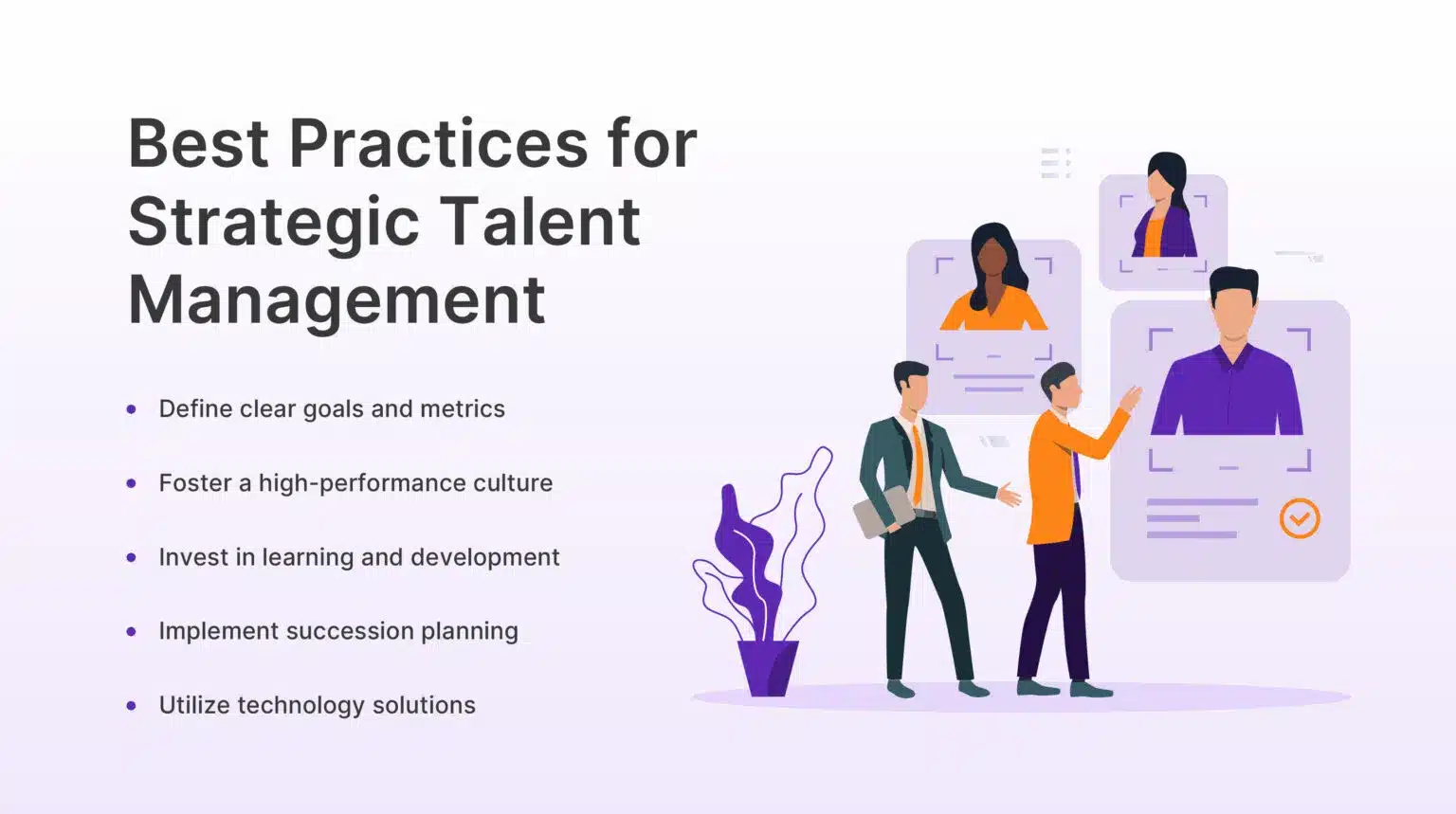
Define Clear Goals and Metrics
Establishing specific, measurable goals for talent management initiatives is essential. Align these goals with the overall business strategy to ensure that talent management efforts contribute to organizational success. Regularly review and adjust these goals based on changing business needs.
Foster a High-Performance Culture
Encourage a company culture that values high performance through continuous feedback, recognition, and opportunities for professional development. This culture motivates employees to excel and fosters a sense of ownership over their work and growth.
Invest in Learning and Development
Provide ongoing training and development opportunities that are tailored to employee needs and organizational goals. This investment not only enhances employee skills but also demonstrates a commitment to their career progression, increasing retention rates.
Implement Succession Planning
Develop a succession plan to identify and prepare high-potential employees for future leadership roles. This proactive approach ensures that the organization is ready for transitions and minimizes disruptions when key positions become vacant.
Utilize Technology Solutions
Leverage technology to streamline talent management processes, enhance communication, and facilitate data-driven decision-making. Tools like Applicant Tracking Systems (ATS), Learning Management Systems (LMS), and performance management software can significantly improve efficiency and effectiveness.
But how do you choose the right tools for strategic talent management? Let’s discuss.
How to Evaluate Tools for Strategic Talent Management?
Selecting the right tools for strategic talent management is crucial for maximizing efficiency and effectiveness. Here are some key considerations when evaluating talent management systems and tools:
1. Identify Your Needs
Begin by assessing your organization’s specific talent management needs. Consider areas such as recruitment, onboarding, performance management, and employee development. Understanding your requirements will help you select tools that align with your objectives.
2. Evaluate Integration Capabilities
Ensure that the tools you choose can integrate seamlessly with your existing systems, such as HRIS, payroll, and communication platforms. Effective integration minimizes data silos and enhances the overall efficiency of talent management processes.
3. Assess User Experience
Look for tools that offer a user-friendly interface for both employees and managers. A positive user experience encourages adoption and engagement, making it easier for teams to utilize the software effectively.
4. Review Analytics and Reporting Features
Choose tools that provide robust workforce analytics and reporting capabilities. These features allow you to track key performance metrics, assess the effectiveness of your talent management strategies, and make data-driven decisions.
5. Consider Scalability
Select tools that can grow with your organization. As your workforce expands and your talent management needs evolve, the software should be able to accommodate increased demands without compromising performance.
6. Seek Feedback from Users
Before finalizing your decision, gather feedback from employees and managers who will be using the tools. Their insights can provide valuable perspectives on usability and functionality, helping you make a more informed choice.
By carefully evaluating tools for strategic talent management, organizations can ensure they select solutions that enhance their talent management efforts and support overall business goals.
To make it easier for you, we have created a quick talent management software buyer’s checklist you can use to choose the best talent management software for your organization. Download it now!

Leverage Peoplebox for Effective Talent Management
Peoplebox is a powerful platform designed to enhance your organization’s talent management efforts.
With its OKR (Objectives and Key Results) functionality, Peoplebox aligns individual goals with company objectives, ensuring that every employee’s efforts contribute to overall success.
Additionally, Peoplebox streamlines performance management with customizable review templates, making it easier for managers to provide constructive feedback and track progress. Its robust analytics capabilities enable data-driven decision-making, helping you identify high-potential employees and optimize training programs.
Plus, Peoplebox integrates seamlessly with existing workflows, ensuring a smooth talent management process. Ready to transform your talent management strategy?
Get in touch with our team today to learn how Peoplebox can help you achieve your goals!
FAQs
What are the 5 stages of talent management models?
The five stages of a typical talent management model are:
1) Workforce planning
2) Talent acquisition
3) Talent onboarding and development
4) Performance management
5) Succession planning
These stages encompass the entire employee lifecycle, from identifying talent needs to preparing high-potential employees for future leadership roles.
How to write a talent management strategy?
To write an effective talent management strategy, start by aligning it with your organization’s overall business objectives. Identify critical roles and skills needed to achieve those goals.
Then, develop plans for attracting, onboarding, developing, and retaining top talent. Ensure your strategy includes clear metrics to measure success, such as employee engagement scores and internal promotion rates. Regularly review and refine the strategy as your business evolves.
What are the 5 core functions of talent management?
The five core functions of talent management are:
1) Recruitment and selection
2) Learning and development
3) Performance management
4) Succession planning
5) Compensation and benefits
These functions work together to ensure organizations have the right people in the right roles, with the necessary skills and motivation to drive success.
What is the difference between talent management and talent strategy?
Talent management refers to the overall process of attracting, developing, and retaining employees. It encompasses various HR functions such as recruitment, training, and performance management.
Talent strategy, on the other hand, is the overarching plan that aligns talent management initiatives with an organization’s business goals. A talent strategy provides a roadmap for how talent will be leveraged to achieve strategic objectives.
Who is responsible for talent management?
Talent management is a shared responsibility across the organization. While the HR department typically leads the development and implementation of talent management programs, managers and executives also play a crucial role.
Managers are responsible for providing ongoing feedback, coaching, and development opportunities to their team members. Executives set the overall talent management strategy and ensure it is aligned with the business’s strategic priorities. Effective talent management requires collaboration and buy-in from all levels of the organization.
TABLE OF CONTENTS
RELEVANT ARTICLES
Our Customers Love us