



Dhanya




When creating OKRs, often organizations confuse them with tasks. And although it is easy to understand why that might be so for someone new to the OKR framework, it is necessary to understand the differences between OKRs and Tasks. Many organizations never understand this distinction, and hence see their OKRs falling short.
However if this difference is understood, a business can realize the true power of OKRs that have helped many companies drive 10x growth & high retention.
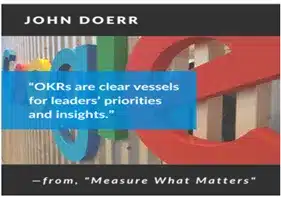
: “One thing OKRs are not is a checklist. They are not intended to be a master task like… Use OKRs to define the impact the team wants to see, and let the teams come up with the methods of achieving that impact.”- Google’s re:Work on OKR goals

OKR vs Tasks: How to identify?
1 Does it lead towards the right directions for the company’s objective?
Tasks don’t inform you whether or not you’re doing the “right things.” You’re just working on them as per instructions. It’s the OKRs that tell you what’s right and what works most for your organization for a particular period.

2 Is it an outcome that you want to achieve over a period of time?
In simple language, a task is something that you do without a result.
For example:
Writing a caption for a post can be called a task because you don’t expect anything from it. But OKRs are results or outcomes that you want to achieve at the end of the quarter.
3 Action or Result?
A task is just an action that you perform while working on a project. There can be many tasks or actions that contribute to a single project. But tasks are never OKRs.

4 Can you measure them?
On a daily basis, it can be tough to monitor and measure tasks assigned to employees and it impacts overall employee productivity as well as organization’s growth.

OKR Software – Used by 500+ Companies
Transform your managers into leaders through personalized coaching, bite-size learnings and make it super easy for them to have meaningful 1:1s, check-ins, and align goals(OKRs).
OKR Software – Rated 4.8 on G2
Empower your managers to be a better leader with essential performance tools & personalized coaching support.
5 Is your key result value based or activity based ?
Key results are enablers defining the success of the organization. OKRs will have value-based key results.
So, while OKRs will focus on a result-focused culture with continuous improvement, tasks will have activity-based key results.
OKR Software – Used by 500+ Companies
Transform your managers into leaders through personalized coaching, bite-size learnings and make it super easy for them to have meaningful 1:1s, check-ins, and align goals(OKRs).
OKR Software – Rated 4.8 on G2
Empower your managers to be a better leader with essential performance tools & personalized coaching support.
For example,
Create engagement program- Activity based Key result.- Tasks
Improve employee engagement from X to Y- Value based Key result.- OKR.

Tasks are important but so are OKRs. While tasks can add value to your workforce productivity, OKRs can do magic to your company’s growth.
Setting OKRs and Tasks separately gives the advantage of allowing you to focus on goals and be flexible in terms of what is working and what isn’t in order to attain a certain goal.
OKR vs Tasks: What’s the difference?
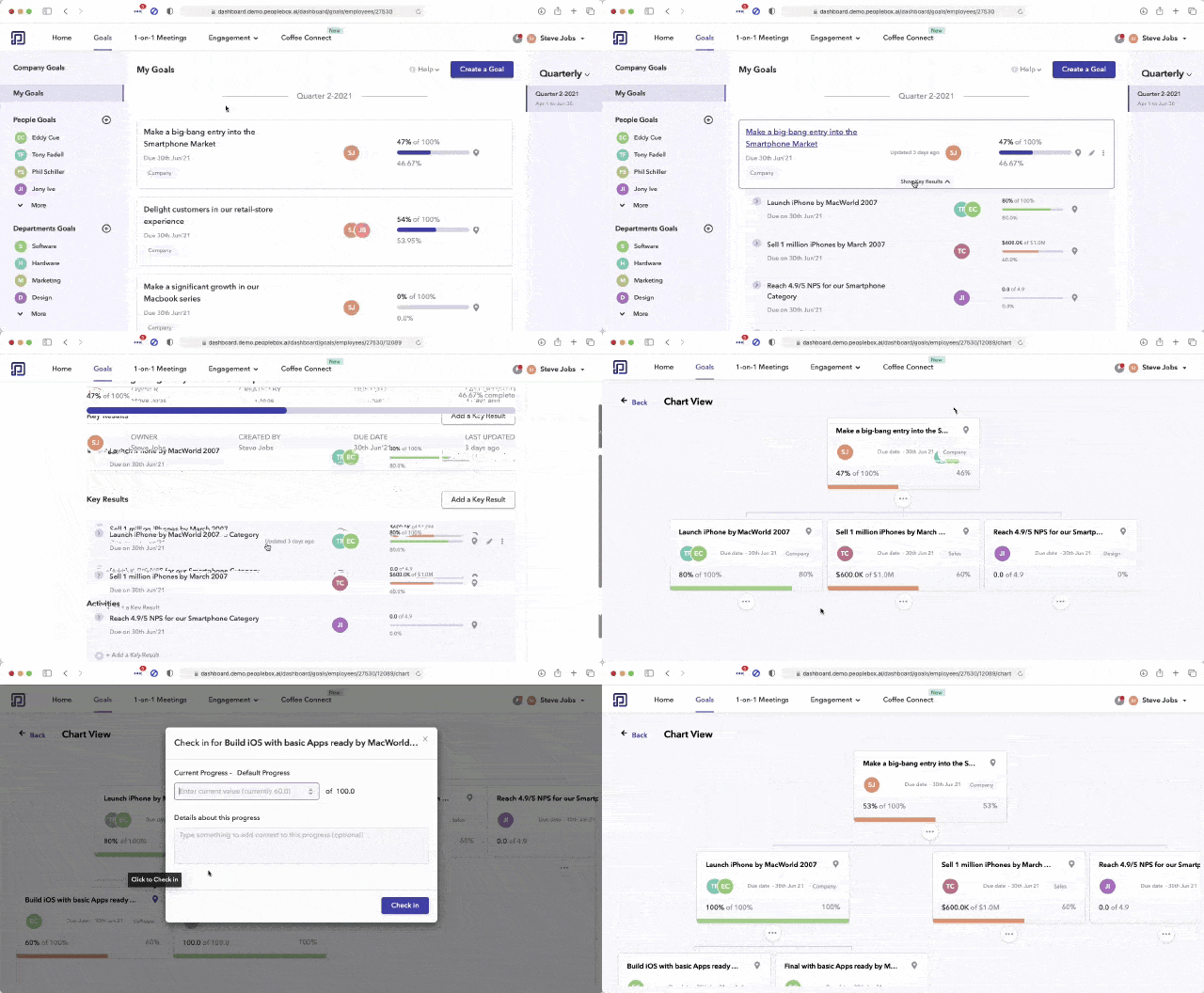
OKR is a goal setting framework and tasks can be considered as a to-do list or actions. Let’s have a look at a simple example:
Objective: Be the fastest runner in family
Key Result: Improve daily running from 5 KMs to 10 KMs
Key Result: Cover 1 KM track from 15 mins to 10 mins
Task: Buy Running Gears, Follow the diet, Take coaching
OKR Software – Used by 500+ Companies
Transform your managers into leaders through personalized coaching, bite-size learnings and make it super easy for them to have meaningful 1:1s, check-ins, and align goals(OKRs).
OKR Software – Rated 4.8 on G2
Empower your managers to be a better leader with essential performance tools & personalized coaching support.
In the above example the objective is what is where you want to reach. Key results determine if you are reaching your goal and for completing this OKR you need to perform a task. Simple right?

Now let’s get insights into how you can use OKRs with tasks in a business environment.
Objective: Create a high-performing Marketing funnel
Key Result: Website visit to demo conversion rate of 5%
Key Result: Demo to Trial conversion rate of 80%
Key Result: Trial to Close conversion rate of 95%
For the first key results, Your tasks will be:
- Optimize copy on website for conversion rate
- Put more request demo CTA on website
However, setting an objective of Optimize copy is incorrect since it is not what you want to do. You want to build a high-performing funnel, and one method to do that is to by optimizing copy.
Conclusion
You should be flexible in the face of a quickly changing business environment and develop harmony between the company’s short-term goals and long-term ambitions to succeed.
You must also ensure that everyone works together to achieve the intended objectives by giving everyone a clear direction.
It is very difficult to monitor the daily tasks for all the employees but with OKRs it is easier to monitor, set and manage the larger objectives supporting company objectives.
FAQs
Author

Shivani Dhiman is a Content Writer at Peoplebox.ai, bringing over 6 years of experience in creating insightful, research-backed content across HR, workplace culture, and people operations. With a strong foundation in communication and HR-focused writing, she specializes in turning complex concepts—from performance management to AI-driven HR tools—into clear, actionable insights for leaders and people teams.
At Peoplebox.ai, Shivani focuses on crafting content that helps organizations improve decision-making, strengthen employee experience, and navigate the evolving world of modern HR and workplace technology. Her writing blends deep research with a practical understanding of how HR teams operate in fast-growing companies.
With 6+ years in the content domain, Shivani brings a thoughtful, structured, and human-centric approach to every piece she creates.
Outside of work, she enjoys exploring the latest HR tech trends and brainstorming creative ideas to make HR content more engaging and relatable
View profile 
Top Picks



YOU'VE READ THE PLAYBOOK
Now see it running - live, on your org chart
A 30-minute walkthrough of reviews, goals and 1:1s inside Slack & MS Teams. No slides, just the product.
Request a Demo